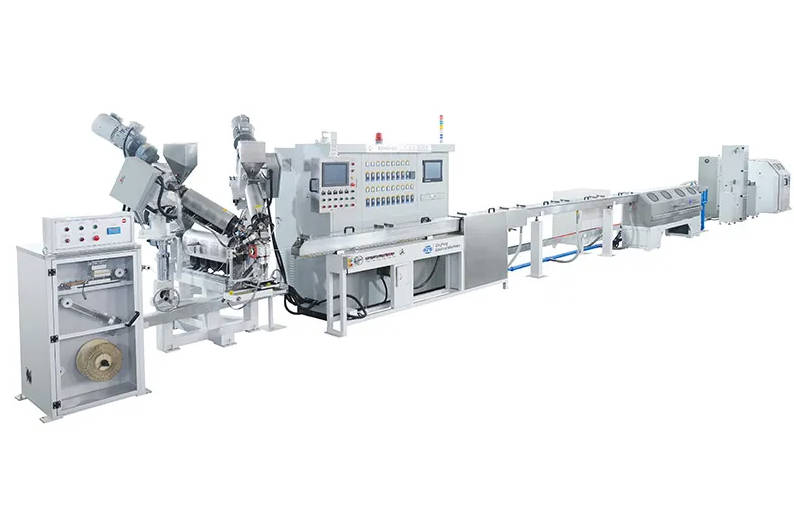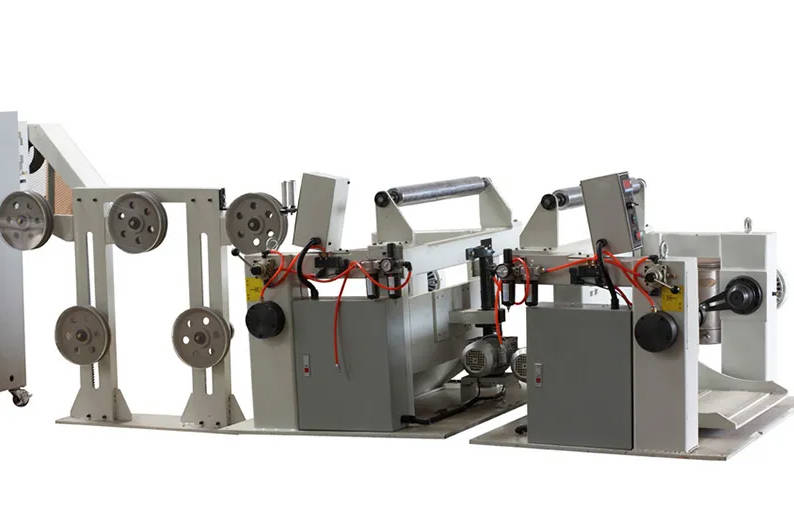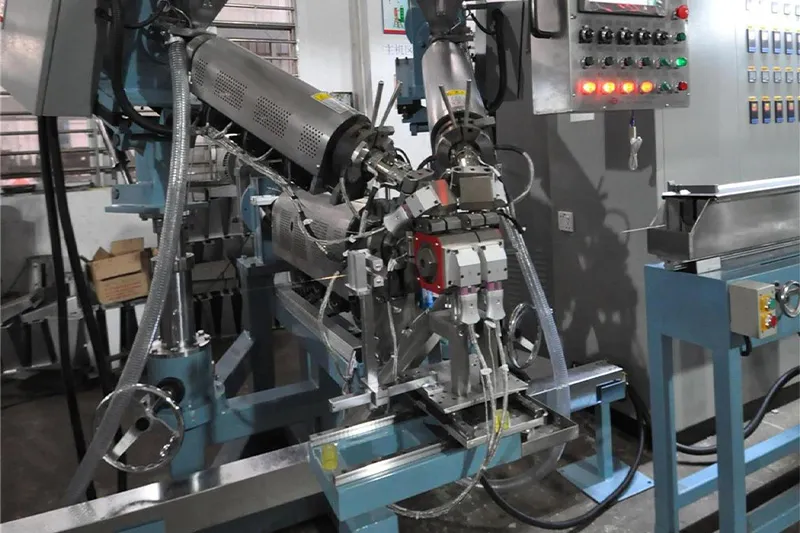
A double twist bunching machine is generally more suitable for high-speed production of flexible conductors, paired wires and relatively simple twisted structures. A single twist machine is often more suitable for larger cable cores, integrated taping, broader finished diameters and products requiring more controlled handling.
Neither machine is universally better.
The correct choice depends on what is being twisted, how the finished cable must be constructed and which production constraint matters most. A factory producing fine-stranded copper conductors has different priorities from one assembling insulated data cable cores with central taping.
The most useful comparison is therefore not:
Which machine has the higher RPM?
It is:
Which twisting path produces the required cable at the lowest cost per acceptable meter?
QingFeng SFS provides both single twist and double twist cable machines for conductor bunching, pair twisting, cable assembly and other wire and cable applications. Its current product range includes cantilever single twisters, high-speed double twisters, bow-type bunchers and other cabling configurations. (dgqfmachine.com)
The Difference Begins With Where the Twist Is Created
Single twist and double twist machines can both combine wires or cable elements into a helical structure. The main mechanical difference is the number of twists produced during one rotation of the twisting mechanism.
Single Twist Process
In a typical single twist arrangement, one machine revolution creates one twist in the product.
The take-up reel or twisting assembly rotates as the cable enters the machine. Depending on the machine design, the system can also integrate:
- Central taping
- Side taping
- Longitudinal wrapping
- Filling
- Cable-core assembly
- Larger take-up reels
The QingFeng SFS cantilever single twisting range is intended for applications including high-frequency communication cable, data cable, computer cable and power cable, with center or side taping available within the process. Its published models cover finished cable diameters up to approximately 14–25 mm, depending on configuration. (dgqfmachine.com)
Double Twist Process
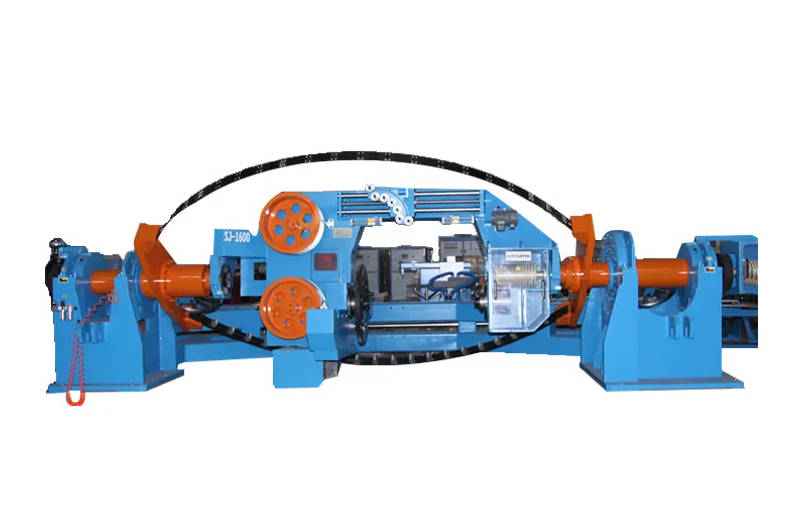
In a typical double twist machine, one bow revolution produces two twists in the cable.
The wires enter the machine through a gathering point, pass through the rotating bow path and are wound onto a take-up reel inside the machine. The two-twist mechanism allows a higher number of twists to be generated at a given rotational speed.
QingFeng SFS lists its European-type double twisting machines for copper-wire bunching, pair-core twisting and multi-wire cabling. Published models cover several inlet-wire, finished-diameter and lay-length ranges. (dgqfmachine.com)
Single twist creates one twist per revolution, while double twist creates two; however, real production output still depends on lay length, material tension, cable size and stable operating speed. (Stolberger)
A Quick Comparison Before the Detailed Decision
| Selection Factor | Single Twist Machine | Double Twist Machine |
| Twists per machine revolution | One | Two |
| Typical production priority | Product flexibility and integrated cable processing | Higher twisting output |
| Common product type | Insulated cable cores, data cables and larger assembled cables | Bare conductors, paired wires and flexible bunched conductors |
| Finished product range | Often suitable for larger outside diameters | Commonly optimized for small and medium products |
| Taping integration | Frequently easier to integrate | Possible, but not always the main machine function |
| Take-up configuration | Rotating take-up or cantilever arrangement | Take-up reel normally located inside the bow system |
| Rotating mass | Can increase with take-up reel and product size | Bow rotates around the internal take-up system |
| Changeover considerations | Product and reel handling can be more accessible | Enclosed bow and reel access must be evaluated |
| Line-speed potential | Product-dependent and generally lower for the same twist requirement | Usually higher for equivalent lay and rotational speed |
| Main purchasing risk | Buying excessive flexibility without enough output | Prioritizing speed over product compatibility |
This table provides an initial direction, but it does not replace product-based analysis.
Put Product A Through Both Machines: Flexible Copper Conductor
Consider a factory producing a flexible conductor from multiple fine copper wires.
The main requirements are:
- High continuous output
- Stable short or medium lay
- Low individual-wire tension
- Good conductor roundness
- Few wire breaks
- Compact finished reels
On a Double Twist Machine
The two-twist mechanism is well suited to high-volume bunching. For each bow rotation, two twists are introduced, which can increase theoretical line speed for a given lay length.
A double twist machine may therefore offer strong advantages when producing:
- Flexible building-wire conductors
- Automotive conductors
- Appliance wires
- Battery cable conductors
- Electronic wire conductors
- Fine copper or tinned-copper bunches
The machine still needs suitable tension control, guides and bow balance. Running faster does not help when the increased speed stretches fine wires or creates loose outer strands.
On a Single Twist Machine
A single twist machine can also twist conductors, but its primary advantage may not be fully used for a simple bare-wire bunch.
If both machines operate at the same rotational speed and produce the same lay length, the single twist system creates half the number of twists per minute.
Its value would need to come from another project requirement, such as:
- Larger take-up reel
- Special product handling
- Additional taping
- Broader finished cable range
- Compatibility with insulated elements
Decision for Product A
For high-volume production of a relatively simple flexible conductor, double twist is usually the more efficient starting point.
The final decision still depends on the wire range, strand count, required conductor geometry and take-up reel.
Put Product B Through Both Machines: Insulated Data Cable Cores
Now consider several insulated cores that must be twisted together and wrapped with tape during the same process.
The priorities change:
- Avoid marking the insulation
- Maintain core geometry
- Control lay length
- Integrate center or side taping
- Handle a larger finished diameter
- Prevent excessive cable torsion
- Maintain smooth take-up
On a Single Twist Machine
A cantilever single twist machine can combine twisting with taping or longitudinal wrapping. This may reduce intermediate handling and eliminate a separate production pass.
The product path is relatively accessible, making it easier to install:
- Taping heads
- Filling devices
- Longitudinal tape applicators
- Diameter measurement
- Surface inspection
- Cable guides
The QingFeng SFS single twist models are specifically presented for communication, data, computer and power cable applications, with center taping or longitudinal wrapping options. (dgqfmachine.com)
On a Double Twist Machine
A double twist machine may provide greater twisting speed, but the buyer must confirm whether the product can tolerate the complete bow path and whether the required taping operation can be integrated without disturbing cable geometry.
The machine may still be suitable for paired insulated wires or relatively simple multi-core structures. However, a highly customized assembly process may reduce the practical speed advantage.
Decision for Product B
For assembled insulated cores requiring synchronized taping or a larger finished outside diameter, a single twist machine may provide a more practical production route.
Put Product C Through Both Machines: High-Volume Twisted Pair
A third factory manufactures a standardized two-core twisted pair in long, repeatable batches.
Its priorities are:
- High line speed
- Consistent lay length
- Stable core tension
- Fast reel filling
- Repeatable product recipes
- Low labor per kilometer
When product structure is simple and volume is high, the double twist process can produce more twists for every revolution.
The double twist machine becomes especially attractive when:
- Cable dimensions remain within the machine range
- Product construction does not require complex inline processing
- Input-core tension is stable
- Long batches reduce changeover frequency
- The finished pair can pass through the bow without damage
A single twist machine may still be selected when the pair needs simultaneous taping, filling or special cable-core handling.
Decision for Product C
For a standardized high-volume twisted pair, the double twist system will often offer a better output-to-footprint ratio. For a more complex taped or filled pair, the single twist route deserves stronger consideration.
Use the Lay Length to Compare Real Output
Maximum machine RPM does not directly equal cable line speed.
A simplified theoretical relationship is:
Line speed = rotational speed × twists per revolution × lay length
When rotational speed is measured in revolutions per minute and lay length is measured in millimeters, divide the result by 1,000 to obtain meters per minute.
For example:
| Machine | Rotation | Twists per Revolution | Lay Length | Simplified Theoretical Speed |
| Single twist | 800 rpm | 1 | 50 mm | 40 m/min |
| Double twist | 800 rpm | 2 | 50 mm | 80 m/min |
This example explains the potential speed advantage of double twist technology. It does not represent a guaranteed production speed.
Actual output may be limited by:
- Payoff stability
- Input-wire tension
- Product diameter
- Bow vibration
- Take-up reel weight
- Acceleration limits
- Wire-break frequency
- Surface-quality requirements
- Taping or filling operations
- Operator changeover time
QingFeng SFS publishes different machine-specific speed ranges. Its listed cantilever single twist models reach model-dependent maximum rotations of approximately 400–1,000 rpm, while selected double twist models are listed at approximately 1,000–2,000 rpm. The model ranges also serve different finished diameters and applications, so the figures should not be compared without defining the product first. (dgqfmachine.com)
The Better Machine Changes When the Lay Gets Shorter
Short lay lengths require more twists per meter.
This can reduce linear output even when machine RPM remains unchanged.
Short-Lay Products
Shorter lay may be used to improve:
- Flexibility
- Core stability
- Resistance to strand separation
- Cable geometry
- Repeated bending performance
The disadvantages can include:
- Lower line speed
- Longer material path per finished meter
- Higher mechanical stress
- Greater sensitivity to tension
- More demanding drive synchronization
A double twist machine has a natural productivity advantage where many twists per meter are required.
Long-Lay Products
Longer lay allows higher linear speed but may produce a looser structure if taken beyond the suitable range.
For products requiring a long lay and additional inline processing, the theoretical speed advantage of double twist may become less important than the single twist machine’s production flexibility.
Compare What Rotates, Not Just How Fast It Rotates
Rotating mass affects acceleration, vibration, bearing load, energy use and practical production speed.
Single Twist Rotating System
In many single twist designs, the take-up reel and associated assembly rotate to create the twist.
As the reel fills:
- Rotating mass increases
- Moment of inertia changes
- Drive load changes
- Acceleration may become slower
- Machine balance becomes more important
This does not make single twist unsuitable. It means the machine should be sized around the full reel, not evaluated only with an empty take-up bobbin.
Double Twist Rotating System
In a double twist machine, the bow rotates around the take-up assembly.
Important evaluation points include:
- Bow material
- Bow balance
- Guide condition
- Cable path
- Bearing quality
- Protective enclosure
- Vibration at production speed
Smaller high-speed bows may support very high rotation, while larger bow machines must balance product capacity against mechanical inertia.
The usable speed is the highest speed at which the complete rotating system remains stable with the actual cable and a production-loaded reel.
Tension Control Affects the Two Processes Differently
Both machine types require stable input and take-up tension, but the cable follows different mechanical paths.
Input-Wire Tension
Uneven input tension can cause:
- Different effective core lengths
- Loose wires
- Wire crossing
- Conductor eccentricity
- Unstable pair geometry
- Surface protrusions
Fine bare conductors require especially careful handling because excessive tension can stretch the wire and change electrical resistance.
Insulated cores require low marking pressure and balanced tension to prevent one core becoming mechanically shorter than another.
Take-Up Tension
The take-up system must account for increasing reel diameter.
Without compensation, the cable tension can change as the reel fills. This may affect:
- Lay length
- Cable elongation
- Reel density
- Finished outside diameter
- Layer stability
QingFeng SFS describes automatic tension control, pitch management and recipe-based monitoring within its bunching and twisting equipment category. (dgqfmachine.com)
Do not accept “automatic tension” as a complete specification. Ask the supplier:
- Which tension is being measured?
- Where is it measured?
- What is the control range?
- How is reel diameter compensated?
- What happens during acceleration?
- Can different products store separate tension recipes?
Product Diameter Can Eliminate One Option Early
Machine size must match both the incoming elements and the finished cable.
QingFeng SFS publishes single twist models with maximum finished diameters from approximately 14 to 25 mm. Its European-type double twist range lists maximum finished diameters from approximately 5.2 to 9 mm, while other bow-type double twist models may cover larger products. (dgqfmachine.com)
This illustrates an important purchasing rule:
Do not compare one single twist model with one double twist model and assume the result applies to both technologies as a whole.
Each technology contains several architectures and machine sizes.
The RFQ should state:
- Minimum product diameter
- Maximum product diameter
- Input element range
- Number of elements
- Finished cable weight
- Minimum bending radius
- Required take-up reel
- Full reel weight
Quality Comparison: What Should Be Measured?
The same acceptance criteria should be applied to both machine proposals.
| Quality Indicator | Why It Matters |
| Lay length | Confirms drive synchronization |
| Lay variation | Shows stability through the reel |
| Outside diameter | Reveals structural consistency |
| Roundness | Affects later extrusion and jacketing |
| Core-length difference | Important for pairs and multi-core products |
| Surface damage | Reveals excessive friction or guide pressure |
| Wire elongation | Shows whether tension is too high |
| Loose strand or core | Indicates tension or forming instability |
| Electrical resistance | Detects conductor stretching or material loss |
| Reel winding | Influences downstream payoff and storage |
A machine should be evaluated at startup, continuous speed, acceleration, deceleration and near-full reel conditions.
Production Scenario Selection Table
| Factory Situation | More Likely Choice | Main Reason |
| Fine copper conductor produced in long batches | Double twist | Higher twist output and efficient bunching |
| Flexible automotive conductor | Double twist | Strong fit for high-volume conductor production |
| Standardized twisted pair | Double twist | Two twists per revolution improve output |
| Data cable with inline center taping | Single twist | Easier process integration |
| Larger insulated cable core | Single twist | Broader finished-diameter capability in many models |
| Product requiring longitudinal tape or filler | Single twist | More flexible inline processing |
| Factory with frequent mixed-product orders | Depends on product range | Changeover and flexibility may outweigh maximum speed |
| One machine must handle conductors and cable assembly | Single twist may be more flexible | Broader process capability |
| High-volume narrow product family | Double twist may be more economical | Higher usable output and lower labor per meter |
Compare Investment by Cost per Acceptable Meter
A double twist machine may have higher output, but the investment comparison should also include:
- Machine price
- Product range
- Scrap rate
- Wire-break downtime
- Reel-change frequency
- Operator requirement
- Energy use
- Floor space
- Preventive maintenance
- Spare bows or guides
- Taping equipment that may otherwise be purchased separately
- Downstream rewinding or handling
A Practical Procurement Scorecard
| Evaluation Area | Suggested Weight |
| Product compatibility | 25% |
| Demonstrated acceptable output | 20% |
| Finished cable quality | 20% |
| Tension and lay control | 10% |
| Reel and changeover efficiency | 10% |
| Inline process integration | 5% |
| Maintenance and safety | 5% |
| Service and technical documentation | 5% |
The weighting can be adjusted according to the project. A data cable factory may assign more weight to taping integration, while a flexible conductor factory may prioritize output.
Test Both Proposals With the Same Product
A meaningful comparison requires the same:
- Input wire
- Number of strands or cores
- Finished diameter
- Lay length
- Twisting direction
- Take-up reel
- Trial duration
- Quality criteria
Recommended FAT Comparison
- Confirm the input material
- Record payoff tension
- Set the same target lay
- Run both proposals at low speed
- Increase to the proposed production speed
- Measure actual line speed
- Measure lay length at several locations
- Inspect cable roundness and surface
- Test acceleration and deceleration
- Measure core-length or strand variation
- Observe reel filling
- Record wire breaks and production stops
- Measure finished reel quality
- Calculate acceptable meters per hour
A machine should win the comparison by producing more acceptable cable—not by displaying the larger maximum-speed number.
How QingFeng SFS Supports Both Production Routes
QingFeng SFS offers bunching and twisting machine configurations that include:
- Cantilever single twisting machines
- Outside-capstan single twisting machines
- European-type double twisting machines
- High-speed bunching machines
- Large bow-type double twisting machines
- Drum twisting machines
- Other cable-specific configurations
This range allows equipment selection to begin with the product rather than forcing every application into one machine principle. The company also states that customer-provided wire can be used for pre-purchase process trials to evaluate pitch, tension and production performance. (dgqfmachine.com)
Manufacturers planning a broader conductor, twisting, extrusion or taping process can also review QingFeng SFS wire and cable production machinery.
Conclusion: Which Is Better?
The answer depends on the production objective.
Choose a double twist bunching machine when the priority is typically:
- High-volume conductor bunching
- Standardized paired or twisted products
- Short or medium lay
- Small or medium finished diameter
- More twists per machine revolution
- Lower labor cost per produced kilometer
Choose a single twist machine when the priority is typically:
- Larger finished cable structures
- Integrated center or side taping
- Longitudinal wrapping
- Insulated cable-core assembly
- Wider product flexibility
- More accessible inline processing
Double twist is generally better for speed-intensive, repeatable bunching; single twist is generally better for flexible cable assembly and integrated processing.
The final machine should be selected from actual cable drawings, product range, lay requirements, reel dimensions and demonstrated production trials.
Cable manufacturers can discuss a single or double twist machine configuration with QingFeng SFS based on their actual production plan.
Frequently Asked Questions
What is the main difference between single twist and double twist machines?
A single twist machine produces one twist per machine revolution. A double twist machine produces two twists per bow revolution, which can increase output for products requiring many twists per meter.
Is a double twist machine always faster?
It has a theoretical speed advantage, but actual production depends on lay length, cable diameter, tension, reel size, vibration and quality requirements.
When should I choose a single twist cable machine?
A single twist machine is often suitable for larger insulated cable cores, communication cables and products requiring center taping, side taping or longitudinal wrapping.
When should I choose a double twist bunching machine?
A double twist buncher is commonly selected for flexible copper conductors, automotive wires, paired cores and other standardized high-volume products.
Can single twist and double twist machines produce the same cable?
Their application ranges can overlap, but one process may offer better output, cable handling or inline integration for a particular construction.
Does double twist damage fine copper wire?
It should not when the guides, tension, bow path and speed are correctly configured. Excessive tension or unsuitable guides can stretch or mark fine wire on any machine type.
Which machine gives better lay-length accuracy?
Both can produce stable lay when properly engineered and controlled. Accuracy depends on drive synchronization, tension, reel compensation and mechanical condition rather than the twisting principle alone.
Can a single twist machine apply tape while twisting?
Many cantilever single twist machines can integrate center taping, side taping or longitudinal wrapping, depending on the machine configuration.
Which machine is better for flexible conductors?
Double twist machines are commonly preferred for high-volume flexible conductor bunching because they create two twists per bow revolution.
How should I compare single twist and double twist quotations?
Compare both machines using the same product, lay length, take-up reel and quality criteria. Evaluate stable line speed, scrap, cable quality, changeover and cost per acceptable meter.