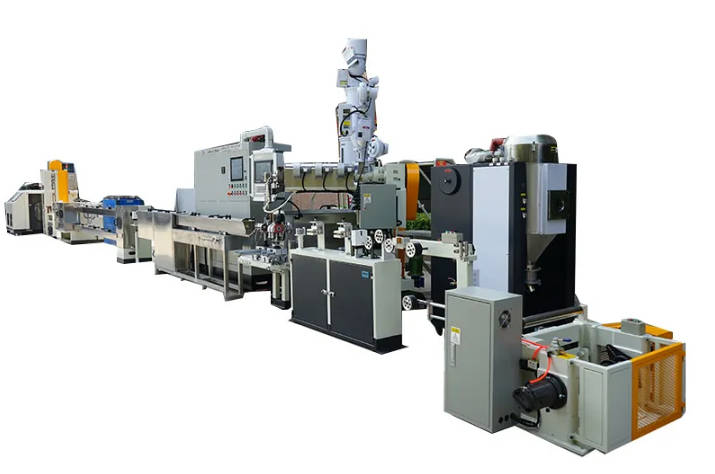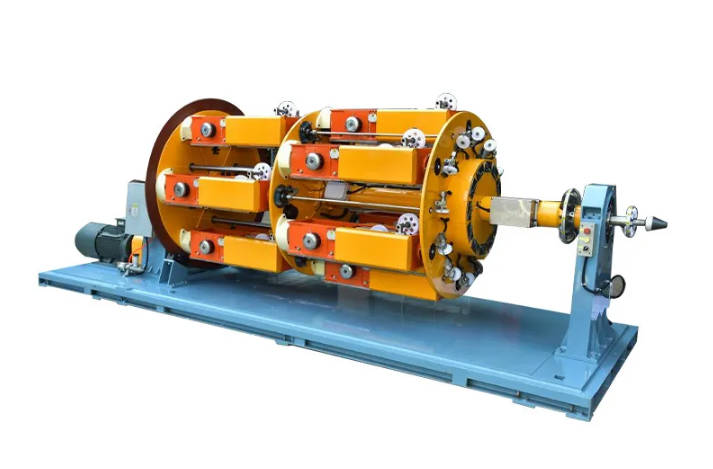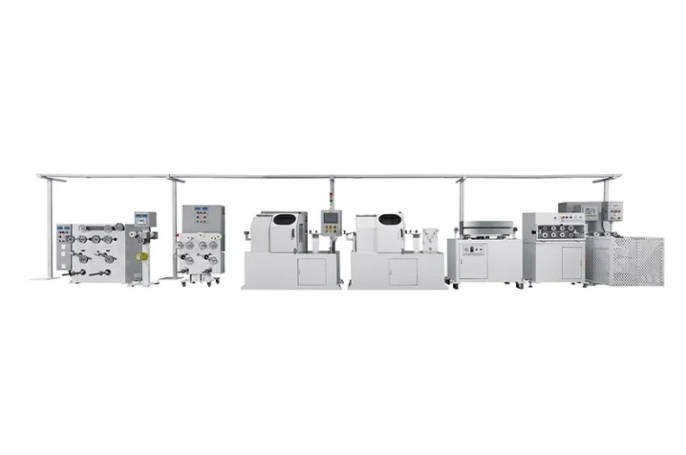
A planetary stranding machine is used in power cable production to strand or lay up multiple conductors, insulated cores, sector conductors, or cable elements while maintaining controlled lay length, tension, and cable structure stability. For power cable manufacturers, choosing the right planetary stranding machine affects cable roundness, conductor stress, lay length consistency, production efficiency, downstream armoring, sheathing quality, and long-term manufacturing reliability.
A planetary cable machine is not a simple rotating frame. It is a heavy-duty cable production system designed to handle large bobbins, multiple cable elements, controlled back-twist, stable pulling force, and precise stranding geometry. If the machine is under-specified, poorly aligned, or unsuitable for the target cable structure, the factory may face problems such as uneven lay length, core deformation, loose stranding, conductor damage, high downtime, and poor cable appearance.
For manufacturers planning new capacity or upgrading a power cable production line, QingFeng SFS provides planetary cable machine solutions for different cable stranding and laying-up applications. This guide explains how to evaluate a planetary stranding machine before purchasing.
What Is a Planetary Stranding Machine?
A planetary stranding machine, also known as a planetary cable machine or cage stranding machine in many cable production contexts, is used to strand or lay up multiple wires, conductors, or insulated cores around a central axis. The machine frame rotates while bobbins remain controlled so that the cable elements are laid together with a designed pitch and structure.
In power cable production, a planetary stranding machine may be used for:
| Application | Typical Use |
| Conductor stranding | Stranding round or sector conductors |
| Insulated core laying-up | Laying up 3-core, 4-core, or multi-core power cables |
| Control cable production | Laying up multiple insulated cores |
| Armored cable preparation | Producing stable cores before armoring |
| Large cable core formation | Combining larger cable elements before sheathing |
| Special cable production | Handling cables requiring low torsion or controlled structure |
The main purpose of a planetary stranding machine is to produce a stable cable structure with controlled lay length, balanced tension, and reduced unwanted twisting of cable elements.
Compared with simpler twisting machines, planetary stranding equipment is often selected when cable size, structure stability, or back-twist control becomes important.
Why Planetary Stranding Matters in Power Cable Production
Power cables often contain multiple conductors or insulated cores that must be arranged into a stable round or sector-shaped cable structure. The stranding or laying-up process affects the mechanical and electrical quality of the final cable.
If the stranding process is unstable, several problems may appear:
| Quality Issue | Possible Impact on Cable Production |
| Uneven lay length | Inconsistent cable structure and appearance |
| Excessive conductor stress | Reduced mechanical reliability |
| Loose stranding | Poor core stability before sheathing |
| Core deformation | Difficult downstream extrusion or armoring |
| Poor roundness | Uneven jacket thickness or poor finished appearance |
| Excessive twisting | Insulated cores may rotate or deform |
| Unstable tension | Cable diameter and structure may vary |
| Frequent wire breakage | Production downtime and material waste |
For power cable manufacturers, these problems can affect both production cost and customer acceptance. A stable planetary stranding machine helps build a consistent cable core before downstream processes such as taping, armoring, and jacket extrusion.
Planetary Stranding Machine vs Other Stranding Equipment
Different cable stranding machines are used for different cable structures. Before purchasing, buyers should understand whether a planetary stranding machine is the right choice.
| Machine Type | Common Application | Main Advantage | Limitation |
| Planetary stranding machine | Power cable, large cable cores, multi-core cable | Good for controlled lay-up and back-twist applications | Larger footprint and higher investment |
| Tubular stranding machine | Smaller conductors or high-speed stranding | Higher speed for certain conductor structures | Less suitable for very large or complex cable cores |
| Bow type stranding machine | Smaller wire bunching and flexible conductor production | Compact and efficient for certain wire sizes | Limited for heavy power cable structures |
| Rigid frame stranding machine | Large conductor stranding | Strong structure and high capacity | May not fit all laying-up requirements |
| Single twist machine | Simple cabling or light-duty applications | Lower complexity | Not ideal for heavy-duty power cable production |
A planetary cable machine is usually considered when the cable requires controlled rotation, stable core formation, larger bobbins, or reduced torsion on cable elements.
Key Components of a Planetary Cable Machine
A typical planetary stranding machine includes several important sections. Each section affects production stability.
| Component | Function |
| Pay-off bobbins | Hold conductors, wires, or insulated cores |
| Rotating cage | Carries bobbins around the stranding axis |
| Back-twist mechanism | Helps control core rotation and torsion |
| Tension control system | Keeps each cable element under stable tension |
| Die or closing unit | Forms the cable elements into the required structure |
| Meter counter | Tracks production length |
| Capstan or traction unit | Pulls the cable at controlled speed |
| Take-up system | Winds finished stranded cable or core |
| Safety guarding | Protects operators during rotating operation |
| Control system | Manages speed, alarms, synchronization, and operation parameters |
A planetary stranding machine should be evaluated as a complete system, because cage rotation, tension control, closing die, capstan, and take-up must work together.
A strong cage alone does not guarantee cable quality if bobbin tension fluctuates or the capstan pulls unevenly.
Back-Twist Control: Why It Matters
Back-twist is one of the most important features in many planetary stranding applications. It helps control whether the cable elements rotate around their own axis during stranding. For insulated cores, excessive torsion may deform insulation, change core orientation, or create stress in the cable structure.
Back-twist control is especially important for:
- Multi-core power cables
- Sector conductor cables
- Control cables
- Instrumentation cables
- Cables with sensitive insulated cores
- Cables requiring stable core orientation
- Armored cable cores before downstream processing
Without proper back-twist control, cable elements may twist, rotate, or deform during laying-up. This can affect downstream taping, armoring, sheathing, and final cable appearance.
For power cable laying-up, back-twist control helps reduce unwanted torsion and maintain a more stable cable core structure.
Lay Length and Stranding Pitch
Lay length, also called stranding pitch, refers to the length along the cable axis required for one complete turn of the stranded elements. It is one of the main process parameters in cable stranding.
Lay length affects:
| Factor | Impact |
| Cable flexibility | Shorter lay length may increase flexibility in some structures |
| Material usage | Different lay lengths affect path length of cable elements |
| Cable diameter | Poor pitch control may affect roundness |
| Mechanical stability | Proper lay length helps maintain core structure |
| Downstream processing | Stable lay length supports taping, armoring, and sheathing |
| Production speed | Pitch setting affects machine speed and output |
The correct lay length depends on cable design, conductor size, insulation type, cable core structure, and customer specifications. Buyers should confirm whether the machine can adjust lay length accurately and repeatably.
Tension Control in Planetary Stranding
Tension control is critical because each conductor or insulated core must feed into the closing point consistently. If one element has higher tension than the others, the cable structure may become unbalanced. If tension is too low, loose stranding may occur. If tension is too high, conductor stretching or insulation damage may appear.
| Tension Problem | Possible Result |
| Uneven bobbin tension | Poor cable roundness and unstable core structure |
| Excessive tension | Core deformation or conductor stress |
| Low tension | Loose stranding and unstable lay-up |
| Tension fluctuation | Lay length variation and inconsistent appearance |
| Poor take-up tension | Cable deformation after stranding |
A suitable planetary stranding machine should provide stable bobbin tension, smooth pulling, and controlled take-up to support repeatable cable quality.
How to Choose the Right Planetary Stranding Machine
1. Confirm the Cable Product Type
Start by defining the cable products you plan to manufacture. A planetary stranding machine for small control cables may not be suitable for large power cables. A machine for round insulated cores may need a different configuration from one used for sector-shaped conductors.
Prepare the following information:
| Information | Why It Matters |
| Cable type | Determines machine structure and capacity |
| Number of cores or wires | Determines cage size and bobbin count |
| Conductor or core diameter | Affects bobbin, guide, and closing die design |
| Cable outer diameter | Determines capstan and take-up configuration |
| Cable structure | Round, sector, multi-core, armored cable core, etc. |
| Required lay length | Determines speed and pitch adjustment |
| Material type | Affects tension and handling requirements |
| Production capacity target | Affects machine size and automation level |
2. Select the Right Bobbin Size and Cage Structure
Bobbin size affects production length, machine capacity, and changeover frequency. Larger bobbins reduce stopping frequency but require a stronger machine structure and more floor space.
Common buying considerations include:
| Bobbin Factor | Buying Consideration |
| Bobbin diameter | Must match conductor or core supply format |
| Bobbin weight | Affects cage strength and dynamic balance |
| Number of bobbins | Must match cable structure |
| Loading method | Affects labor and changeover efficiency |
| Braking or tension method | Affects feeding stability |
| Cage rigidity | Important for heavy-duty power cable production |
If a factory produces different cable types, it should discuss whether the machine can support multiple bobbin specifications or future configuration changes.
3. Evaluate Machine Rigidity and Dynamic Balance
Planetary stranding machines are heavy rotating systems. Machine rigidity, cage balance, bearing quality, and frame strength affect vibration, noise, safety, and cable quality.
For power cable production, the machine must handle large bobbins and heavy cable elements. Weak structure may lead to vibration, unstable tension, poor pitch consistency, or higher maintenance needs.
Buyers should check:
- Cage structure strength
- Bearing and transmission design
- Dynamic balance of rotating parts
- Safety guarding
- Foundation requirements
- Maintenance accessibility
- Long-term stability under real production load
4. Check Lay Length Adjustment and Speed Control
A practical planetary cable machine should allow lay length adjustment according to different cable designs. The control system should coordinate cage rotation and traction speed.
The key question is not only the maximum speed. Buyers should ask whether the machine can maintain stable lay length and tension at the required working speed.
Stable working speed is more important than theoretical maximum speed in power cable stranding.
5. Consider Pay-Off, Capstan and Take-Up Integration
The stranding machine should be integrated with proper upstream and downstream handling equipment. Poor pay-off or take-up design can damage cable quality even when the main cage works correctly.
| Section | What to Check |
| Pay-off | Bobbin loading, tension stability, braking system |
| Closing die | Smooth cable formation without damage |
| Capstan | Pulling force, speed stability, cable grip |
| Take-up | Reel size, winding tension, traversing quality |
| Control system | Synchronization between machine sections |
For large power cable cores, capstan and take-up configuration can be just as important as the stranding cage itself.
Planetary Stranding Machine Configuration Checklist
Before requesting a quotation, buyers should prepare a technical specification sheet.
| Requirement | Details to Provide |
| Cable type | Power cable, control cable, armored cable core, etc. |
| Cable structure | Number of cores, conductor type, round or sector structure |
| Core diameter range | Minimum and maximum core size |
| Final stranded diameter | Target cable core diameter |
| Bobbin size | Pay-off bobbin dimensions and weight |
| Number of bobbins | Required cage configuration |
| Lay length range | Required stranding pitch |
| Back-twist requirement | Full back-twist, partial back-twist, or no back-twist |
| Production speed | Required stable working speed |
| Take-up reel size | Finished cable winding requirement |
| Factory layout | Available space and line direction |
| Control preference | Manual, semi-automatic, PLC/HMI control |
| Safety requirements | Guarding, emergency stop, braking system |
The more accurate the information, the more suitable the supplier’s recommendation will be.
What Affects Planetary Stranding Machine Price?
Planetary stranding machine price depends on machine size, bobbin count, bobbin capacity, control system, automation level, safety configuration, and customization.
| Price Factor | How It Affects Cost |
| Bobbin size | Larger bobbins require stronger structure |
| Number of bobbins | More bobbins increase cage complexity |
| Cable diameter range | Larger cables require stronger traction and take-up |
| Back-twist mechanism | Adds mechanical complexity |
| Control system | PLC/HMI and synchronization functions affect price |
| Machine frame strength | Heavy-duty construction increases cost |
| Capstan type | Pulling capacity and cable grip affect configuration |
| Take-up design | Reel size and winding control affect cost |
| Safety system | Guards, brakes, and sensors add value |
| Customization | Special cable structures may require custom design |
A lower-cost machine may not be suitable if it cannot handle the required cable size, bobbin weight, or production stability. Buyers should compare total configuration rather than machine name alone.
Common Mistakes When Buying a Planetary Cable Machine
Mistake 1: Choosing by Price Only
The cheapest machine may not provide enough rigidity, tension stability, safety protection, or long-term reliability. Power cable production requires equipment that can handle heavy loads consistently.
Mistake 2: Ignoring Back-Twist Requirements
Some cable structures require controlled back-twist. If this is ignored during machine selection, the cable core may twist or deform during production.
Mistake 3: Underestimating Bobbin Weight
Bobbin weight affects cage design, loading method, safety, dynamic balance, and maintenance. Buyers should confirm real bobbin specifications before ordering.
Mistake 4: Focusing Only on the Main Cage
The capstan, closing die, take-up, tension system, and control system also affect final cable quality. A complete line view is necessary.
Mistake 5: Not Planning Factory Layout
Planetary stranding machines can require significant floor space. Loading, unloading, maintenance access, and cable path should be planned before installation.
How to Choose a Reliable Planetary Stranding Machine Supplier
A reliable supplier should understand cable structure, production process, and machine engineering. Buyers should evaluate more than machine appearance.
Useful supplier questions include:
| Question | Why It Matters |
| Have you supplied machines for similar power cable structures? | Confirms application experience |
| Can the machine support our bobbin size and weight? | Confirms mechanical suitability |
| What back-twist options are available? | Matches cable structure needs |
| How is tension controlled? | Affects cable quality |
| What lay length range can be adjusted? | Supports product flexibility |
| What capstan and take-up options are available? | Ensures complete line compatibility |
| Can the machine fit our factory layout? | Reduces installation problems |
| What safety features are included? | Protects operators and equipment |
| What training and after-sales support are provided? | Supports production startup and long-term operation |
QingFeng SFS provides planetary cable machine solutions for power cable and related cable manufacturing applications. Buyers can also visit the QingFeng SFS official website to learn more about available cable equipment categories and company capabilities.
Practical Tips for Better Power Cable Stranding Quality
After equipment installation, process management is also important. Good machine selection must be supported by good production discipline.
Useful practices include:
- Confirm bobbin loading direction before starting production.
- Check each bobbin tension before running.
- Verify lay length during trial production.
- Inspect cable roundness and core stability.
- Avoid sudden speed changes during heavy cable production.
- Keep closing dies clean and properly aligned.
- Check capstan grip and pulling stability.
- Maintain bearings, brakes, and transmission parts regularly.
- Keep take-up tension stable.
- Record production parameters for repeat orders.
- Train operators to identify early signs of loose stranding or tension imbalance.
Stable power cable stranding depends on both machine capability and consistent process control.
FAQ
What is a planetary stranding machine used for?
A planetary stranding machine is used to strand or lay up multiple conductors, insulated cores, or cable elements into a stable cable structure. It is commonly used in power cable, control cable, armored cable core, and multi-core cable production.
What is the difference between a planetary stranding machine and a cage stranding machine?
The terms may overlap in cable manufacturing. A planetary stranding machine usually emphasizes controlled rotation and back-twist capability, while cage stranding machine is often used more broadly for machines with rotating cages holding bobbins.
Why is back-twist important in power cable production?
Back-twist helps reduce unwanted rotation or torsion of insulated cores during laying-up. It helps maintain cable core orientation, reduce deformation, and support stable downstream processing.
How do I choose a planetary cable machine?
To choose a planetary cable machine, confirm cable type, number of cores, bobbin size, cable diameter, lay length range, back-twist requirement, production speed, capstan capacity, take-up reel size, and supplier support.
What affects the price of a planetary stranding machine?
Price is affected by bobbin size, number of bobbins, cable diameter range, back-twist mechanism, machine frame strength, control system, capstan design, take-up configuration, safety features, and customization requirements.
Can a planetary stranding machine be used for armored power cable production?
Yes, a planetary stranding machine can be used to prepare stable cable cores for armored power cable production. The exact configuration depends on cable diameter, core structure, and downstream armoring process.
What causes uneven lay length in cable stranding?
Uneven lay length may be caused by unstable traction speed, cage rotation fluctuation, poor tension control, incorrect machine settings, or mechanical wear in transmission components.
Conclusion
A planetary stranding machine is a key piece of equipment for power cable production, especially when manufacturers need stable cable structure, controlled lay length, back-twist capability, and reliable handling of large bobbins or multi-core cable elements. Choosing the right machine requires a clear understanding of cable structure, bobbin size, tension control, lay length range, production speed, factory layout, and supplier support.
For power cable manufacturers, machine selection should not be based only on price or general machine name. The real value comes from stable production, reduced cable deformation, consistent lay length, strong mechanical design, safe operation, and long-term service support.
QingFeng SFS offers planetary cable machine solutions for manufacturers looking to improve power cable stranding and laying-up production capability.