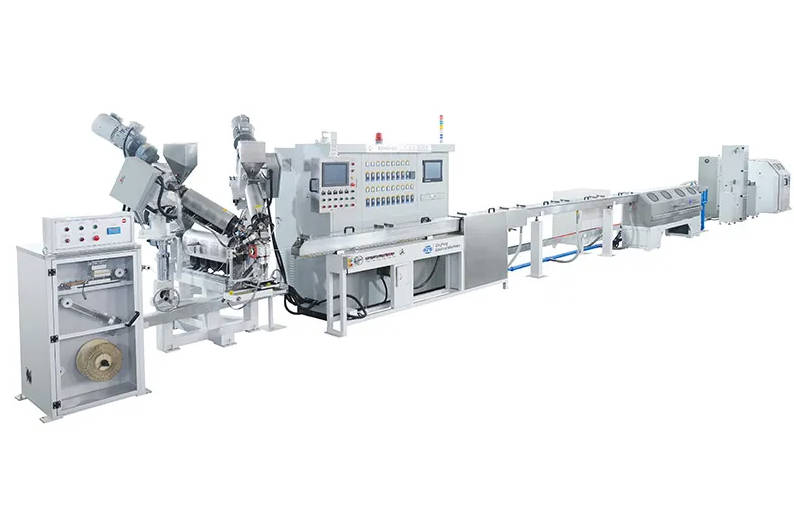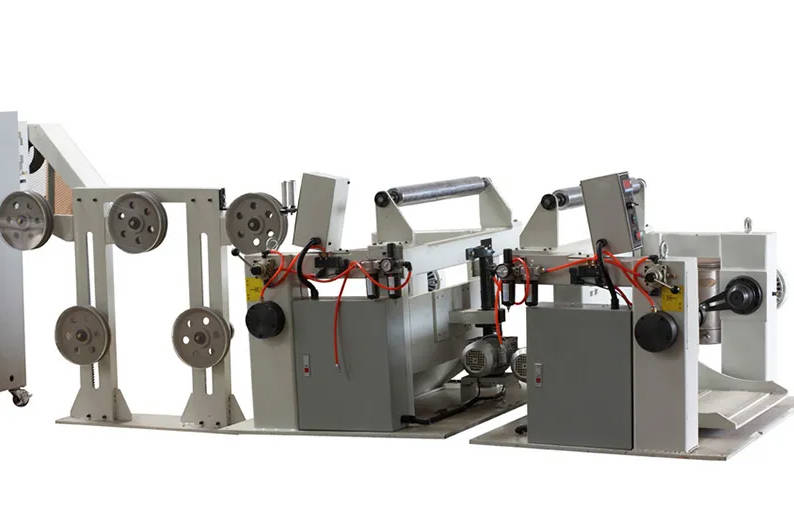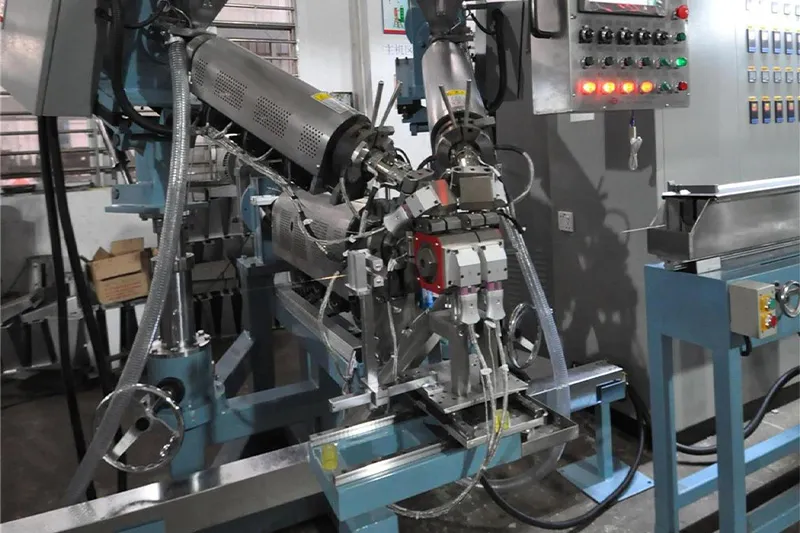
A cable taping machine should be selected according to the cable structure, tape material, required overlap, tension range, production speed and number of layers—not simply by the maximum rotational speed of the taping head.
The same machine configuration will not be suitable for every application. A high-frequency data cable using thin aluminum foil requires different handling from a fire-resistant power cable wrapped with mica tape. A flat cable, fine conductor, large shielded core and multi-layer cable also place different demands on the taping head, tension system and payoff arrangement.
Before requesting quotations, a wire or cable manufacturer should answer three questions:
- What function must the tape perform?
- What cable or conductor must pass through the machine?
- What tape coverage must remain stable at production speed?
These three answers determine most of the machine specification.
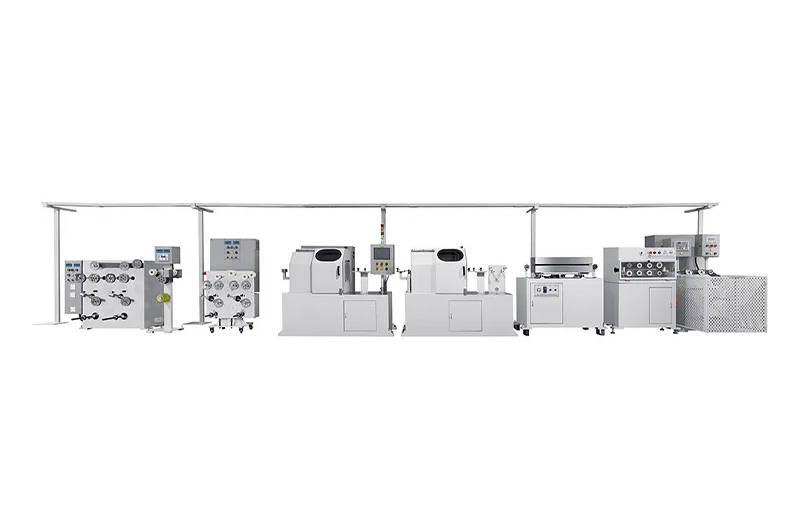
Manufacturers comparing equipment can review QingFeng SFS cable taping machine configurations for horizontal, vertical and multi-layer taping applications.
Decision 1: What Is the Tape Supposed to Do?
Tape is applied to cable for different technical reasons. The purpose of the layer determines the tape material, overlap, tension and machine layout.
A tape may provide:
- Electrical insulation
- Electromagnetic shielding
- Fire resistance
- Thermal protection
- Moisture or water blocking
- Mechanical binding
- Core stabilization
- Surface separation
- Identification
- Controlled dielectric structure
A machine selected for mechanical binding may not provide the precision required for high-frequency shielding. Likewise, a very high-speed machine designed for thin foil may not produce the tension range needed for thicker mica or textile tape.
Match the Application to the Taping Requirement
| Cable Application | Common Tape Function | Possible Tape Materials | Main Machine Priority |
| High-frequency data cable | Shielding and dielectric control | Aluminum foil, copper foil, Mylar or composite foil | Low vibration, stable overlap and low tape tension |
| Coaxial or twinax cable | Shielding and core stabilization | Foil, polyester or PTFE-based tape | Precise tension and consistent wrapping geometry |
| Fire-resistant power cable | Thermal and flame protection | Mica tape | Multiple layers, stable coverage and controlled tape breakage |
| Automotive cable | Shielding, abrasion protection or core binding | Foil, non-woven tape or polyester tape | Flexible configuration and repeatable production recipes |
| Aerospace wire | Heat resistance and lightweight insulation | Polyimide or PTFE tape | Fine tension adjustment and accurate layer positioning |
| Communication cable | Shielding and core assembly | Aluminum foil, polyester or water-blocking tape | High production speed and reliable synchronization |
| Multi-core power cable | Binding and structural stabilization | Non-woven, polyester or paper tape | Higher tape tension and cable handling capacity |
| Medical or flexible cable | Insulation and flexible core control | PTFE, polyester or specialized thin tape | Gentle handling and low-tension stability |
The first machine-selection criterion is the function of the tape layer, because that function defines the acceptable tension, overlap and surface condition.
Decision 2: What Exactly Will Pass Through the Machine?
Buyers often focus on tape width and machine speed while providing little information about the cable itself.
However, cable geometry directly affects:
- Required center height
- Guide-wheel design
- Payoff and take-up capacity
- Taping-head opening
- Pulling method
- Cable tension
- Maximum acceleration
- Machine vibration
- Finished layer stability
The equipment supplier should receive the complete product range rather than one nominal cable diameter.
Important cable information includes:
- Minimum and maximum conductor or cable diameter
- Round, flat or irregular construction
- Solid, stranded or assembled core
- Cable flexibility
- Surface sensitivity
- Minimum bending radius
- Reel dimensions
- Reel weight
- Required production speed
A machine that runs a round cable successfully may not handle a flat parallel cable with the same stability. Flat cables can twist, move laterally or respond differently to pulling tension.
Fine high-frequency cables may also be affected by small changes in guide angle or taping-head vibration.
Decision 3: Which Taping Machine Architecture Fits the Product?
There is no universal division that makes one machine orientation better in every application. Horizontal and vertical machines are selected according to cable structure, tape package, rotational balance, factory layout and production objective.
QingFeng SFS publicly lists horizontal single-, double- and triple-layer machines, vertical wrapping machines and high-frequency dual-layer lapping and taping equipment within its taping-machine portfolio.(dgqfmachine.com)
Horizontal, Vertical and High-Frequency Taping Machines
| Machine Type | Typical Strength | Main Limitation to Evaluate | Suitable Applications |
| Horizontal taping machine | Straight production path and flexible integration with payoff and take-up equipment | Floor length, rotating balance and cable support | General wire, foil wrapping, multi-layer cable and larger production lines |
| Vertical taping machine | Compact material path and suitable arrangement for certain tape packages | Height, operator access and product-specific tension behavior | Fine wire, specialized wrapping and space-sensitive layouts |
| High-frequency lapping machine | High precision, low tape tension and stable geometry | Requires strict vibration and synchronization control | Twinax, coaxial, high-speed data cable and thin foil applications |
| Concentric taping machine | Tape rotates around a relatively stable central cable path | Rotating mass and tape-package limitations | Insulation, shielding and multi-layer concentric cable structures |
| Multi-head taping line | Applies multiple layers in one production pass | More complex tension and speed synchronization | Fire-resistant cable, multi-layer shielding and combined tape structures |
The orientation of the machine should not be selected only from photographs or factory floor preference.
Ask the supplier to explain:
- Why the proposed orientation fits the cable
- How the cable remains centered
- How vibration is controlled
- How tape tension is generated
- How the machine behaves during acceleration
- How tape rolls are replaced
- How operators access the taping heads
- How the machine integrates with upstream and downstream equipment
Decision 4: Can the Machine Handle the Actual Tape Package?
Specifying only the tape material is not enough.
The supplier also needs:
- Tape width
- Tape thickness
- Roll outside diameter
- Roll inside diameter
- Roll weight
- Tape surface condition
- Tape tensile strength
- Whether the tape has adhesive
- Whether the tape stretches
- Whether the tape is supplied on a spool, pad or cross-wound package
- Required winding direction
A thin metal-polymer foil behaves differently from mica tape. A soft polymer tape may stretch under tension, while brittle tape may crack when bent sharply or accelerated too quickly.
Tape Properties and Their Machine Effects
| Tape Property | Possible Production Risk | Machine Feature to Evaluate |
| Very thin foil | Wrinkling, tearing and edge folding | Low-inertia payoff and fine tension adjustment |
| Brittle mica tape | Tape breakage and incomplete protection | Smooth acceleration and tape-break detection |
| Stretchable polymer tape | Changing width and unstable overlap | Closed-loop tension or controlled dancer system |
| Adhesive tape | Roller contamination and difficult cleaning | Accessible guides and controlled heating |
| Wide tape | Wrinkling and poor conformity | Guide design and tape-entry angle |
| Heavy tape roll | High rotating inertia | Motor capacity, balancing and braking control |
| Slippery tape surface | Lateral movement and unstable registration | Tape guidance and stable forming point |
| Heat-bondable tape | Incomplete adhesion | Preheating, infrared or light-wave heating |
QingFeng SFS states that its taping solutions can be configured for materials such as copper foil, aluminum foil, Mylar, cotton paper, mica, PTFE and polyimide, with optional heating and multiple synchronized taping units.(dgqfmachine.com)
The machine trial should use the buyer’s actual tape roll whenever possible, because the tape package affects inertia, tension and changeover performance.
Decision 5: How Will Overlap and Pitch Be Controlled?
Cable tape is normally applied in a spiral path. The relationship between cable speed and taping-head rotation determines the wrapping pitch.
The selected pitch then affects:
- Tape overlap
- Coverage
- Material consumption
- Finished diameter
- Flexibility
- Electrical performance
- Production speed
For example, 50% overlap means that each new tape turn covers approximately half of the previous turn. This creates two tape layers over most of the cable surface, although actual coverage still depends on tape behavior and cable geometry.
Do Not Treat Overlap as an HMI Number Only
A machine may display a target overlap value while the actual layer remains unstable because of:
- Cable-speed fluctuation
- Taping-head speed fluctuation
- Tape stretching
- Tape-roll diameter change
- Slipping puller belts
- Unstable forming position
- Cable movement
- Incorrect tape-entry angle
The buyer should ask how the machine calculates and maintains the relationship between:
- Taping-head rotation
- Linear cable speed
- Tape width
- Cable diameter
- Selected pitch or overlap
The machine should also maintain the forming point during acceleration and deceleration. A layer that is stable only at constant speed can create defects at every startup, stop or speed change.
Decision 6: How Does Tape Tension Change From Full Roll to Empty Roll?
Tape tension is one of the most important specifications in a cable taping machine.
When a tape roll is full, it has a larger diameter and higher rotating inertia. As the tape is consumed, the roll diameter becomes smaller. Without compensation, the tension applied to the tape can change throughout the production run.
This can cause:
- Wrinkles
- Tape breaks
- Uneven overlap
- Cable deformation
- Tape stretching
- Changes in electrical geometry
- Loose layers
- Excessive compression
Common Tension-Control Methods
| Tension Method | Main Characteristic | What the Buyer Should Check |
| Mechanical friction | Simple and economical | Repeatability from full roll to empty roll |
| Magnetic-powder control | Adjustable braking torque | Heat generation and low-tension sensitivity |
| Dancer control | Uses dancer position to compensate for tension changes | Response speed and mechanical inertia |
| Servo-controlled payoff | Actively controls tape delivery | Tuning, response and recipe repeatability |
| Torque-feedback control | Adjusts drive according to torque or tension feedback | Sensor accuracy and control stability |
| Load-cell measurement | Directly monitors tape force at a measurement point | Calibration, tape-path friction and response |
Not every application requires the most complex control system.
Thicker binding tape may tolerate a broader tension range, while thin foil for a high-frequency cable may require a low-inertia, highly responsive system.
The correct question is not whether the machine has “automatic tension control,” but what tension range it can hold with the buyer’s tape from a full roll to an almost empty roll.
A useful production trial should record tension or evaluate finished tape quality at:
- Full tape roll
- Half-used tape roll
- Nearly empty tape roll
- Low line speed
- Normal line speed
- Acceleration
- Deceleration
Decision 7: How Many Taping Heads Are Actually Required?
More taping heads can reduce the number of production passes, but they also increase:
- Machine cost
- Rotating components
- Synchronization complexity
- Setup time
- Tape-change workload
- Maintenance requirements
The number of heads should correspond to the cable structure.
Typical Configurations
| Configuration | Production Use | Main Buying Consideration |
| Single head | One insulation, binding or shielding layer | Lowest complexity and easier changeover |
| Dual head | Two layers or opposite-direction taping | Head synchronization and independent tension |
| Triple head | Multi-layer fire resistance or composite structure | Production speed and operator access |
| Four or more heads | Complex high-frequency or multi-layer cable | Integrated control, vibration and process monitoring |
| Modular head arrangement | Manufacturers with several product families | Expansion capability and head-change flexibility |
QingFeng SFS describes configurations supporting multiple synchronized taping units, including dual- and triple-head arrangements and systems with as many as five taping units depending on project requirements.(dgqfmachine.com)
For multi-layer production, specify whether the tape directions are:
- All in the same direction
- Alternating clockwise and counterclockwise
- Applied with different overlaps
- Applied at different tensions
- Heated or compacted between layers
Each head should have independently adjustable process parameters where the product requires them.
Decision 8: Which Supporting Units Belong in the Line?
A taping head alone does not form a complete production line.
The surrounding equipment controls cable tension, straightness, surface cleanliness, final pulling and reel winding.
A complete wire and cable taping system may include:
- Payoff
- Cable accumulator
- Straightening or cleaning unit
- Preheating system
- One or more taping heads
- Heating or bonding system
- Compacting unit
- Cooling or drying section
- Diameter or visual inspection
- Capstan or caterpillar puller
- Tape-break and cable-break detection
- Take-up
- PLC and HMI control
Payoff and Take-Up
Payoff and take-up systems should be selected for the actual cable reel size and weight.
Check:
- Loading method
- Reel clamping
- Braking or drive system
- Cable tension
- Traverse accuracy
- Maximum reel weight
- Minimum reel core diameter
- Operator safety
- Reel-change time
Capstan or Caterpillar Puller
The pulling unit establishes linear cable speed. Any slipping or unstable pressure can change the taping pitch.
The supplier should explain whether a capstan or caterpillar is more suitable for the product and how pulling force is controlled without marking the cable.
Heating and Compaction
Some tapes require heating, pressure or both to form a stable layer.
Possible equipment includes:
- Conductor preheater
- Infrared heating
- Light-wave heating
- Induction heating
- Heated forming tools
- Compacting rollers
- Cooling or drying units
Heating temperature should be selected from the tape and cable process requirements rather than from the maximum capacity of the heater.
Decision 9: Do Not Compare Machines by RPM Alone
Maximum taping-head speed is easy to place in a quotation, but it does not equal usable production output.
Actual line speed depends on:
- Cable diameter
- Tape width
- Required overlap
- Taping-head rotation
- Tape-roll stability
- Cable tension
- Number of layers
- Heating time
- Cooling time
- Inspection equipment
- Take-up capacity
A machine may reach a high rotational speed with a small tape roll and no cable, yet produce vibration or unstable overlap with the actual production package.
QingFeng SFS lists model-dependent taping speeds reaching up to approximately 3,500 RPM for some high-frequency configurations. This value should be evaluated together with cable size, tape package, overlap and acceptance criteria rather than treated as a standalone production guarantee.(dgqfmachine.com)
Ask for Three Speed Values
A useful quotation should distinguish between:
- Maximum mechanical speed
- Recommended continuous running speed
- Guaranteed production speed for the specified cable
The third value is the most important.
Use a Weighted Scorecard to Compare Quotations
Two quotations often look similar because both list PLC control, servo motors and automatic tension.
A weighted scorecard reveals whether the proposed equipment actually fits the project.
| Evaluation Area | Suggested Weight | Questions to Ask |
| Product compatibility | 25% | Has the machine been designed for the specified cable and tape? |
| Tension and overlap control | 20% | How are tension and pitch maintained during roll depletion and speed changes? |
| Demonstrated production speed | 15% | Can the supplier prove usable speed with the intended product? |
| Mechanical stability | 10% | How are rotating balance, vibration and cable alignment controlled? |
| Changeover and operation | 10% | How long does tape, tooling or product changeover require? |
| Inspection and data | 10% | Which defects, alarms and production parameters are recorded? |
| Service and documentation | 10% | Are manuals, spare-parts lists, training and remote support included? |
The exact weighting can be adjusted, but product performance should receive more importance than the number of optional components.
Common Buying Mistakes
Buying Before Testing the Tape
Tape behavior cannot be fully predicted from the material name. Width, thickness, roll construction, friction and tensile strength all affect production.
Using Only the Maximum Cable Diameter
A machine must also handle the minimum cable diameter and the complete reel range. The smallest product may require the most precise tension control.
Treating All Automatic Tension Systems as Equal
“Automatic” may describe a basic mechanical compensation system or a closed-loop servo system. Request a clear control explanation.
Ignoring Acceleration and Deceleration
Many taping defects occur during speed changes rather than at continuous speed.
Adding Online Inspection After the Machine Is Built
Vision inspection, diameter measurement and production-data integration may require mechanical space and software coordination. They should be defined during project design.
Accepting an Empty Machine Demonstration
A no-load high-speed run proves mechanical rotation, not cable quality.
Build a Complete RFQ Data Sheet
Provide the following information when requesting a quotation.
| RFQ Category | Information to Provide |
| Cable application | Data cable, power cable, automotive cable, fire-resistant cable or other product |
| Cable structure | Drawing showing conductor, insulation, shielding and tape layers |
| Cable dimensions | Minimum and maximum diameter, roundness and tolerance |
| Tape material | Exact material or supplier data sheet |
| Tape package | Width, thickness, roll OD, core ID and roll weight |
| Layer design | Number of layers, direction and sequence |
| Coverage | Required overlap, gap or butt wrapping |
| Tape tension | Target range or finished-product requirement |
| Production speed | Target continuous line speed |
| Reel information | Payoff and take-up reel dimensions and weight |
| Heating | Required heating or bonding method |
| Inspection | Tape break, cable break, diameter or vision inspection |
| Factory conditions | Voltage, frequency, floor space and air supply |
| Data requirements | Recipes, reports, alarms and parameter export |
| Acceptance test | Material, cable and pass/fail criteria for the trial |
Factory Acceptance Test: Use the Most Difficult Product
The FAT should reproduce production conditions with the actual or representative cable and tape.
Recommended FAT Sequence
- Verify tape-roll installation and threading
- Confirm payoff and take-up operation
- Run at low speed
- Adjust the forming point
- Confirm taping direction
- Measure overlap or gap
- Record tape performance with a full roll
- Increase to the agreed production speed
- Test acceleration and deceleration
- Observe tension as the tape roll becomes smaller
- Test tape-break detection
- Inspect cable surface and layer stability
- Review changeover procedure
- Retrieve recipes and alarm data
- Confirm continuous production for the agreed trial period
Product Characteristics to Challenge
Choose the product with one or more difficult conditions:
- Thinnest tape
- Widest tape
- Most brittle tape
- Smallest cable
- Flattest cable
- Highest overlap
- Lowest tape tension
- Highest production speed
- Heaviest tape roll
- Most layers
A successful FAT should prove finished cable quality at the agreed production speed, not merely confirm that the machine can reach its maximum RPM.
Selecting a Cable Taping Machine Supplier
A capable supplier should be able to connect every major machine component to a product requirement.
During technical discussions, ask the supplier to explain:
- Why this machine orientation is recommended
- How the tension range was selected
- How overlap is calculated
- How the head remains balanced
- What happens during tape-roll depletion
- How multiple heads are synchronized
- Which parts require regular maintenance
- Which tape and cable will be used during testing
- Which performance values will appear in the acceptance document
QingFeng SFS provides taping equipment for different cable structures and tape materials, including horizontal, vertical and high-frequency configurations. Its broader wire and cable machinery capabilities can also support the planning of connected payoff, pulling, inspection and take-up systems.
Conclusion
A cable taping machine is a process-control system rather than only a rotating head.
The cable determines the mechanical layout. The tape package determines inertia and tension. The required overlap determines the relationship between head rotation and line speed. The number of layers determines the head arrangement. The product specification determines the heating, inspection and data-control requirements.
The most suitable cable taping machine is the one that maintains the required tape coverage, tension and cable geometry throughout an actual production reel.
Before ordering equipment, prepare the cable drawing, tape-roll specification, required overlap, tension range, layer sequence, production speed and FAT criteria.
Wire and cable manufacturers can discuss a customized cable taping machine with QingFeng SFS based on their actual product structure and production target.
Frequently Asked Questions
What is a cable taping machine used for?
A cable taping machine applies one or more tape layers around a conductor, insulated wire or cable core. The tape may provide insulation, shielding, fire resistance, binding or mechanical protection.
How do I choose a cable taping machine?
Start with the cable diameter and structure, tape material and roll dimensions, required overlap, tape tension, number of layers and target production speed. These factors determine the machine orientation, head design and control system.
What is the difference between a horizontal and vertical wire taping machine?
The difference is the orientation of the cable path and taping assembly. The more suitable design depends on cable geometry, tape package, floor layout, required speed and tension-control method.
How is tape overlap controlled on a cable taping machine?
Overlap is controlled through the relationship between taping-head rotation, cable line speed, tape width and cable diameter. A synchronized control system adjusts the head and pulling speeds according to the selected taping pitch.
Why is constant tape tension important?
Stable tension prevents loose wrapping, wrinkles, tape stretching, cable deformation and tape breakage. It is particularly important when the tape-roll diameter changes during production.
Can one wire taping machine apply several tape layers?
Yes. Multi-head machines can apply two or more layers in one pass. Each head may require separate settings for tape direction, tension, overlap and speed.
What tape materials can a cable wrapping machine process?
Depending on machine configuration, materials may include aluminum foil, copper foil, polyester film, Mylar, paper, mica, PTFE, polyimide and non-woven tape.
Is maximum taping speed the same as production speed?
No. Maximum rotational speed is a mechanical value. Actual production speed depends on cable diameter, tape width, overlap, tension, number of layers and finished-product quality requirements.
What should be tested before buying a cable taping machine?
Test overlap, tape tension, surface quality, cable alignment, acceleration, deceleration, tape-roll depletion, tape-break detection, continuous running and reel winding using the intended cable and tape.