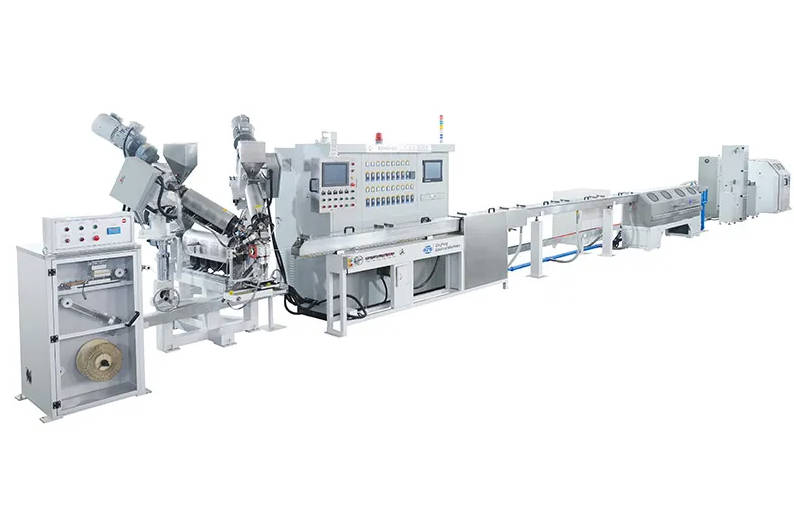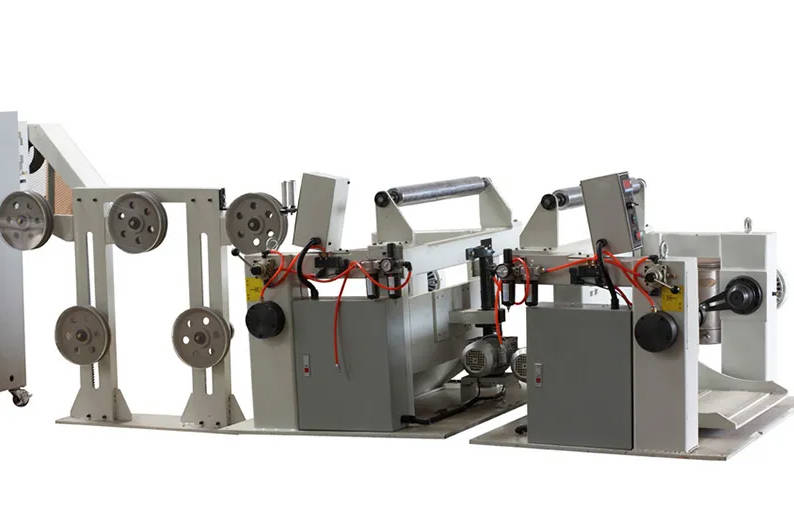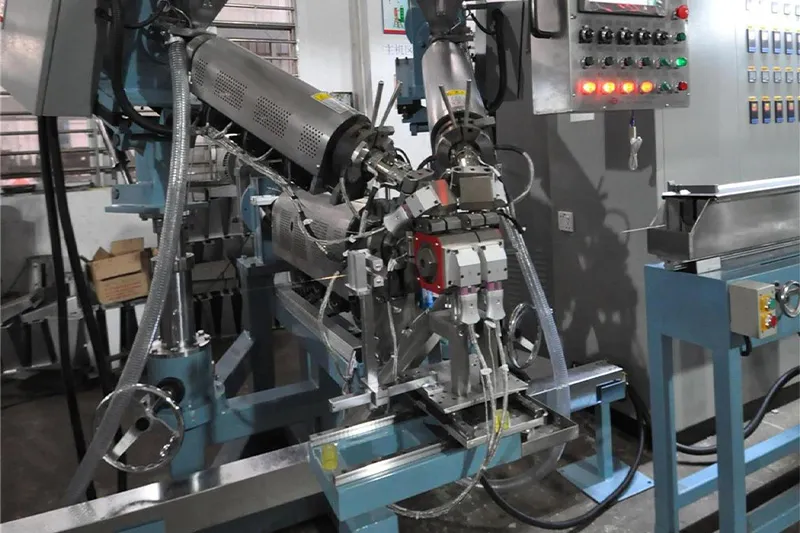
A double twist bunching machine should be selected according to the conductor material, individual wire diameter, number of strands, finished conductor size, lay length, take-up bobbin and required stable output. Maximum bow speed alone does not determine whether the machine is suitable.
Double-twist bunching is commonly used to combine multiple copper, aluminum or insulated wires into a flexible conductor or twisted cable structure. The rotating bow creates two twists for each revolution, allowing higher production efficiency than many conventional single-twist arrangements.
However, the fastest machine is not automatically the most productive investment.
A machine can operate at a high rotational speed while still producing:
- Unstable lay length
- Stretched individual wires
- Loose outer strands
- Poor conductor roundness
- Frequent wire breaks
- Excessive vibration
- Difficult reel changes
- Finished conductors that create problems during extrusion
The real purchasing objective is therefore not to maximize RPM. It is to maximize the number of acceptable meters produced per shift.
Cable manufacturers evaluating new capacity can review QingFeng SFS double twist bunching and twisting machines for copper wire, aluminum wire, insulated cores and different finished conductor ranges. QingFeng SFS currently lists European-type double twisters, bow-type machines, high-speed bunchers, cantilever machines and drum twisting equipment within this product category. (dgqfmachine.com)
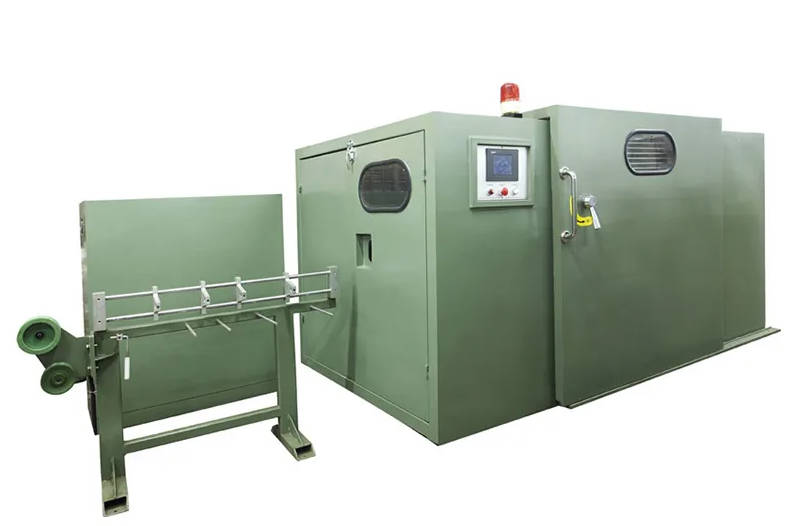
First Decision: Is Double-Twist Bunching Right for the Product?
Before comparing machine models, confirm that the double-twist process is appropriate for the required conductor or cable structure.
In a double-twist machine, the wires receive two twists during each complete rotation of the bow. This makes the process attractive for high-volume production of flexible conductors and relatively simple twisted constructions.
It is generally considered for applications such as:
- Flexible copper conductors
- Automotive wires
- Appliance cables
- Building wires
- Battery cables
- Electronic wires
- Small power cables
- Aluminum or copper-alloy conductors
- Twisted insulated cores
- Certain communication cable elements
It may be less suitable when the product requires independently controlled layer rotation, complex back-twist control, large numbers of insulated cores or specialized armored structures. Those products may require a planetary, drum or other cabling system.
Machine-Type Decision Matrix
| Product Requirement | Double-Twist Buncher | Single-Twist Machine | Planetary or Cage Machine |
| Flexible conductor bunching | Highly suitable | Suitable | Usually unnecessary |
| High production speed | Strong advantage | Moderate | Generally lower |
| Simple twisted pair or core | Suitable | Suitable | Usually unnecessary |
| Large multi-layer power cable | Limited suitability | Model-dependent | More suitable |
| Controlled back-twist | Usually limited | Configuration-dependent | Stronger capability |
| Armoring or complex cabling | Not normally the first choice | Limited | More suitable |
| Compact factory footprint | Often advantageous | Moderate | Requires more space |
| Frequent small-product production | Suitable with correct bobbin and setup | Suitable | May be unnecessarily complex |
Choose the twisting principle before choosing the machine size. A highly efficient double-twist buncher still becomes the wrong investment when the cable structure requires independent planetary motion or complex cabling control.
QingFeng SFS states that its broader bunching and twisting range includes double-twist, cantilever, drum and non-back-twist configurations, allowing the equipment type to be matched to different cable structures. (dgqfmachine.com)
Second Decision: Define the Finished Conductor Before the Machine
An equipment request that only states “we need a 630 bunching machine” is incomplete.
The same bobbin size may be used for very different products. The supplier needs to understand what enters the machine and what must leave it.
A useful product definition includes:
- Conductor material
- Number of individual wires
- Individual wire diameter
- Plated or bare wire
- Solid or insulated input wires
- Finished conductor diameter
- Finished cross-sectional area
- Required lay length
- S or Z twisting direction
- Target line speed
- Maximum acceptable elongation
- Required conductor roundness
- Take-up bobbin dimensions and weight
Translate the Product Into Machine Functions
| Product Information | Why It Matters to the Machine |
| Individual wire diameter | Determines guide design, tension range and break sensitivity |
| Number of strands | Influences payoff arrangement and finished geometry |
| Copper or aluminum | Changes tensile behavior, inertia and acceptable tension |
| Finished conductor size | Determines bow, die, pulling and take-up capacity |
| Lay length | Connects bow speed with take-up speed |
| Bobbin size | Determines machine frame, rotating mass and production length |
| Required flexibility | Influences strand arrangement and lay selection |
| Surface sensitivity | Determines guide material and wire path |
| Product change frequency | Determines recipe, tooling and changeover requirements |
| Target output | Determines usable rather than theoretical machine speed |
QingFeng SFS publishes several model ranges rather than one universal machine. Its European-type double twisting machines include 500, 630 and 800 configurations for different inlet wire, finished diameter, lay pitch and production-speed ranges. A separate QF-1250 bow-type model is intended for larger flexible copper, aluminum and insulated-wire constructions. (dgqfmachine.com)
The published ranges should be treated as an initial screening reference. Final selection should be confirmed against the buyer’s actual conductor drawing and material.
The Real Capacity Formula Is Not Just RPM
Buyers often compare double-twist machines by maximum bow rotation.
That number is important, but it does not independently determine line speed.
The production relationship includes:
- Bow rotational speed
- Two twists per bow revolution
- Required lay length
- Finished conductor diameter
- Bobbin inertia
- Payoff stability
- Wire tension
- Machine vibration
- Acceptable finished quality
A shorter lay length requires more twists per meter. Therefore, the same machine normally produces a shorter-lay conductor at a lower linear speed than a long-lay conductor.
Example of the Production Relationship
Suppose two products run on the same machine:
| Product | Required Lay Length | Relative Twists per Meter | Likely Linear-Speed Effect |
| Flexible conductor A | Short | High | Lower line speed |
| Flexible conductor B | Medium | Moderate | Medium line speed |
| Twisted core C | Long | Low | Higher possible line speed |
This is why a supplier should not promise one line speed for every product within the machine’s diameter range.
The guaranteed production speed should always be tied to a defined conductor, strand count and lay length.
When comparing quotations, request three separate values:
- Maximum mechanical bow speed
- Recommended continuous bow speed
- Demonstrated line speed for the specified product
Only the third value directly supports production planning.
Lay Length Is a Quality Parameter, Not Just a Setting
Lay length is the axial distance required for a strand to complete one full turn around the bunched conductor.
It affects:
- Conductor flexibility
- Finished diameter
- Strand stability
- Material consumption per meter
- Electrical resistance per finished length
- Behavior during insulation extrusion
- Fatigue performance
- Production speed
A shorter lay can produce a tighter, more flexible conductor, but it also increases the helical path traveled by each strand and may reduce line speed. An unnecessarily short lay can increase material use and mechanical stress.
A longer lay supports higher production speed but may create a looser conductor if it exceeds the suitable range for the structure.
What Causes Lay-Length Variation?
Even when the control panel displays a fixed value, actual lay length can vary because of:
- Unstable bow speed
- Take-up speed fluctuation
- Bobbin slippage
- Changing reel diameter
- Incorrect drive synchronization
- Mechanical backlash
- Sudden acceleration or deceleration
- Excessive wire tension
- Poor machine calibration
QingFeng SFS describes precision pitch control, automatic tension adjustment and recipe-based operating control as available functions within its bunching and twisting equipment range. (dgqfmachine.com)
During machine testing, lay length should be measured at:
- Low speed
- Normal production speed
- Acceleration
- Deceleration
- Early reel filling
- Mid-reel filling
- Near-full reel condition
An average value alone may hide short sections of unacceptable variation.
Wire Tension Determines Whether the Conductor Remains Intact
Every wire entering the bunching point should arrive with controlled tension.
If one strand is significantly tighter than the others, it may pull toward the center while looser strands move outward. This can create an irregular conductor that looks acceptable from a distance but performs poorly in later production.
Excessive Tension May Cause
- Wire stretching
- Reduced conductor cross-section
- Plating damage
- Frequent wire breaks
- Increased electrical resistance
- Poor flexibility
- Smaller finished diameter
- Uneven load between strands
Insufficient or Uneven Tension May Cause
- Loose outer strands
- Strand crossing
- Birdcaging
- Irregular conductor roundness
- Unstable bunching point
- Surface protrusions
- Problems entering the extrusion crosshead
The required tension depends on:
- Material
- Wire diameter
- Tensile strength
- Plating
- Number of strands
- Payoff package
- Machine acceleration
- Finished conductor structure
Fine copper wire should not be controlled with the same tension range as a larger aluminum strand.
A suitable wire bunching machine must maintain enough tension to stabilize the strand path without permanently stretching the conductor.
Bobbin Size Is a Production Decision
Buyers sometimes select the largest take-up bobbin because it holds more cable and reduces reel changes.
A larger bobbin can improve continuous production length, but it also introduces:
- Greater rotating mass
- Higher acceleration load
- More stored material value
- Longer time to reach a full reel
- Higher consequences if a defect is discovered late
- Increased machine footprint
- More demanding reel-loading requirements
A smaller bobbin may suit:
- Short production orders
- Frequent product changes
- Fine conductors
- Limited factory space
- Lower reel-handling capacity
A larger bobbin may suit:
- Long continuous runs
- Larger conductor sizes
- High-volume production
- Reduced reel-change frequency
- Downstream processes requiring long lengths
Bobbin Selection Checklist
| Question | Why It Matters |
| What length is required on each finished reel? | Determines whether the bobbin supports downstream production |
| How frequently will products change? | Large bobbins may increase leftover material and changeover time |
| Can operators safely load the full reel? | Determines whether lifting or automatic loading is required |
| What reel sizes are used downstream? | Avoids unnecessary rewinding |
| How does full-reel inertia affect control? | Influences motor, braking and tension design |
| How is traverse controlled? | Determines winding density and reel quality |
| Can the machine accept several bobbin sizes? | Improves product flexibility |
The machine quotation should specify both bobbin dimensions and permitted full-reel weight.
Finished Conductor Quality Must Be Defined in Measurable Terms
“Good bunching quality” is too vague for equipment acceptance.
The buyer and supplier should agree on measurable product criteria.
Recommended Quality Indicators
| Quality Indicator | What It Reveals |
| Finished outside diameter | Overall bunching consistency |
| Diameter variation | Process stability over the reel |
| Lay length | Synchronization between bow and take-up |
| Conductor roundness | Strand distribution and forming quality |
| Strand damage | Suitability of guides and wire path |
| Wire elongation | Whether tension is excessive |
| Electrical resistance | Material continuity and conductor cross-section |
| Surface protrusions | Loose strands or poor forming |
| Wire-break frequency | Process reliability |
| Reel winding | Traverse and take-up stability |
A finished conductor may fall within the maximum diameter but still be unacceptable because of loose strands or local protrusions.
For products that will be insulated, roundness and surface stability are particularly important. An irregular conductor can affect:
- Insulation concentricity
- Minimum wall thickness
- Finished wire diameter
- Spark-test performance
- Material consumption
- Extrusion speed
The bunching and extrusion processes should therefore be evaluated as connected production stages rather than independent machines.
Match the Machine Configuration to the Product Family
Flexible Copper Conductors
Priorities typically include:
- Stable fine-wire payoff
- Low wire tension
- Short or medium lay control
- High production speed
- Good conductor roundness
- Smooth guides
- Rapid wire-break detection
Aluminum and Aluminum-Alloy Conductors
These products may require:
- Material-specific tension
- Careful forming
- Controlled bending radius
- Suitable guide surfaces
- Sufficient bow and drive capacity
- Verification of strand deformation
Insulated Core Twisting
Twisting PVC-, PE- or other insulated cores introduces different risks:
- Surface marking
- Core deformation
- Insulation stretching
- Color abrasion
- Unequal core length
- Pair geometry variation
The machine may require larger guides, lower contact pressure or a different wire path compared with bare conductor bunching.
Automotive and Battery Cable Conductors
The main purchasing priorities may include:
- Flexible large-section conductor production
- Repeatable short lay
- High-volume output
- Stable reel winding
- Low wire damage
- Recipe traceability
- Fast product changeover
QingFeng SFS identifies automotive, power, electronics, telecommunications and renewable-energy applications within its bunching and twisting machine portfolio. (dgqfmachine.com)
Compare Quotations by Cost per Acceptable Meter
The lowest machine price does not necessarily produce the lowest conductor cost.
A useful investment comparison should include:
- Machine purchase price
- Expected acceptable line speed
- Scrap during startup
- Wire-break downtime
- Reel-change time
- Product-change time
- Operator requirement
- Energy consumption
- Maintenance intervals
- Spare-part cost
- Floor-space requirement
- Expected machine utilization
Procurement Scorecard
| Evaluation Area | Suggested Weight | Main Question |
| Product compatibility | 25% | Can the machine run the complete specified product range? |
| Finished conductor quality | 20% | Can it hold lay, diameter, roundness and strand condition? |
| Demonstrated output | 15% | What stable speed has been proven with the actual product? |
| Tension and drive control | 10% | How are payoff, bow and take-up synchronized? |
| Bobbin and reel handling | 10% | Does the machine match production and downstream reel needs? |
| Changeover and operation | 5% | How quickly can products and reels be changed? |
| Maintenance and spare parts | 5% | Which components wear and how quickly can they be replaced? |
| Safety and documentation | 5% | Are guards, manuals, drawings and training included? |
| Supplier support | 5% | Can the supplier assist with trials, installation and troubleshooting? |
Compare machines by the cost and consistency of saleable conductor, not by purchase price or maximum RPM in isolation.
Hidden Details That Should Appear in the Quotation
A technically useful quotation should identify:
- Machine model
- Suitable wire range
- Maximum finished diameter
- Maximum conductor cross-section
- Number of input wires
- Lay-length range
- S and Z direction availability
- Bow-speed range
- Product-specific line speed
- Take-up bobbin dimensions
- Maximum reel weight
- Payoff configuration
- Tension-control method
- Traverse-control method
- Motor and drive brands
- PLC and HMI functions
- Recipe capacity
- Wire-break detection
- Safety enclosure
- Noise-control measures
- Included tooling
- Installation scope
- Training
- Spare-parts package
- Acceptance-test conditions
Avoid quotations that list only machine dimensions, motor power and maximum rotational speed.
Prepare a Product-Based RFQ
| RFQ Category | Information to Provide |
| Product application | Automotive wire, building wire, battery cable, electronic cable or another product |
| Material | Copper, tinned copper, aluminum, alloy or insulated core |
| Strand construction | Number of wires and strand arrangement |
| Individual wire | Diameter, tolerance, tensile condition and plating |
| Finished conductor | Diameter, cross-section and allowable tolerance |
| Lay length | Target and acceptable range |
| Direction | S, Z or both |
| Production speed | Target stable line speed |
| Payoff package | Bobbin dimensions and weight |
| Take-up bobbin | Required size, capacity and full weight |
| Quality criteria | Roundness, elongation, resistance, surface and lay tolerance |
| Product range | Smallest and largest products |
| Factory conditions | Voltage, frequency, space and lifting facilities |
| Data requirements | Recipes, alarms, reports and access control |
| FAT material | Wire quantity and product to be tested |
QingFeng SFS offers wire and cable bunching machine configurations across several machine architectures and published model sizes. The company also states that customer-provided wire can be used for pre-purchase process trials to evaluate pitch, tension and production performance. (dgqfmachine.com)
Factory Acceptance Test: Challenge the Weakest Operating Point
A FAT should not consist of running an empty bow at maximum speed.
It should prove that the machine can produce an acceptable conductor from the beginning to the end of a reel.
Recommended FAT Sequence
- Inspect the supplied payoff and take-up bobbins
- Thread all input wires through the intended wire path
- Confirm individual wire tension
- Start at low speed
- Establish the required lay length
- Measure finished diameter and roundness
- Increase to the agreed production speed
- Record bow speed and line speed
- Inspect the conductor for loose or crossed strands
- Test acceleration and deceleration
- Test wire-break detection
- Observe tension as the take-up reel fills
- Verify traverse and reel winding
- Measure lay length at several reel positions
- Test S and Z direction where required
- Retrieve recipes and alarm records
- Demonstrate bobbin changeover
- Run continuously for the agreed test period
Select a Challenging Test Product
The trial should include the product most likely to expose machine limitations:
- Finest individual wire
- Largest conductor
- Shortest lay
- Longest lay
- Highest strand count
- Most stretch-sensitive material
- Highest required line speed
- Largest take-up reel
- Insulated core most sensitive to surface marking
A supplier may prefer to test an easy product, but an easy demonstration does not prove the full purchasing requirement.
Questions to Ask During Supplier Evaluation
Ask the supplier:
- Why is this machine size recommended?
- Which product limits the machine range?
- What output has been demonstrated for our lay length?
- How is lay length synchronized?
- How is wire tension adjusted?
- What happens as the take-up reel becomes heavier?
- How is bobbin diameter compensation handled?
- How are vibration and bow balance controlled?
- Which guides contact the wire?
- How quickly can the bobbin be changed?
- Which components require regular replacement?
- What product will be used during the FAT?
- Which conductor measurements will appear in the acceptance report?
A capable supplier should connect each machine feature to a finished-product requirement rather than simply present a longer component list.
Conclusion
Buying a double twist bunching machine is a production-capacity decision, not only a machinery purchase.
The correct process is to:
- Confirm that double-twist technology fits the cable structure
- Define the complete input and finished conductor range
- Match machine size to lay length, output and bobbin requirements
- Specify measurable conductor-quality criteria
- Compare suppliers by acceptable output rather than maximum RPM
- Test the most difficult product before accepting the machine
The most suitable double twist bunching machine is the one that maintains lay length, strand integrity, conductor geometry and reel quality at the required production speed.
Cable manufacturers can review QingFeng SFS high-speed bunching and twisting equipment or explore its broader wire and cable manufacturing machinery when planning a connected conductor, extrusion and cable-production process.
Frequently Asked Questions
What is a double twist bunching machine?
A double twist bunching machine combines multiple wires into a bunched conductor or twisted cable structure. The wires receive two twists during each bow revolution, supporting relatively high production efficiency.
What is the difference between bunching and stranding?
Bunching generally combines wires without arranging them into precisely defined concentric layers. Concentric stranding places wires in controlled layers around a center and may require planetary or rigid stranding equipment.
How do I choose the correct double twist machine size?
Select the machine according to individual wire diameter, strand count, finished conductor diameter, cross-sectional area, lay length, required line speed and take-up bobbin size.
Does higher RPM always mean higher wire bunching output?
No. Actual output also depends on required lay length, conductor size, wire tension, bobbin inertia and acceptable finished quality. Short lay lengths normally require more twists per meter.
Why is lay length important in flexible conductor bunching?
Lay length influences conductor flexibility, diameter, strand stability, material usage and production speed. It must remain consistent throughout the reel.
What causes loose strands in a bunched conductor?
Common causes include uneven payoff tension, incorrect lay length, unstable forming, conductor movement, poor guide alignment and changes in take-up speed.
Can one bunching machine process copper and aluminum wire?
Some machines can process both materials, but their tension, forming and drive requirements differ. Compatibility should be confirmed using the actual wire sizes and material conditions.
What bobbin size should a cable manufacturer choose?
The bobbin should provide sufficient production length without creating unnecessary inertia, changeover difficulty or mismatch with downstream equipment. Reel weight and loading method must also be considered.
How should a double twist bunching machine be tested?
Test it with the intended wire, strand count, lay length and bobbin. Measure finished diameter, lay consistency, roundness, wire elongation, surface condition and reel winding at the agreed production speed.
What information is needed for a wire bunching machine quotation?
Provide the material, wire diameter, strand count, finished conductor size, lay length, production speed, payoff package, take-up bobbin and required quality tolerances.