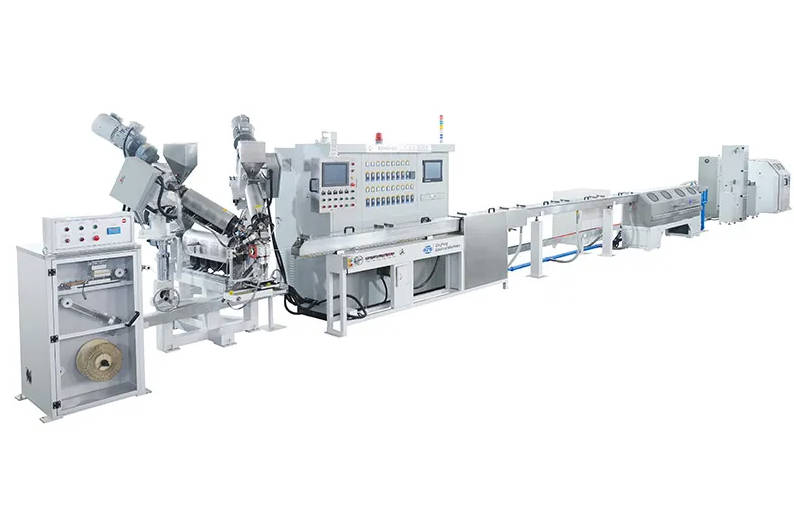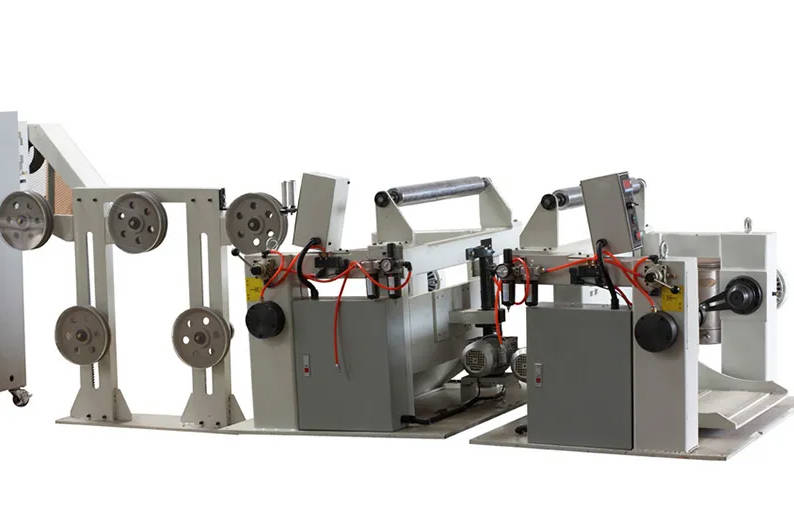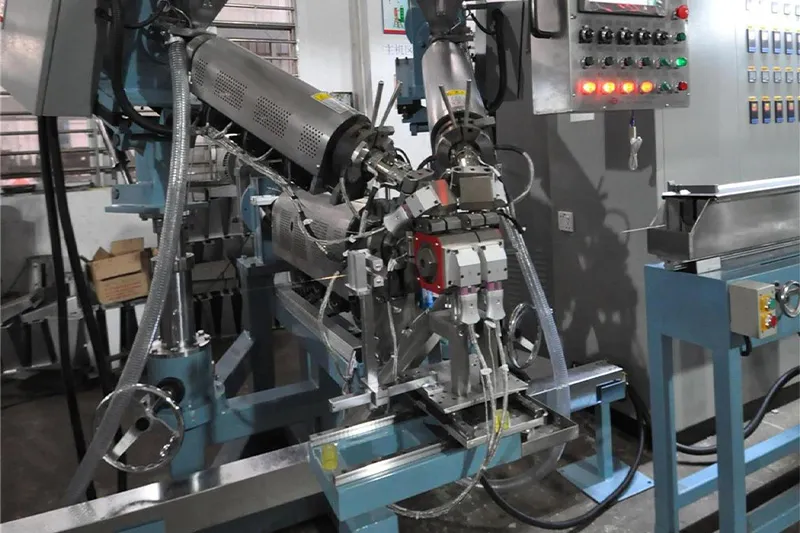
Choose a single-layer taping machine when one tape layer can provide the required insulation, shielding, binding or protection. Choose a double-layer cable taping machine when the cable needs two functional layers, greater coverage redundancy, opposite-direction wrapping or two different tape materials in one production pass.
The important point is that two layers are not automatically better.
A second taping head increases equipment complexity, setup time, tape consumption and process-control requirements. If the cable specification only requires one stable tape layer, a well-controlled single-layer machine may be the more efficient choice.
On the other hand, using a single-layer machine for a cable that consistently requires two wraps may force the factory to run the product twice. That adds reel handling, labor, floor movement and the possibility that the first layer shifts before the second pass.
The correct decision therefore begins with the cable construction—not with the number of taping heads available on the machine.
QingFeng SFS develops wire and cable manufacturing machinery for different cable structures, including production processes where one or multiple material layers must be applied with controlled tension and speed.
Start With a Different Question: What Must Each Tape Layer Do?
Do not begin with:
Should we buy a single-head or double-head machine?
Begin with:
What function does Layer 1 perform, and what problem is Layer 2 supposed to solve?
Typical tape functions include:
- Electrical insulation
- Electromagnetic shielding
- Fire-resistant insulation
- Mechanical binding
- Core stabilization
- Moisture protection
- Surface separation
- Dielectric control
- Thermal protection
- Preparation for later extrusion or jacketing
If the second layer has no clearly defined function, it may simply increase cost and cable diameter.
Example A: One Foil Shielding Layer
A cable may only require one aluminum or copper-based foil layer around an insulated core.
If the required shielding coverage, overlap and dimensional stability can be achieved in one pass, a single-layer taping machine may be sufficient.
The main priorities become:
- Stable tape tension
- Accurate overlap
- Low wrinkle rate
- Consistent cable speed
- Smooth tape edges
Adding another taping head does not automatically improve the product.
Example B: Foil Plus Protective Film
Another cable may require:
- A metallic foil for shielding
- A polymer film for mechanical protection or stabilization
Now the second layer has a separate job.
Running both layers through one dual-head machine may simplify production because the foil can be covered immediately before handling or take-up disturbs it.
Example C: Two Layers for Redundant Coverage
Fire-resistant or specialized insulation systems may require multiple tape layers so that a local weakness in the first wrap does not directly create a weak path through the complete tape system.
In this case, double-layer taping is part of the cable design rather than an optional production upgrade.
The second taping layer is valuable only when it provides an additional function, additional coverage or a measurable production advantage.
The Basic Difference Is Simple—but the Production Effect Is Not
A single-layer taping machine applies one tape layer during the production pass.
A double-layer cable taping machine uses two taping heads so that two layers can normally be applied continuously.
However, the difference affects much more than the number of tape rolls.
| Comparison | Single-Layer Taping Machine | Double-Layer Taping Machine |
| Number of tape layers per pass | One | Two |
| Number of taping heads | One | Usually two |
| Machine complexity | Lower | Higher |
| Setup time | Shorter | Longer |
| Tension systems | One main tape control loop | Two independently controlled tape paths |
| Tape direction options | One wrapping direction | Same or opposite directions depending on design |
| Process synchronization | Simpler | More demanding |
| Changeover | Faster | More parameters to reset |
| Initial investment | Generally lower | Generally higher |
| Suitable product range | Simpler tape constructions | Cables requiring two functional layers |
| Production advantage | Efficient when only one layer is needed | Can eliminate a second production pass |
This comparison already reveals the key point:
Single-layer equipment minimizes unnecessary complexity; double-layer equipment reduces repeated processing when two layers are genuinely required.
Scenario 1: When a Single-Layer Taping Machine Is the Better Choice
A single-layer machine is often the more practical solution when the product structure is simple and stable.
Typical situations include:
- One shielding foil
- One binding tape
- One insulation tape
- One separator layer
- One outer protective wrap
- Product development with frequent material changes
- Low- or medium-volume production with many SKUs
Simpler Process Control
With only one tape path, the operator has fewer variables to coordinate.
The main control variables include:
- Tape tension
- Taping-head speed
- Cable speed
- Tape angle
- Overlap
- Forming point
If a defect appears, root-cause analysis is relatively direct.
For example, if overlap becomes unstable, the production team only needs to investigate one tape tension system and one taping head.
Faster Changeover
Factories producing many cable types may frequently change:
- Tape material
- Tape width
- Cable diameter
- Overlap
- Wrapping direction
- Production speed
Every additional taping head creates another tape path that may need adjustment.
For high-mix, low-volume manufacturing, machine simplicity can have real economic value.
Lower Complexity Does Not Mean Lower Quality
A single-layer machine can still require precise control.
For fine cable, foil shielding or high-frequency products, the quality of one tape layer may depend heavily on:
- Low and stable tape tension
- Smooth acceleration
- Accurate cable pulling
- Consistent wrapping pitch
- Low taping-head vibration
Using only one layer does not reduce the need for precision.
Scenario 2: When Double-Layer Taping Saves an Entire Production Pass
Now consider a product that always requires two tape layers.
A factory using a single-layer machine may need to:
- Apply Layer 1
- Wind the cable onto a reel
- Remove the reel
- Return it to the payoff
- Set up the machine again
- Apply Layer 2
- Wind the finished product again
A double-layer machine may combine these steps into one continuous operation.
The production benefit is not simply “two tapes at once.”
It can reduce:
- Intermediate reel handling
- Operator intervention
- Work-in-process inventory
- Factory-floor movement
- Risk of damaging Layer 1
- Production scheduling complexity
One Pass vs Two Passes
| Production Activity | Single Machine, Two Passes | Double-Layer Machine |
| First-layer taping | Required | Required |
| Intermediate take-up | Required | Usually avoided |
| Reel handling | Required | Reduced |
| Second setup | Required | Usually integrated |
| Second-layer taping | Second production pass | Same production pass |
| Layer-to-layer synchronization | Separate | Continuous |
| Risk of first-layer movement | Higher during handling | Lower when immediately covered |
| Labor involvement | Higher | Potentially lower |
| Equipment complexity | Lower | Higher |
For a stable high-volume product, avoiding the second pass can make a double-layer cable taping machine economically attractive even when the initial equipment cost is higher.
Same-Direction or Opposite-Direction Double Taping?
Buying two taping heads creates another decision:
Should both layers wrap in the same direction, or should they run in opposite directions?
There is no universal answer.
It depends on the cable design.
Same-Direction Wrapping
Both heads apply tape clockwise or both counterclockwise.
This may be used where the cable design calls for:
- Similar spiral geometry
- Layer build-up in one direction
- Specific material orientation
- Simplified tape behavior
However, if both layers have similar pitch and positioning, weak areas can potentially follow similar paths.
Opposite-Direction Wrapping
One layer wraps clockwise and the next counterclockwise.
This creates crossing spiral patterns.
Possible benefits include:
- Better cross-coverage
- Improved mechanical stabilization
- Reduced chance of aligned tape edges
- Balanced layer structure in some cable constructions
However, opposite-direction wrapping requires the two heads to remain independently controlled.
The operator may need separate settings for:
- Head speed
- Direction
- Tape tension
- Overlap
- Tape angle
A double-layer machine should not simply duplicate the first taping head; each layer should be adjustable according to its own function.
Double Layer Does Not Mean Double the Same Tape
One of the strongest reasons to choose a double-layer taping machine is the ability to process two different materials.
For example:
- Metallic foil + polyester film
- Mica tape + protective tape
- PTFE tape + another insulation layer
- Binding tape + shielding tape
- First dielectric film + second stabilization layer
These materials may have very different mechanical behavior.
Different Tapes Need Different Settings
| Tape Property | Layer 1 Requirement | Layer 2 Requirement |
| Tape width | May be narrow | May be wider |
| Tape thickness | Thin | Thicker |
| Tension | Low | Moderate |
| Overlap | Higher | Lower |
| Direction | Clockwise | Counterclockwise |
| Heating | Not required | May be required |
| Stretch sensitivity | High | Low |
| Roll weight | Light | Heavier |
This means both taping heads should not necessarily share identical tension or speed settings.
A machine that mechanically provides two tape positions but does not allow useful independent process adjustment may limit the advantage of double-layer production.
The Hidden Challenge of Double-Layer Machines: Layer 2 Sees a Different Cable
The second head does not wrap the same surface as the first head.
Head 1 sees the original cable core.
Head 2 sees:
Original cable + Layer 1
That changes the effective outside diameter and surface condition.
This matters because the second layer may experience:
- A larger wrapping diameter
- Different surface friction
- A different forming angle
- A different required pitch
- Different tape sliding behavior
If the first layer is uneven, the second head may amplify the problem.
For example:
Unstable Layer 1 → changing cable diameter → unstable Layer 2 forming point → changing overlap → irregular finished cable
This is why the first taping head remains critical even when the second head eventually covers it.
Do Two Layers Automatically Improve Shielding?
Not necessarily.
For shielding applications, performance depends on the complete cable design.
A second tape layer may improve coverage when it:
- Covers gaps in the first layer
- Adds another conductive or shielding structure
- Protects a fragile foil
- Stabilizes the underlying tape before later processing
But two poorly controlled layers can still create problems.
Examples include:
- Wrinkles trapped between layers
- Aligned gaps
- Excessive cable diameter
- Uneven surface
- More tape consumption without useful performance gain
Before adding a second layer, define what electrical or mechanical requirement the layer must improve.
Do Two Layers Automatically Improve Fire Resistance?
Again, not automatically.
Multiple high-temperature or fire-resistant tape layers can create additional coverage and redundancy, but final cable performance also depends on:
- Tape material
- Tape construction
- Overlap
- Conductor geometry
- Insulation
- Fillers
- Sheath
- Cable assembly
- Manufacturing consistency
Two layers provide value when the cable has been designed and validated around a multi-layer tape structure.
Adding an extra layer without considering finished diameter, flexibility and downstream extrusion can create manufacturing problems.
Production Speed: Two Heads Can Increase Output but Also Create a New Bottleneck
A double-layer machine may eliminate a second production pass, but that does not mean it can automatically run at the same speed as a single-head configuration.
The complete line must operate at a speed acceptable to both tape systems.
Imagine:
- Layer 1 can run stably at a relatively high speed
- Layer 2 uses a fragile tape that breaks at that speed
The entire line must normally operate within the stable window of Layer 2.
This means the maximum usable line speed is determined by the more demanding process.
Factors That Can Limit Double-Layer Speed
- Tape-roll inertia
- Fragile tape
- Different tape widths
- Low permitted tension
- Higher required overlap
- Heating requirements
- Taping-head vibration
- Cable pulling stability
- Acceleration response
The production advantage of double-layer taping should be calculated from completed two-layer cable output—not from the maximum RPM of either individual head.
What Happens When One Layer Breaks?
This is an important purchasing question that is sometimes overlooked.
Suppose Head 1 continues running but the tape on Head 2 breaks.
What does the machine do?
Possible responses include:
- Immediate machine stop
- Alarm only
- Automatic slowdown
- Defect marking
- Operator intervention
For most controlled production processes, continuing to manufacture cable without the required second layer would create unnecessary scrap.
Therefore, buyers should evaluate:
- Tape-break detection on each head
- Alarm logic
- Line-stop response
- Fault history
- Restart procedure
The control system should make it clear which taping head caused the fault.
Incoming Cable Geometry Still Matters
Even a highly precise double-layer taping machine cannot fully compensate for an unstable incoming cable core.
If the cable entering Head 1 has:
- Loose strands
- Changing diameter
- Irregular twisting
- Ovality
- Surface protrusions
- Unstable tension
then both tape layers can inherit the variation.
For cables made from twisted conductors or assembled cores, manufacturers should also control the upstream bunching and twisting process so that the cable enters the taping section with repeatable geometry.
A stable upstream core makes both single-layer and double-layer taping easier to control.
The Cost Comparison Should Include More Than Machine Price
A single-layer taping machine generally has fewer components.
That may mean:
- Lower initial investment
- Simpler maintenance
- Fewer tape-tension systems
- Faster setup
- Lower spare-parts complexity
But if every major product requires two tape layers, the factory may spend more over time on:
- Second production passes
- Additional operators
- Reel handling
- Additional floor movement
- Longer manufacturing lead time
- Work-in-process inventory
Investment Comparison
| Cost Factor | Single-Layer Machine | Double-Layer Machine |
| Initial equipment cost | Lower | Higher |
| Control complexity | Lower | Higher |
| Maintenance | Simpler | More components |
| Setup | Faster | More parameters |
| Two-layer product passes | Usually two | Usually one |
| Intermediate handling | Higher | Lower |
| High-volume dual-layer efficiency | Lower | Higher potential |
| Mixed single-layer production | Very efficient | May leave one head unused |
| Future multi-layer capability | Limited | Greater |
The economic decision therefore depends heavily on production mix.
Use Your Product Mix to Choose
Consider the percentage of orders that actually require two layers.
Factory A: Mostly Single-Layer Products
Suppose:
- 80% of products require one layer
- 20% require two layers
A single-layer machine may still be appropriate if volumes are moderate and the second pass is manageable.
Machine simplicity is used on most orders.
Factory B: Mostly Double-Layer Products
Suppose:
- 70% of production requires two layers
- Long batches are common
- Product structures are standardized
A dual-layer configuration deserves stronger consideration because the factory repeatedly avoids the second production pass.
Factory C: Rapidly Expanding Product Range
A manufacturer may currently produce single-layer products but expect to enter:
- High-frequency data cables
- Fire-resistant cables
- Multi-layer insulation structures
- New shielded cable designs
In that situation, future product architecture may justify a multi-head machine even if one head is not always used today.
A Simple Selection Matrix
| Production Situation | Recommended Direction |
| Only one tape layer required | Single-layer |
| Small batches and frequent changeovers | Single-layer often simpler |
| Two layers always required | Double-layer |
| Two different tape materials in one cable | Double-layer |
| Opposite-direction wrapping required | Double-layer |
| High-volume dual-layer product | Double-layer |
| Product development with uncertain layer structure | Depends on future product plan |
| Very sensitive tape requiring independent process control | Evaluate each head separately |
| First layer needs inspection before second layer | Separate passes may still be useful |
| Limited investment budget | Single-layer may be easier to start with |
What to Include in the RFQ
Do not send a supplier only this message:
“Please quote one double-layer cable taping machine.”
Provide enough information to determine whether two heads are actually necessary.
Cable Information
- Cable application
- Cable construction drawing
- Minimum and maximum cable diameter
- Round or flat structure
- Required finished diameter
Layer 1
- Tape material
- Tape width
- Tape thickness
- Roll size
- Required overlap
- Wrapping direction
- Target tension
Layer 2
Provide the same information separately.
Do not assume Layer 2 uses the same parameters.
Production Requirements
- Target line speed
- Required daily or annual capacity
- Product change frequency
- Payoff reel size
- Take-up reel size
- Factory voltage
- Available floor space
Control Requirements
- Independent head speed control
- Independent tension control
- Tape-break detection
- Recipe storage
- Alarm history
- Heating if required
- Online measurement if required
QingFeng SFS provides cable manufacturing equipment that can be configured according to different cable structures, production processes and capacity requirements.
How to Test Single- and Double-Layer Configurations Before Purchase
Do not conduct a machine trial using only one easy tape and one stable speed.
For a double-layer project, both heads should operate together.
Recommended FAT Sequence
- Install the actual or representative Layer 1 tape
- Install the Layer 2 tape
- Confirm both tape paths
- Run Head 1 independently
- Inspect first-layer overlap
- Run Head 2 independently where possible
- Run both heads simultaneously
- Confirm wrapping directions
- Measure each layer’s tension
- Increase to target production speed
- Test acceleration
- Test deceleration
- Simulate a Layer 1 tape break
- Simulate a Layer 2 tape break
- Verify alarm and machine response
- Inspect finished outside diameter
- Check wrinkles and gaps
- Confirm reel winding quality
Test More Than the Final Surface
A smooth-looking second layer can hide defects underneath.
If possible, stop production and remove sections of Layer 2 to inspect Layer 1.
Check:
- Actual overlap
- Wrinkles
- Tape break damage
- Layer movement
- Surface consistency
This is especially important during machine acceptance.
A double-layer machine should prove that both layers remain independently controlled—not merely that the finished outer surface looks acceptable.
Frequently Asked Questions
What is the difference between a single-layer and double-layer cable taping machine?
A single-layer machine applies one tape layer in a production pass, while a double-layer cable taping machine uses two taping heads to apply two layers continuously.
Is a double-layer cable taping machine always better?
No. If the cable only requires one tape layer, the second head may add unnecessary cost and complexity. Double-layer equipment is more valuable when two layers are consistently required.
Can a double-layer taping machine use two different tape materials?
Yes, depending on machine configuration. Each head can be set up for a different tape material, width, tension, overlap or wrapping direction.
Can two tape layers wrap in opposite directions?
Yes. Double-layer systems can be configured for opposite wrapping directions when required by the cable design. Each head should have suitable independent control.
Why use two tape layers on a cable?
Two layers may provide additional insulation, shielding, mechanical protection, redundant coverage or two different functional materials.
Does double-layer taping increase cable production speed?
It can increase overall production efficiency when a cable would otherwise require two separate taping passes. Actual line speed still depends on the more demanding tape layer and process requirement.
Can a double-layer machine also produce single-layer cable?
Depending on machine configuration, one taping head may remain inactive while the other operates. Buyers should confirm this operating mode with the equipment configuration.
Does a double-layer machine need two tension-control systems?
Each tape layer may require a different tension, particularly when different materials are used. Independent tension adjustment is therefore important for flexible production.
What happens if one tape breaks on a dual-layer taping machine?
The machine should detect the tape break and respond according to the configured alarm or stop logic. Continuing without the required layer may produce nonconforming cable.
How do I choose between single-layer and double-layer taping equipment?
Base the decision on the cable structure, percentage of products requiring two layers, tape materials, wrapping direction, target capacity and whether avoiding a second production pass creates meaningful savings.
Conclusion
The choice between a single-layer and double-layer cable taping machine is ultimately a question of product architecture.
Choose single-layer taping when:
- One tape already provides the required function
- Product changes are frequent
- Machine simplicity is important
- Two-layer production volume is limited
Choose double-layer taping when:
- Two functional layers are part of the standard cable structure
- Opposite-direction wrapping is required
- Different tape materials need to be applied continuously
- Eliminating a second production pass provides meaningful production savings
The right number of taping heads is the minimum number required to manufacture the cable efficiently and consistently—not the maximum number available on the machine.
Manufacturers planning new cable production capacity can review QingFeng SFS wire and cable machinery solutions and match the machine configuration to the actual cable structure, tape specification and production volume.