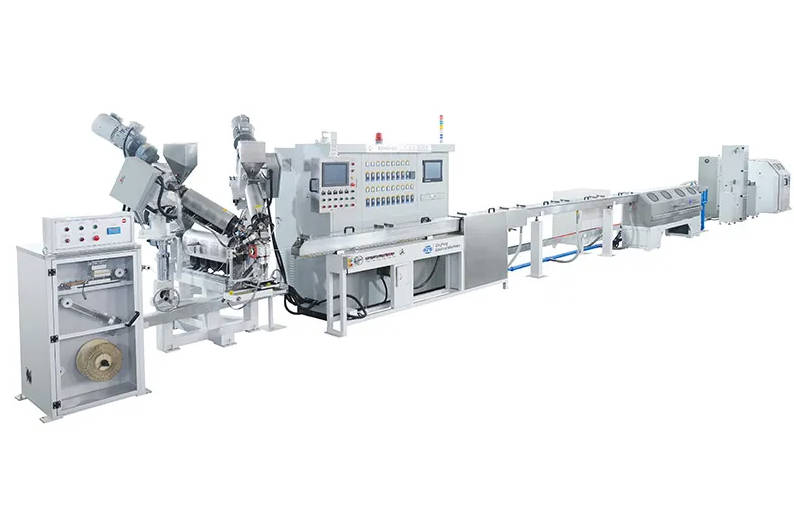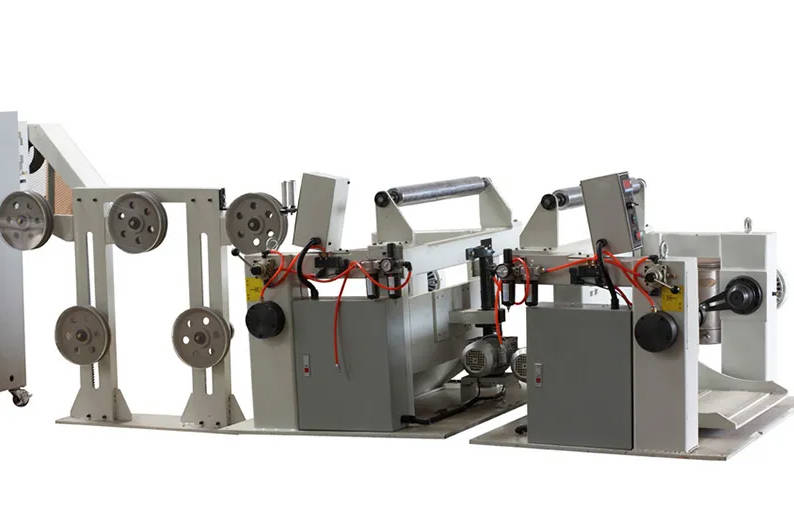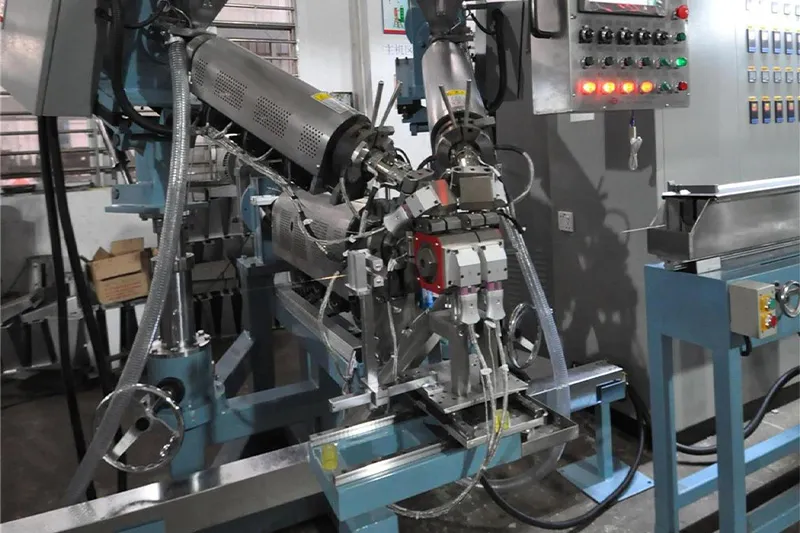
Physical foaming and solid extrusion are two common insulation extrusion processes for high-speed twinax cables, but they are designed for different performance requirements. Physical foaming extrusion is usually preferred for low-loss, high-frequency signal integrity cable because it can reduce dielectric constant, capacitance and insertion loss. Solid extrusion is simpler, more stable and suitable for standard cable insulation where ultra-low-loss performance is not the main requirement.
For cable manufacturers, choosing the right twinax cable extrusion line is not only about producing an insulation layer. The extrusion process directly affects impedance control, insulation concentricity, capacitance stability, pair skew, insertion loss and long-term production consistency. This is especially important for high-speed data cables, twinax cables and signal integrity cable used in data centers, AI servers, telecom equipment and high-frequency interconnect systems.
This article compares physical foaming and solid extrusion for twinax cable insulation, explains how each process affects electrical performance, and helps cable manufacturers choose the right cable extrusion line for different production requirements.
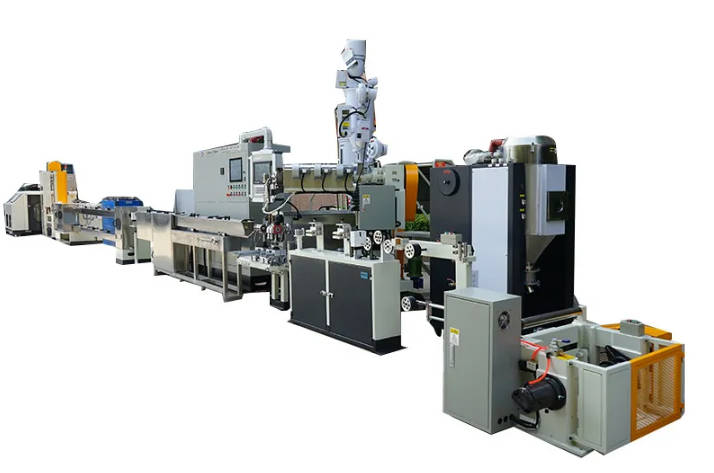
What Is a Twinax Cable and Why Is Insulation Extrusion Important?
A twinax cable is a cable structure with two conductors arranged as a differential pair. It is commonly used for high-speed signal transmission where impedance control, low signal loss and pair balance are critical. Unlike ordinary power cables, twinax cables are designed to transmit high-frequency data signals with stable electrical performance.
Basic Structure of a Twinax Cable
A typical high-speed twinax cable usually includes the following parts:
| Component | Function in Twinax Cable |
| Two Signal Conductors | Transmit differential signals |
| Insulation Layer | Controls dielectric performance, capacitance and impedance |
| Shielding Layer | Reduces electromagnetic interference and improves signal stability |
| Outer Jacket | Provides mechanical protection and environmental resistance |
Among these layers, the insulation is one of the most important parts for signal integrity. The insulation is not only used to prevent electrical contact between conductors. It also determines the cable’s dielectric constant, signal propagation speed, impedance stability and high-frequency loss.
Why Twinax Cable Insulation Affects Signal Integrity
Twinax cable insulation affects signal integrity because its dielectric constant, thickness, concentricity and uniformity directly influence impedance, capacitance, insertion loss and skew.
In high-speed data transmission, even small variations in insulation thickness or dielectric uniformity may cause impedance fluctuation. If the two conductors in a twinax cable are not balanced, pair skew and signal distortion may occur. Therefore, a high-quality twinax cable extrusion line must provide precise control over conductor tension, extrusion pressure, insulation diameter, concentricity and cooling stability.
What Is Solid Extrusion for Twinax Cable Insulation?
Definition of Solid Extrusion
Solid extrusion is a cable insulation process in which molten polymer is extruded around the conductor to form a dense, non-foamed dielectric layer. The insulation layer does not contain intentionally created gas cells or foam structure.
Common materials for solid cable insulation include PE, PP, FEP, PFA and other dielectric polymers. Solid extrusion is widely used for standard cable insulation because the process is relatively simple, stable and easy to control.
Advantages of Solid Extrusion
Solid extrusion is suitable for many cable manufacturing applications, especially when the cable does not require ultra-low dielectric loss or very low capacitance.
- Simpler process control
- Lower equipment complexity
- Stable mechanical strength
- Good conductor protection
- Easier material feeding and temperature control
- Suitable for standard data cable and general insulation production
- Lower initial equipment investment compared with physical foaming extrusion
Limitations of Solid Extrusion for High-Speed Twinax Cables
Although solid extrusion is reliable, it may not be the best option for high-speed twinax cable insulation when very low signal loss is required.
Because solid insulation uses a dense polymer structure, its effective dielectric constant is usually higher than that of foamed insulation. This can lead to higher capacitance and higher insertion loss at high frequencies. To meet impedance requirements, the cable design may need a larger insulation diameter, which can increase cable size and material consumption.
Solid extrusion is a good choice for standard cable insulation, but it may be limited for high-speed signal integrity cable that requires low dielectric constant, low capacitance and low insertion loss.
What Is Physical Foaming Extrusion for Twinax Cable Insulation?
Definition of Physical Foaming Extrusion
Physical foaming extrusion is a cable insulation process that injects gas into the polymer melt to create a controlled microcellular dielectric structure with lower dielectric constant and lower signal loss.
In this process, gas such as nitrogen is introduced into the molten polymer under controlled pressure. The gas is dispersed into the polymer melt and forms fine cells inside the insulation layer during extrusion and cooling. Because air has a much lower dielectric constant than solid polymer, the foamed insulation can reduce the effective dielectric constant of the cable insulation.
Common Physical Foaming Structures
Physical foaming extrusion can be used to produce different insulation structures depending on cable design and performance requirements.
| Foaming Structure | Description | Common Use |
| Foam Insulation | Entire insulation layer contains controlled foam cells | Low-loss cable insulation |
| Skin-Foam Structure | Solid skin layer with foamed insulation layer | Improves surface quality and electrical performance |
| Skin-Foam-Skin Structure | Foamed middle layer between solid inner and outer skin layers | Balances mechanical strength and low-loss performance |
| Co-Extruded Foamed Insulation | Multiple extruders produce different layers at the same time | High-performance twinax and signal integrity cable |
Why Physical Foaming Is Used for High-Speed Signal Integrity Cable
Physical foaming is commonly used in high-speed cable insulation because it improves electrical performance while reducing material weight.
- Lower dielectric constant
- Lower capacitance
- Lower insertion loss
- Higher velocity of propagation
- Better high-frequency transmission performance
- Lower material consumption
- Potential for smaller or optimized cable structure
For high-speed twinax cable and signal integrity cable, physical foaming extrusion is often selected because it helps reduce dielectric loss and supports more stable high-frequency transmission.
Physical Foaming vs Solid Extrusion: Quick Comparison
The following table summarizes the main differences between physical foaming and solid extrusion for twinax cable insulation.
| Comparison Point | Physical Foaming Extrusion | Solid Extrusion |
| Insulation Structure | Microcellular foamed dielectric | Dense solid dielectric |
| Process Complexity | Higher | Lower |
| Equipment Requirement | Gas injection, precision control, advanced cooling and monitoring | Standard cable extrusion line equipment |
| Dielectric Constant | Lower | Higher |
| Capacitance | Lower | Higher |
| Insertion Loss | Lower, suitable for high-speed cable | Higher at high frequency |
| Mechanical Strength | Depends on foam structure and process control | Generally stronger and denser |
| Impedance Control | Excellent when foam ratio, OD and concentricity are stable | Stable, but may require larger insulation size |
| Material Usage | Can reduce polymer consumption | Higher material consumption |
| Best For | High-speed twinax cable, low-loss signal integrity cable | Standard cable insulation and general data cable |
Physical foaming is better for high-speed twinax cables that require lower dielectric constant, lower capacitance and lower insertion loss, while solid extrusion is better for simpler cable structures that prioritize mechanical strength and easier process control.
How Physical Foaming Improves High-Speed Twinax Cable Performance
Lower Dielectric Constant
The dielectric constant of insulation material directly affects the electrical performance of a twinax cable. Solid polymers usually have a higher dielectric constant than air. By introducing controlled gas cells into the insulation, physical foaming reduces the effective dielectric constant of the insulation layer.
Lower dielectric constant is especially important for high-speed data cable because it helps reduce capacitance and improve signal propagation characteristics.
Lower Capacitance
Capacitance is related to the dielectric material and conductor geometry. In twinax cable insulation, lower capacitance helps improve high-speed transmission performance and reduce signal distortion.
Foamed insulation can reduce capacitance by replacing part of the solid polymer with controlled air cells. This is one of the main reasons why physical foaming extrusion is used for signal integrity cable.
Lower Insertion Loss
Insertion loss is a major concern in high-speed twinax cable. As transmission frequency increases, dielectric loss becomes more important. Physical foaming can reduce dielectric loss by lowering the effective dielectric constant and reducing the amount of solid polymer in the insulation.
Lower insertion loss is one of the key reasons cable manufacturers choose physical foaming extrusion for high-speed twinax cable and low-loss signal integrity cable.
Better Velocity of Propagation
Signal propagation speed is affected by the dielectric constant of the insulation. A lower dielectric constant allows signals to travel faster through the cable structure. This can help improve timing consistency in high-speed differential transmission.
For twinax cables used in data centers, telecom systems and high-speed interconnect applications, stable velocity of propagation is important for maintaining signal quality.
Weight and Size Reduction
Physical foaming reduces the amount of polymer material used in the insulation layer. This can make the cable lighter and may help optimize the cable structure. In some designs, foamed insulation allows the cable to reach target impedance with a smaller or more efficient insulation geometry.
When Is Solid Extrusion Still a Good Choice?
Physical foaming is not always necessary. In many cable applications, solid extrusion is still a practical and cost-effective choice.
Standard Data Cable or General Insulation
If the cable does not require ultra-low dielectric loss or very high-frequency signal transmission, solid extrusion may be sufficient. It provides reliable insulation performance and stable mechanical protection.
Mechanical Strength Priority
Dense solid insulation can provide strong mechanical support. It may be preferred when abrasion resistance, compression resistance, conductor protection or handling strength is more important than low-loss electrical performance.
Lower Equipment Investment
A solid cable extrusion line is usually simpler than a physical foaming extrusion line. It does not require a gas injection system or complex foam control equipment. This can reduce initial investment and simplify operation.
Easier Process Control
Solid extrusion has fewer process variables. Operators mainly need to control material drying, extrusion temperature, melt pressure, line speed, cooling and winding. Physical foaming requires additional control of gas pressure, gas flow, cell structure, foam ratio and cooling stability.
Solid extrusion is suitable when the cable product requires stable insulation, strong mechanical protection and simpler production rather than ultra-low-loss high-frequency performance.
Key Requirements for a Twinax Cable Extrusion Line
A high-quality twinax cable extrusion line must be designed to control both mechanical and electrical performance. For high-speed cable production, the extrusion line should not only produce a stable outer diameter. It should also support impedance consistency, capacitance stability and insulation concentricity.
Precise Conductor Payoff and Tension Control
Twinax cable requires accurate conductor positioning. If conductor tension fluctuates, the conductor may move during extrusion, causing eccentric insulation or pair imbalance. Stable payoff tension is essential for maintaining consistent insulation thickness and pair symmetry.
High-Precision Crosshead
The extrusion crosshead affects insulation concentricity and surface quality. Poor crosshead centering can cause uneven insulation thickness, which may lead to impedance fluctuation and signal instability. For high-speed twinax cable insulation, a high-precision crosshead is one of the most important parts of the cable extrusion line.
Stable Gas Injection System for Physical Foaming
For a physical foaming extrusion line, the gas injection system must provide stable gas pressure and accurate gas flow control. Poor gas control can cause large cells, uneven foam distribution, foam collapse or capacitance fluctuation.
Screw and Barrel Design
The screw and barrel design must match the insulation material and extrusion process. Physical foaming requires good plasticizing, stable melt pressure and uniform gas mixing. Solid extrusion requires stable melt temperature and consistent output.
Online Diameter and Capacitance Monitoring
Online monitoring is especially important for high-speed twinax cable production. A diameter gauge helps monitor insulation OD stability, while a capacitance tester helps evaluate dielectric consistency during production.
For high-speed twinax cable extrusion, online diameter and capacitance monitoring help control insulation geometry, dielectric stability and impedance consistency in real time.
Cooling System and Line Speed Control
The cooling system affects insulation shrinkage, foam cell stability, ovality and surface quality. If cooling is too fast, too slow or uneven, the insulation may deform or show unstable electrical performance. A well-designed cooling trough and stable line speed control are important for both solid extrusion and physical foaming extrusion.
Take-Up, Accumulator and Winding Quality
Stable take-up and winding tension help prevent cable deformation after extrusion. For continuous production, accumulator systems may be used to reduce downtime and improve production efficiency. Poor winding tension may affect final cable geometry and handling performance.
Common Problems in Twinax Cable Insulation Extrusion
During twinax cable insulation extrusion, many production problems are related to process stability, equipment precision or material control. Understanding these problems helps manufacturers improve cable quality and reduce waste.
Unstable Impedance
Unstable impedance may be caused by insulation OD fluctuation, eccentric insulation, unstable capacitance, conductor movement or uneven foam cell structure. For high-speed signal integrity cable, impedance fluctuation can directly affect signal quality.
High Insertion Loss
High insertion loss may result from high dielectric constant, low foam ratio, poor material selection, non-uniform insulation or internal defects. If the cable is designed for high-speed data transmission, physical foaming extrusion may be required to reduce dielectric loss.
Foam Collapse or Large Cells
Foam collapse or large cells are common issues in physical foaming extrusion. Possible causes include incorrect gas pressure, unstable melt temperature, inadequate cooling, poor nucleating agent dispersion or insufficient screw mixing.
Eccentric Insulation
Eccentric insulation occurs when the conductor is not centered within the insulation layer. Causes may include crosshead centering problems, conductor vibration, unstable payoff tension or tooling misalignment. Eccentricity can cause impedance variation and poor cable consistency.
Rough Surface or Bubbles
Rough surface or bubbles may be caused by moisture in the material, poor melt plasticizing, gas instability, incorrect die temperature or contamination. For signal integrity cable, surface and internal defects should be minimized.
Pair Skew or Signal Imbalance
Pair skew may occur when the two insulated conductors have different electrical lengths or inconsistent dielectric properties. Asymmetric insulation thickness, different conductor positions and non-uniform foam structure can all contribute to signal imbalance.
| Problem | Possible Cause | Impact on Cable Performance |
| Unstable impedance | OD fluctuation, eccentricity, unstable capacitance | Signal reflection and transmission instability |
| High insertion loss | High dielectric constant, poor foam ratio, material mismatch | Reduced high-frequency signal performance |
| Foam collapse | Incorrect gas pressure, poor cooling, unstable melt | Dielectric inconsistency and capacitance fluctuation |
| Eccentric insulation | Crosshead misalignment, conductor movement | Impedance variation and poor pair balance |
| Rough surface | Moisture, contamination, poor temperature control | Processing defects and possible signal instability |
| Pair skew | Asymmetric insulation or pair geometry variation | Timing mismatch in differential signal transmission |
How to Choose Between Physical Foaming and Solid Extrusion
The choice between physical foaming and solid extrusion depends on cable type, signal frequency, electrical performance target, cost budget and production capability.
Choose Physical Foaming Extrusion If You Need:
- High-speed twinax cable production
- Low dielectric constant insulation
- Low capacitance
- Low insertion loss
- Better signal integrity performance
- Lightweight cable structure
- Data center, AI server, telecom or high-frequency signal cable applications
- Advanced process control capability
Choose Solid Extrusion If You Need:
- Standard cable insulation
- Simpler production process
- Lower equipment investment
- Strong mechanical insulation
- Easier operation and maintenance
- Cable products that do not require ultra-low-loss performance
Simple Selection Table
| Your Requirement | Recommended Process |
| High-speed twinax cable | Physical foaming extrusion |
| Low-loss signal integrity cable | Physical foaming extrusion |
| Standard insulation cable | Solid extrusion |
| Lower initial equipment cost | Solid extrusion |
| Lower dielectric constant | Physical foaming extrusion |
| Easier operation | Solid extrusion |
| Precision impedance control | Physical foaming with online monitoring |
| Strong dense insulation | Solid extrusion |
| Lightweight cable design | Physical foaming extrusion |
| High-frequency data transmission | Physical foaming extrusion |
What Information Should You Provide Before Buying a Twinax Cable Extrusion Line?
Before purchasing a twinax cable extrusion line, cable manufacturers should provide detailed product and process requirements. This helps the equipment supplier design the correct extrusion configuration, control system and production layout.
| Information Needed | Why It Matters |
| Cable type | Determines whether the line is designed for twinax, coaxial, data cable, RF cable or signal integrity cable |
| Conductor size | Affects crosshead design, payoff tension and insulation thickness |
| Insulation material | PE, PP, FEP, PFA and other materials require different extrusion conditions |
| Extrusion process | Confirms whether solid extrusion or physical foaming extrusion is required |
| Target insulation OD | Important for tooling design and diameter control |
| Target impedance | Important for signal integrity cable design |
| Target capacitance | Helps determine insulation structure and foaming ratio |
| Required line speed | Affects extruder output, cooling length and take-up configuration |
| Foam ratio requirement | Important for physical foaming extrusion line design |
| Layer structure | Single-layer, two-layer or skin-foam-skin structure requires different extruder configuration |
| Online testing requirement | Diameter gauge, capacitance tester and spark tester improve production control |
| Bobbin size | Affects payoff, take-up and accumulator design |
| Automation requirement | Determines PLC control, data monitoring and closed-loop adjustment functions |
To configure the right twinax cable extrusion line, manufacturers should provide cable structure, insulation material, conductor size, target OD, impedance requirement, line speed and whether they need solid extrusion or physical foaming extrusion.
FAQ About Physical Foaming and Solid Extrusion for Twinax Cables
What is the best extrusion process for high-speed twinax cables?
Physical foaming extrusion is usually preferred for high-speed twinax cables because it can reduce dielectric constant, capacitance and insertion loss. However, the final choice depends on cable structure, signal frequency, material type and performance target.
Is solid extrusion suitable for twinax cable insulation?
Yes. Solid extrusion can be used for some twinax or data cable insulation, especially when ultra-low-loss performance is not required. It is simpler, easier to control and suitable for standard insulation applications.
Why does physical foaming reduce signal loss?
Physical foaming introduces controlled gas cells into the insulation. Because air has a lower dielectric constant than solid polymer, the effective dielectric constant of the insulation is reduced. This helps lower capacitance and dielectric loss.
What is skin-foam-skin insulation?
Skin-foam-skin insulation uses a foamed middle layer between solid inner and outer skin layers. This structure helps balance low dielectric loss, smooth surface quality and mechanical stability.
What equipment is needed for physical foaming extrusion?
A physical foaming extrusion line usually needs a precision extruder, gas injection system, high-precision crosshead, cooling system, online diameter gauge, capacitance tester, spark tester, stable payoff and take-up system, and PLC control system.
How does extrusion line stability affect signal integrity?
Extrusion line stability affects insulation thickness, concentricity, capacitance and impedance. These factors directly influence signal integrity performance in high-speed twinax cables.
What causes impedance fluctuation in twinax cable extrusion?
Common causes include unstable insulation outer diameter, eccentric insulation, conductor movement, uneven foam cell structure, unstable capacitance and improper cooling.
Should I choose PE, FEP or PFA for twinax cable insulation?
The material choice depends on frequency, temperature resistance, flexibility, cost and electrical performance requirements. PE is commonly used for many data cable applications, while FEP and PFA may be selected for higher temperature or special performance requirements.
Conclusion
Physical foaming and solid extrusion are both important processes for twinax cable insulation, but they are suitable for different cable products. Solid extrusion is simpler and suitable for standard cable insulation. Physical foaming extrusion is more complex but better suited for high-speed twinax cable, low-loss data cable and signal integrity cable where dielectric performance is critical.
For high-speed transmission, the insulation layer must provide stable dielectric constant, uniform thickness, good concentricity and low signal loss. A high-performance twinax cable extrusion line should control conductor tension, extrusion temperature, gas injection, crosshead centering, outer diameter, capacitance, cooling and winding quality.
If your cable needs low dielectric constant, low capacitance, low insertion loss and stable impedance, physical foaming extrusion is usually the better choice. If your cable requires standard insulation, strong mechanical protection and easier process control, solid extrusion may be more suitable.