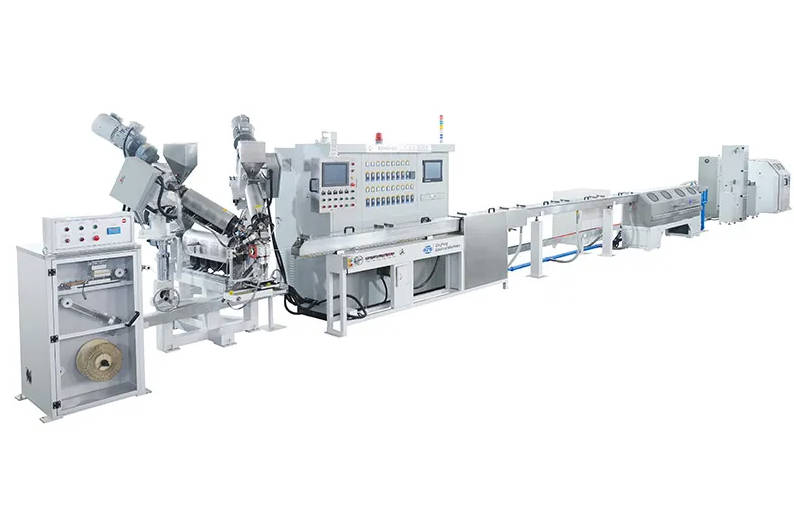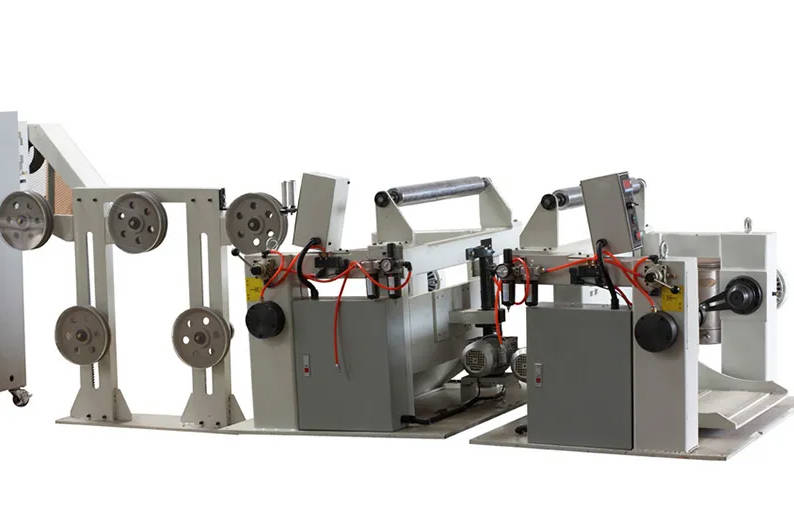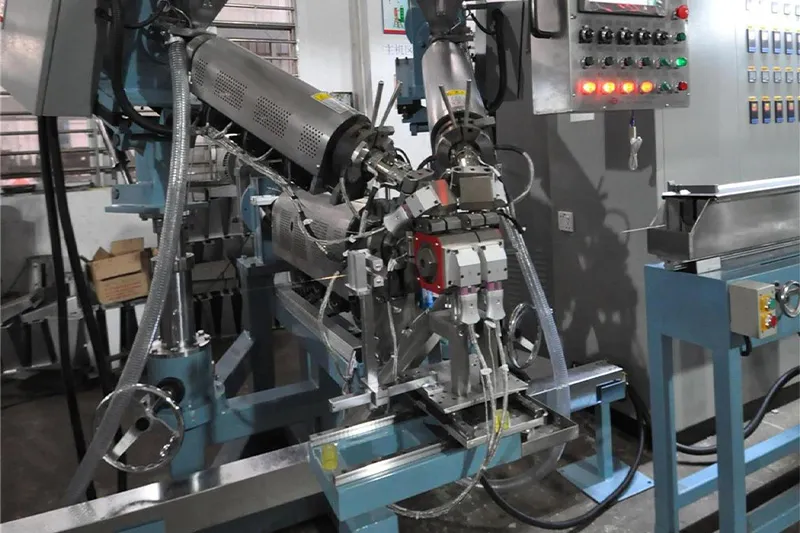
Cable insulation materials should be selected according to electrical performance, temperature resistance, flexibility, mechanical protection, flame requirements, environmental conditions, cost, and extrusion process compatibility. PVC, PE, XLPE and TPE are commonly used in wire and cable production, but each material has different strengths, limitations, and processing requirements.
For cable manufacturers, material choice is not only a raw material decision. It also affects extrusion line configuration, screw design, temperature control, cooling, line speed, diameter stability, quality inspection, and downstream processing. A material that performs well in one application may not be suitable for another cable structure or production environment.
In general, PVC is widely used for cost-sensitive insulation and jacket applications, PE is often selected for good dielectric properties and moisture resistance, XLPE is used when higher heat resistance and mechanical performance are needed, and TPE is commonly chosen for flexible cables and applications requiring elasticity. To process these materials consistently, manufacturers need a suitable cable extrusion line with stable temperature, pressure, traction, and diameter control.
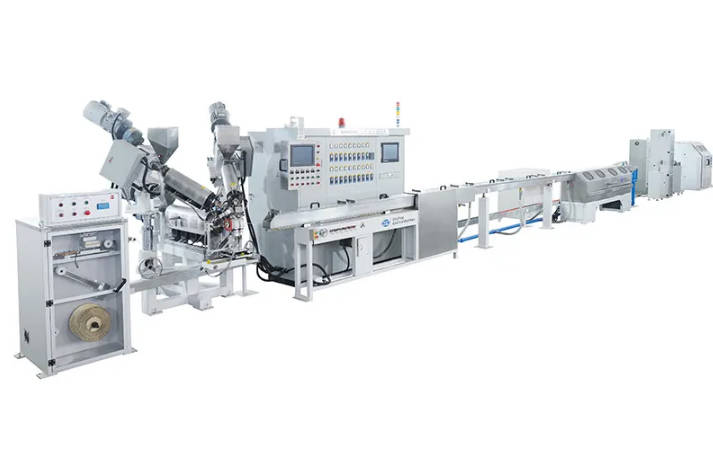
What Are Cable Insulation Materials?
Cable insulation materials are polymer layers applied around conductors to prevent electrical contact, protect conductors from the environment, and support the cable’s mechanical and electrical performance. In many cable structures, the insulation layer is produced by extrusion, where polymer material is melted, formed around the conductor, cooled, inspected, and wound for later processing.
Common cable insulation materials include:
| Material | Full Name | Common Role in Cable Production |
| PVC | Polyvinyl Chloride | General insulation and jacket material |
| PE | Polyethylene | Communication cable insulation and moisture-resistant cable applications |
| XLPE | Cross-linked Polyethylene | Heat-resistant and power cable insulation |
| TPE | Thermoplastic Elastomer | Flexible cable insulation or jacket material |
| TPU | Thermoplastic Polyurethane | Abrasion-resistant flexible cable applications |
| FEP / PFA / ETFE | Fluoropolymers | High-temperature and special cable applications |
| LSZH | Low Smoke Zero Halogen compound | Flame and smoke-sensitive environments |
This article focuses on PVC, PE, XLPE and TPE because they are widely used and often compared during cable material selection.
The right insulation material should match both the cable performance requirement and the extrusion process capability of the factory.
Quick Comparison: PVC vs PE vs XLPE vs TPE Cable Insulation
The table below gives a practical comparison for buyers and process engineers.
| Material | Main Advantages | Main Limitations | Common Applications |
| PVC | Cost-effective, easy to process, good flame-retardant formulation options | Limited high-temperature performance compared with XLPE or fluoropolymers | Building wire, control cable, general cable jacket |
| PE | Good dielectric properties, moisture resistance, smooth extrusion surface | Lower heat resistance than XLPE unless modified | Communication cable, data cable, low-loss insulation applications |
| XLPE | Better thermal resistance, mechanical strength, and aging resistance than standard PE in many applications | Requires crosslinking process and tighter process control | Power cable, solar cable, automotive cable, industrial cable |
| TPE | Flexible, elastic, suitable for dynamic cable applications | Material grades vary widely; processing window should be checked | Flexible cable, robotics cable, charging cable, special industrial cable |
PVC is often chosen for general-purpose and cost-sensitive cables, PE for dielectric performance, XLPE for higher heat resistance, and TPE for flexible cable applications.
However, this is only a starting point. Final material selection should depend on cable standard, working environment, customer specification, safety requirement, and production capability.
PVC Cable Insulation
PVC is one of the most widely used cable insulation and jacket materials. It is popular because it is cost-effective, relatively easy to process, and can be formulated for different hardness, flexibility, color, flame performance, and application requirements.
Advantages of PVC Cable Insulation
PVC cable insulation is commonly selected because of:
- Mature processing technology
- Relatively low material cost
- Good general mechanical protection
- Flexible formulation options
- Color stability in many general applications
- Flame-retardant formulation possibilities
- Wide use in building wire, control cable and general cable products
PVC is also suitable for many factories because it can be processed on common extrusion equipment with proper screw, temperature, tooling and cooling settings.
Limitations of PVC Cable Insulation
PVC may not be suitable for every cable application. Its thermal performance, flexibility at low temperature, smoke requirements, and environmental considerations should be checked according to the target market and cable standard.
Typical limitations include:
| Limitation | Production or Application Concern |
| Heat resistance limitation | May not fit high-temperature applications |
| Smoke and halogen concern | Some environments may require LSZH materials instead |
| Plasticizer migration | Some flexible PVC grades may change over time |
| Application dependency | Formulation must match cable standard and customer requirement |
PVC is suitable for many general cable products, but buyers should confirm whether the intended cable requires higher heat resistance, halogen-free performance, or special environmental properties.
PE Cable Insulation
PE cable insulation is widely used in communication cables, data cables, coaxial cables, and other applications where dielectric properties and moisture resistance matter. Compared with PVC, PE generally provides better electrical insulation characteristics in many cable designs.
Advantages of PE Cable Insulation
PE is commonly selected for:
- Good dielectric performance
- Low moisture absorption in many applications
- Smooth extrusion surface
- Good chemical resistance in many environments
- Suitability for communication and data cable insulation
- Compatibility with solid or foamed insulation structures
PE can be used in different forms, including LDPE, MDPE, HDPE, and foamed PE depending on cable design.
Limitations of PE Cable Insulation
PE has limitations when higher thermal resistance, flame performance, or mechanical strength is required. It may need modification or crosslinking for certain demanding applications.
| Limitation | Production or Application Concern |
| Heat resistance | Standard PE may not be enough for higher-temperature cables |
| Flame performance | May need formulation support for flame requirements |
| Stress cracking | Some applications require grade selection carefully |
| Process sensitivity | Diameter and concentricity should be controlled in precision cables |
For communication and data cable production, extrusion stability is important because small changes in insulation diameter may affect electrical performance.
XLPE Cable Insulation
XLPE means cross-linked polyethylene. It is based on PE but improved through crosslinking, which creates a more stable molecular structure. XLPE cable insulation is widely used in power cables, solar cables, automotive cables, and industrial cables where heat resistance and long-term performance are important.
Advantages of XLPE Cable Insulation
XLPE is often chosen because it can provide:
- Better heat resistance than standard PE in many cable applications
- Improved mechanical strength
- Good aging resistance
- Good electrical insulation properties
- Suitability for power cable insulation
- Compatibility with demanding cable applications when properly processed
Crosslinking Requirement
Unlike ordinary thermoplastic PE, XLPE requires a crosslinking process. This may involve different methods depending on material system and production design, such as chemical crosslinking, silane crosslinking, or irradiation crosslinking. The correct method should be selected according to cable standard, material supplier guidance, and production requirements.
XLPE cable insulation should be considered as both an extrusion process and a crosslinking process, not only a material substitution for PE.
This means cable manufacturers should evaluate not only the extrusion line but also downstream process compatibility, quality inspection, and production control.
Limitations of XLPE Cable Insulation
| Limitation | Production or Application Concern |
| More complex process | Requires crosslinking compatibility |
| Higher process control requirement | Temperature, extrusion stability and curing/crosslinking conditions matter |
| Material handling | Compound storage and processing should follow supplier guidance |
| Equipment planning | Factory may need additional process or inspection equipment |
XLPE is a strong option for many power and high-performance cable applications, but it requires a more complete process plan than standard PVC or PE extrusion.
TPE Cable Insulation
TPE is a family of thermoplastic elastomer materials. It combines elastic behavior with thermoplastic processing characteristics. TPE is often used for flexible cables, robotics cables, charging cables, industrial cables, sensor cables, and other products requiring bending performance or soft touch.
Advantages of TPE Cable Insulation
TPE may be selected because of:
- Good flexibility
- Elastic recovery
- Soft surface feel
- Suitability for dynamic cable applications
- Thermoplastic processing
- Potential use in low-temperature flexible applications depending on grade
- Wide formulation variety for different cable requirements
TPE is useful when the cable needs repeated bending, flexibility, or improved handling feel.
Limitations of TPE Cable Insulation
Because TPE is a broad material category, properties can vary significantly by grade. Buyers should avoid treating all TPE materials as the same.
| Limitation | Production or Application Concern |
| Grade variation | Different TPE grades have different performance |
| Processing sensitivity | Temperature and cooling should be controlled |
| Cost | May be higher than general PVC in many applications |
| Application matching | Material must match cable standard and use environment |
For TPE cable production, stable traction and take-up are important because flexible materials may be more sensitive to tension and deformation.
How to Choose the Right Cable Insulation Material
Cable manufacturers should evaluate cable insulation materials based on both performance and production capability.
| Selection Factor | PVC | PE | XLPE | TPE |
| General cost control | Strong | Medium | Medium-High | Medium-High |
| Electrical insulation | Good for general use | Strong in many applications | Strong | Depends on grade |
| Heat resistance | Moderate | Moderate | Strong | Depends on grade |
| Flexibility | Depends on formulation | Limited to moderate | Limited to moderate | Strong |
| Flame performance | Formulation-dependent | Often needs modification | Formulation-dependent | Grade-dependent |
| Moisture resistance | Moderate | Strong | Strong | Depends on grade |
| Processing difficulty | Relatively easy | Moderate | Higher | Moderate |
| Suitable for power cable | General applications | Limited | Strong | Special flexible applications |
| Suitable for data cable | Some applications | Strong | Some applications | Special applications |
| Suitable for dynamic cable | Limited to flexible grades | Limited | Limited | Strong |
Material selection should start from the cable application, not from material price alone.
A cheaper material may increase total cost if it causes poor performance, difficult processing, high scrap, or customer rejection.
How Insulation Material Affects the Extrusion Line
Different insulation materials require different extrusion conditions. The extrusion line should be selected or adjusted according to the material’s melting behavior, temperature window, viscosity, cooling behavior, and product tolerance.
| Material Factor | Impact on Extrusion Line |
| Processing temperature | Determines heating zone design and temperature control |
| Melt flow behavior | Affects screw design, pressure stability and surface finish |
| Material sensitivity | Requires stable temperature and residence time |
| Cooling behavior | Affects cooling trough length and water control |
| Flexibility | Affects traction and take-up tension |
| Crosslinking requirement | Affects downstream process planning |
| Diameter tolerance | Requires stable output and online measurement |
| Surface requirement | Requires proper tooling and material cleanliness |
A suitable wire insulation extrusion line should provide stable temperature, pressure, line speed, tooling alignment, cooling and take-up control.
Equipment Considerations for PVC, PE, XLPE and TPE Extrusion
When choosing extrusion equipment, cable manufacturers should confirm whether the line can support the target insulation material and cable structure.
| Equipment Area | What to Check |
| Extruder screw | Suitable for material plasticization and stable output |
| Barrel and heating zones | Temperature range and control accuracy |
| Crosshead | Suitable for conductor size and insulation thickness |
| Tooling | Supports wall thickness and concentricity requirements |
| Preheating | Useful for some conductor and insulation processes |
| Cooling trough | Matches material cooling behavior and line speed |
| Diameter measurement | Helps control insulation OD |
| Spark tester | Supports insulation defect detection in many applications |
| Capstan | Provides stable line speed and pulling force |
| Take-up | Prevents deformation or winding damage |
| Control system | Supports temperature, speed and process repeatability |
For factories producing multiple materials, it is important to discuss material range with the equipment supplier before ordering. One line may process several materials, but some materials may need special screw, tooling, temperature range, or downstream process design.
Common Material Selection Mistakes
Mistake 1: Choosing the Lowest-Cost Material Only
Low material cost does not always mean low total cost. If the material fails performance requirements or causes processing defects, the factory may face higher scrap and customer complaints.
Mistake 2: Treating PE and XLPE as the Same
XLPE is not just “stronger PE.” It requires a crosslinking process and should be evaluated together with extrusion, curing or crosslinking, and final cable performance.
Mistake 3: Ignoring Cable Standards
Cable insulation materials must match applicable standards, customer requirements, safety rules and application environment. General material comparison is not enough.
Mistake 4: Ignoring Extrusion Equipment Capability
A material may be suitable in theory but difficult to process with the existing extrusion line. Equipment compatibility should be checked early.
Mistake 5: Overlooking Long-Term Operating Conditions
Temperature, humidity, bending, abrasion, chemicals, sunlight, flame requirement and installation environment can all affect material choice.
Quality Control for Cable Insulation Extrusion
Insulation material performance depends not only on formulation but also on process control. Even a suitable material can fail if extrusion conditions are unstable.
Important quality checks include:
| Quality Control Item | Why It Matters |
| Outer diameter | Ensures dimensional consistency |
| Wall thickness | Supports insulation performance and material control |
| Concentricity | Prevents weak points and uneven insulation |
| Surface smoothness | Affects appearance and downstream processing |
| Spark testing | Detects pinholes or insulation defects in many processes |
| Tensile and elongation testing | Checks mechanical performance |
| Aging test | Evaluates long-term performance when required |
| Heat deformation test | Important for higher-temperature applications |
| Flexibility test | Important for TPE and dynamic cable applications |
| Crosslinking degree test | Important for XLPE cable production |
Stable insulation quality requires both the right material and the right extrusion process control.
For cable manufacturers upgrading production, online diameter measurement, process parameter storage, stable traction and reliable cooling can help improve repeatability.
How to Work With an Equipment Supplier
When selecting a cable extrusion line for PVC, PE, XLPE or TPE cable insulation, buyers should provide technical details rather than only asking for a machine price.
Useful information includes:
| Information to Provide | Why It Matters |
| Cable type | Determines equipment configuration |
| Insulation material | Determines screw, temperature and tooling requirements |
| Conductor size | Affects pay-off, preheating and crosshead |
| Insulation thickness | Affects extrusion output and cooling |
| Target outer diameter | Determines tooling and diameter control |
| Production speed | Helps size the extruder and cooling system |
| Quality tolerance | Determines inspection and control requirements |
| Crosslinking method | Important for XLPE production planning |
| Factory layout | Helps design line arrangement |
| Future product plan | Helps evaluate flexibility and upgrade needs |
QingFeng SFS provides cable extrusion line solutions for manufacturers working with different insulation and jacket materials. Buyers can also visit the QingFeng SFS official website to learn more about available wire and cable production equipment.
FAQ
What are the most common cable insulation materials?
Common cable insulation materials include PVC, PE, XLPE, TPE, TPU, LSZH compounds and fluoropolymers such as FEP, PFA and ETFE. PVC, PE, XLPE and TPE are widely compared in general wire and cable production.
What is the difference between PVC and PE cable insulation?
PVC cable insulation is widely used for general-purpose and cost-sensitive cables, while PE cable insulation is often selected for better dielectric performance and moisture resistance in many communication and data cable applications.
When should I choose XLPE cable insulation?
XLPE cable insulation is often chosen when the cable requires better heat resistance, mechanical strength and aging resistance than standard PE. It is commonly used in power cable, solar cable, automotive cable and industrial cable applications.
Is TPE suitable for flexible cable insulation?
Yes, TPE is commonly used for flexible cable insulation or jacket applications. It is suitable for many dynamic cable products, but the exact performance depends on the TPE grade and cable application.
Can one extrusion line process PVC, PE, XLPE and TPE?
In some cases, one extrusion line can process multiple materials if the extruder, screw, temperature control, tooling, cooling and take-up system are suitable. However, buyers should confirm material compatibility with the equipment supplier before ordering.
Why does XLPE cable insulation need crosslinking?
XLPE means cross-linked polyethylene. Crosslinking improves thermal and mechanical performance compared with standard PE in many cable applications. The crosslinking method should match the material system and cable production process.
How do I choose cable insulation materials for my factory?
Choose cable insulation materials based on cable application, electrical performance, temperature rating, flexibility, flame requirement, environmental conditions, material cost, extrusion process capability and customer standards.
Conclusion
PVC, PE, XLPE and TPE are all important cable insulation materials, but they serve different production and application needs. PVC is widely used for general and cost-sensitive cable products. PE is often selected for dielectric performance and moisture resistance. XLPE is suitable for cables requiring higher heat resistance and mechanical performance. TPE is useful for flexible and dynamic cable applications.
For cable manufacturers, choosing the right insulation material should be combined with extrusion line capability, quality control method, cable standard, and long-term production plan. Material performance and equipment compatibility should be evaluated together.
QingFeng SFS offers cable extrusion line solutions for manufacturers producing PVC, PE, XLPE, TPE and other wire and cable products.