The year 2026 has ushered in a transformative era for global data center connectivity. As artificial intelligence clusters transition from experimental 800G deployments to the massive-scale rollout of 1.6T Ethernet, the physical limits of copper cable manufacturing are being tested like never before. With the industry moving toward 224G PAM4 per lane signaling, the margin for physical error in cable production has effectively vanished.
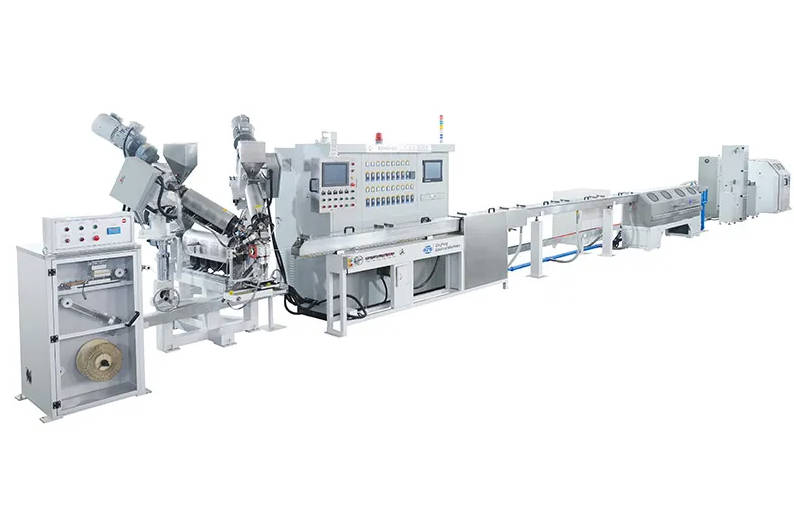
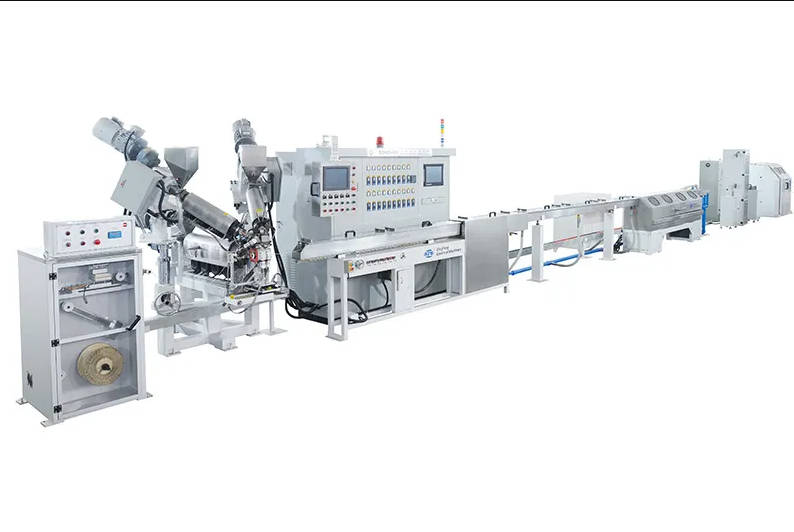
For cable manufacturers, the heartbeat of this technological shift is the high-speed extrusion line. At QingFeng SFS, we believe that success in the next generation of connectivity is not found in marketing superlatives, but in the rigorous mastery of high-frequency physics. This article is a sincere technical sharing of why physical foaming accuracy is the absolute decisive factor for Twinax cable quality and how you can optimize your production for the challenges of 1.6T.
1. The 224G PAM4 Frontier: Why “Good Enough” is Over
In the era of PCIe 6.0 and 1.6T networking, signaling has shifted to PAM4 (Pulse Amplitude Modulation 4-level). Unlike the older NRZ signaling, PAM4 is incredibly sensitive to “noise” caused by physical variations in the cable. At 224G per lane, a Twinax cable behaves less like a simple wire and more like a precision waveguide.
To maintain the signal integrity required for 1.6T Ethernet, an extrusion line must deliver a foaming rate consistency of ±1% and an insulation diameter tolerance of ±0.005mm, as even microscopic fluctuations can cause catastrophic impedance mismatch.
If your extrusion process cannot maintain this level of precision, the resulting “Return Loss” will render the cable useless for high-speed data transmission, leading to low yield rates and wasted high-end materials.
2. Physical vs. Chemical Foaming: Mastering the Dielectric Constant
To achieve the low Dielectric Constant (Dk) necessary for high-speed transmission, manufacturers must choose between chemical and physical foaming. For the 800G and 1.6T sectors, physical foaming via nitrogen injection is the only viable path.
Why Physical Foaming Wins
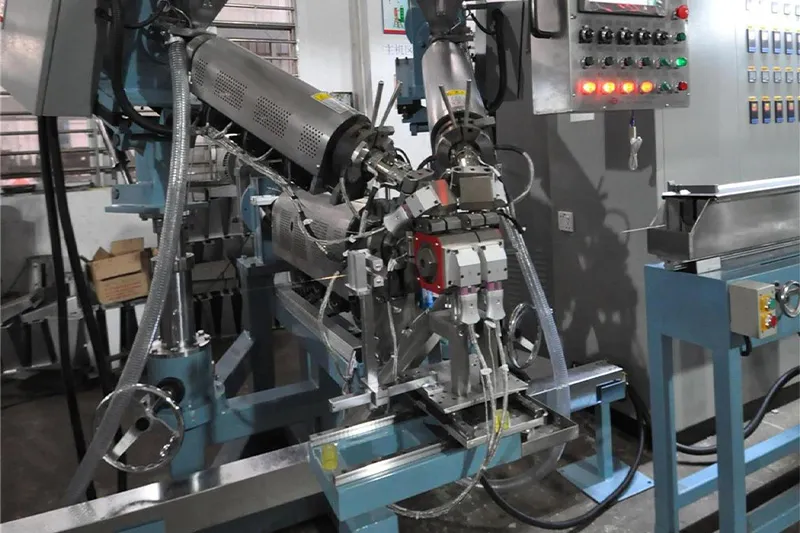
Chemical foaming relies on heat-activated additives that leave behind chemical residues, which increase the Dissipation Factor (Df) and signal loss. In contrast, Physical Foaming creates clean, gas-filled micro-cells. By injecting pure nitrogen into the melt, we can achieve foaming rates of 65% to 75%, significantly lowering the Dk and allowing signals to travel at a higher Velocity of Propagation (VoP).
The Skin-Foam-Skin (SFS) structure, achieved through triple-layer co-extrusion, is mandatory for high-speed Twinax because it provides a smooth internal bond to the conductor and a tough external shell to protect the delicate foam cells during subsequent taping and cabling processes.
3. Solving the “7 Hard Questions” of Extrusion Line Users
Through our years of collaboration with technical teams, we have identified seven recurring challenges that keep production managers awake at night. Here is our sincere take on how to solve them.
Q1: Why does my impedance drift even when the OD looks stable?
Most users focus solely on the Outer Diameter (OD). However, impedance is a function of the ratio between the conductor diameter and the insulation’s effective Dielectric Constant. If your nitrogen injection pressure or melt temperature fluctuates, the density of the foam changes.
- Solution: You must synchronize nitrogen mass-flow control with the extruder’s thermal zones to ensure “Density Stability” alongside “Diameter Stability.”
Q2: How do I extrude on ultra-fine 32AWG-34AWG without stretching the copper?
The “necking” or elongation of silver-plated copper is a yield-killer. While many suggest electronic load cells, we have found that sensors often have a “signal lag.”
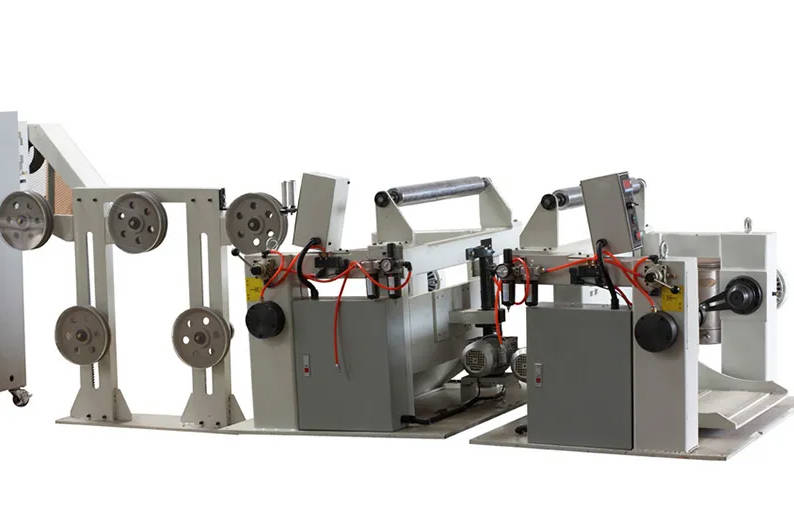
- Solution: Utilizing low-inertia mechanical dancer systems constructed from lightweight alloys provides instantaneous physical feedback, ensuring that tension remains constant without the delayed reaction of electronic processing.
Q3: How do I prevent foam cells from collapsing?
“Thermal shock” is the primary enemy. If the hot insulated wire hits cold water too quickly, the gas inside the cells contracts, causing the foam to collapse.
- Solution: Implement a multi-stage cooling trough with a precise thermal gradient (e.g., 45°C to 35°C to 20°C) to allow the foam structure to solidify gradually.
Q4: How do I maintain ±0.5 pF/m capacitance stability over long runs?
Capacitance is the ultimate real-time indicator of electrical quality.
- Solution: Integrate a high-speed capacitance bridge directly into the motion control system of the extrusion line. This allows the machine to make micro-adjustments to the screw speed in real-time, long before a human operator could detect a drift.
Q5: Why are my mass-production yields so much lower than my R&D samples?
R&D happens in short bursts where machines stay stable. Mass production exposes the “thermal drift” of the equipment.
- Solution: Invest in an extrusion line with high thermal mass and water-cooled barrels to ensure that the environment inside the extruder remains identical at Hour 1 and Hour 48.
Q6: Do I really need “Auto-Correction” crossheads for fine wires?
We must be sincere: for 34AWG wire, automated correction is often a marketing myth. The wire is too small for current sensors to adjust the die accurately in real-time.
- Solution: For high-speed Twinax, a high-precision, manually adjustable micro-crosshead is superior because it provides a “locked-in” stability that does not drift once the initial setup is perfected by a skilled operator.
Q7: Can my current line handle the move to 1.6T (224G/lane)?
Standard PLC-based lines often lack the synchronization speed required for the extreme tolerances of 1.6T.
- Solution: Evaluate your controller. If your system cannot process encoder feedback in microseconds, you will likely face “periodic defects” that cause signal spikes at 224G frequencies.
4. Technical Performance Data: The Standard for 2026
To help you audit your current production capabilities, we have compiled the following table of requirements for high-end Twinax manufacturing.
| Technical Parameter | 400G (56G PAM4) | 800G (112G PAM4) | 1.6T (224G PAM4) | QingFeng SFS Benchmark |
| Impedance Tolerance | ±5 Ω | ±3 Ω | ±2 Ω | High-precision gas control |
| OD Stability | ±0.010mm | ±0.005mm | ±0.003mm | Motion-controlled capstan |
| Foaming Rate | 50% – 60% | 65% – 75% | > 75% (Targeted) | Physical N2 Injection |
| Concentricity | > 92% | > 95% | > 96% | Micro-adjust Crosshead |
| Tension Control | Load Cell | Mechanical | Ultra-Low Inertia | Balanced Dancer System |
导出到 Google 表格
5. The Brain of the Machine: Why Motion Control is Mandatory
In 2026, the “logic” of a standard PLC is no longer fast enough to manage the complexities of a high-speed extrusion line. When you are extruding a 32AWG wire at high speed, a fluctuation of just 0.1% in the capstan speed can ruin the impedance of 50 meters of cable.
By utilizing high-speed motion controllers instead of standard PLCs, QingFeng SFS lines achieve microsecond-level synchronization between the extruder screw, the nitrogen gas flow, and the take-up unit, virtually eliminating the “micro-pulsing” that causes signal reflections.
This level of synchronization is the difference between a cable that barely passes a test and a cable that provides a healthy “Eye Diagram” for the most demanding AI server interconnects.
6. Operational Sincerity: The ROI of Yield
As a manufacturer, your biggest cost isn’t the machine; it’s the material. Silver-plated copper and high-end FEP/PFA resins are incredibly expensive.
An extrusion line that reduces your scrap rate by just 5% can pay for itself within the first year of 800G DAC production by saving on the cost of wasted high-performance polymers and conductors.
Focusing on “Top Speed” is a common trap. We suggest focusing on “Stable Yield Speed.” A line that runs at 80% of its max speed with a 98% yield rate is significantly more profitable than a line running at 100% speed with an 85% yield rate.
Conclusion: A Partnership in Engineering
The road to 1.6T is challenging, but it is also the most exciting frontier in the history of telecommunications. At QingFeng SFS, we don’t just provide an extrusion line; we share the technical journey with you. We understand that mass-producing 34AWG for PCIe 6.0 is still in the verification phase for much of the industry, and we are committed to being the sincere partner you need to navigate these R&D hurdles.
Mastering the physics of foaming is the first step. When your extrusion is perfect, every downstream process—from taping to cabling—becomes easier, and your position in the AI infrastructure supply chain becomes unshakeable.
FAQ: Quick Review for Technical Teams
Q1: What is the biggest enemy of 1.6T signal integrity? A: Periodical defects in the insulation. Even tiny, repeating variations in the foam density or diameter can cause a “spike” in Return Loss at high frequencies.
Q2: Why does QingFeng SFS avoid load cells for ultra-fine Twinax? A: Load cells require electronic processing time. For 32AWG-34AWG wire, the wire is too fragile to wait for a sensor to “tell” the motor to slow down. Mechanical dancers provide zero-lag physical compensation.
Q3: Can I upgrade an old line to produce 800G Twinax? A: It is difficult. Most old lines lack the nitrogen injection precision and the motion control speed required to hit ±3Ω impedance consistently.
Q4: What foaming rate should I target for internal AI cables? A: For most PCIe 6.0/7.0 applications, a foaming rate between 65% and 75% provides the best balance between electrical performance (low Dk) and mechanical crush resistance.
Q5: Is 800G/1.6T ready for mass production on 34AWG? A: It is currently in the intensive verification and R&D phase. Achieving stable high yields requires a deep partnership between the equipment manufacturer and the cable producer.