Blog

We share information, tips and knowledge we have learned over the years in twisting machines and networking equipment.

Blog

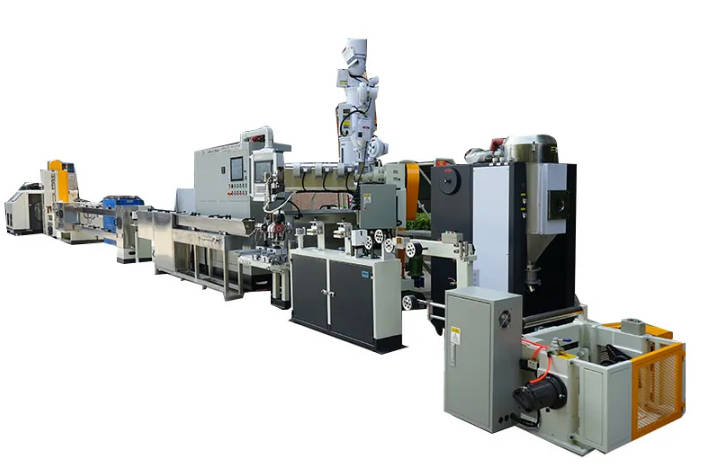
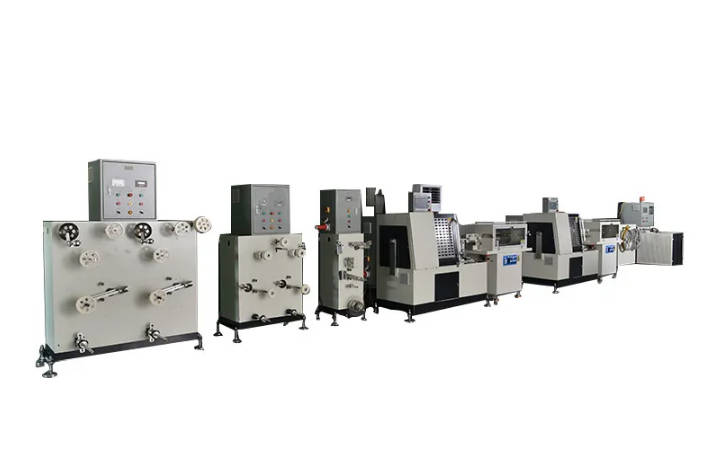
How to Control Concentricity and Wall Thickness in High-Speed Cable Extrusion Lines

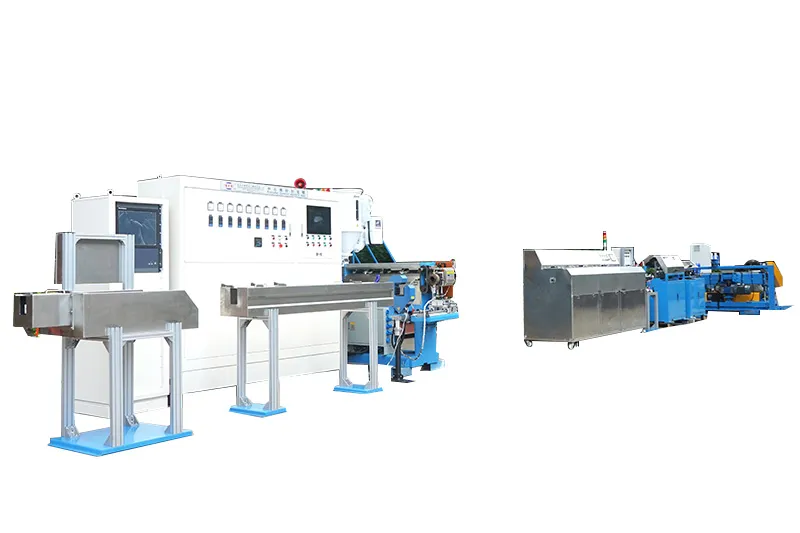
Maintaining tight insulation tolerances at line speeds exceeding several hundred meters per minute requires balancing mechanical alignment, polymer thermodynamics, and real-time process monitoring. In continuous wire manufacturing, cable extrusion line concentricity determines whether a finished conductor meets strict electrical insulation standards or fails spark testing due to localized thin spots. Achieving uniform wall distribution is not simply a matter of tightening head bolts; it requires steady melt pressure, dampening line vibrations, choosing the correct tooling geometry, and utilizing automated feedback loops.
Read More
Blog

Spark Testing in Cable Extrusion Lines: Placement, Sensitivity, and Integration Guide

Direct inline testing is the only reliable way to detect insulation pinholes, voids, and thin spots before a cable reaches the take-up reel. Implementing effective spark testing in cable extrusion line operations requires resolving two core engineering questions: exactly where to locate the test electrode along the line, and how to calibrate the test voltage and sensitivity to line speed and wall thickness. Locating the tester too close to the cooling trough causes residual water droplets to trigger false breakdown alarms.

Read More
Blog

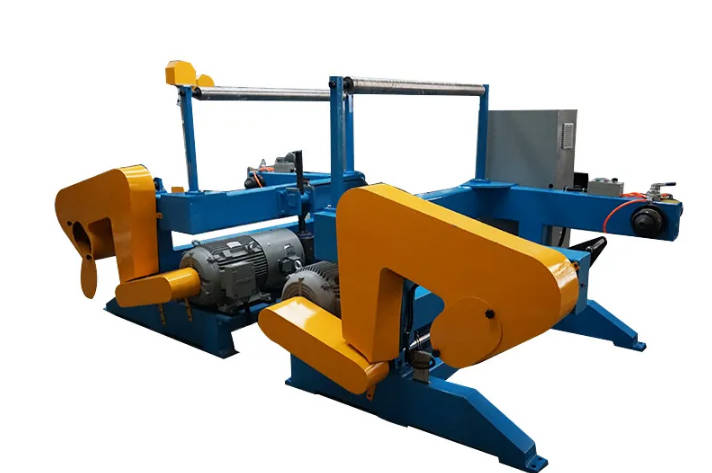
Drum Twister vs Planetary Cage Twister: Cost, Mechanics, and Application Comparison

Choosing between a drum twister and a planetary cage twister is one of the most critical capital expenditure decisions for a cable manufacturing plant. The short answer comes down to geometry, core sensitivity, and package size: a planetary cable machine is engineered for 100% mechanical back-twist, handling delicate, shaped, or multi-core constructions without torsional stress, whereas a drum twister excels at laying up heavy, large-conductor power cables onto large-capacity take-up drums in a compact footprint. Selecting the incorrect line risks conductor

Read More
Blog

Charging Pile Cable Extrusion: What Equipment Buyers Should Evaluate

Selecting equipment for charging pile cable manufacturing requires matching machine dynamics directly to polymer shear sensitivity, strict concentricity tolerances, and continuous high-voltage insulation integrity. Because electric vehicle (EV) charging cables combine heavy-gauge power conductors with delicate signal cores under heavy, oil-resistant jackets, standard construction-wire extruders cannot deliver the required dimensional stability. A dedicated extrusion line must balance gentle melt plasticization, multi-zone temperature stability, dynamic tension regulation, and closed-loop inline wall thickness verification. Evaluating these systems before issuing a purchase order prevents

Read More
Extrusion Line
Blog

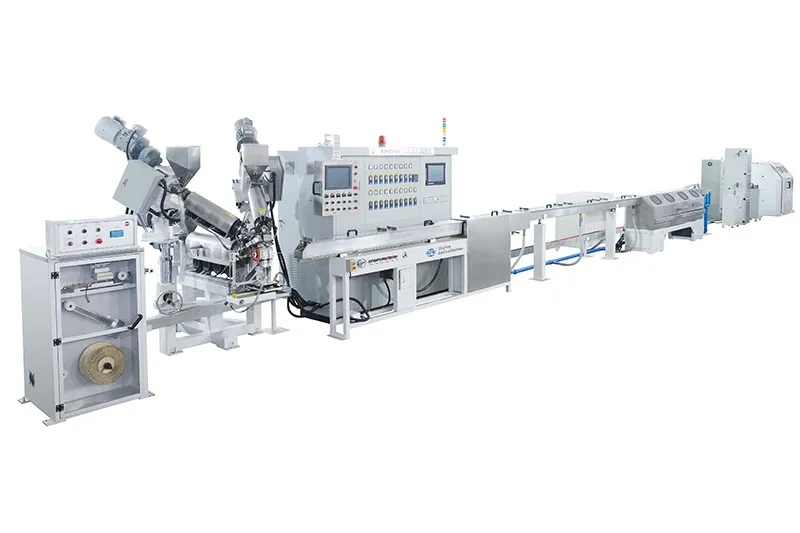
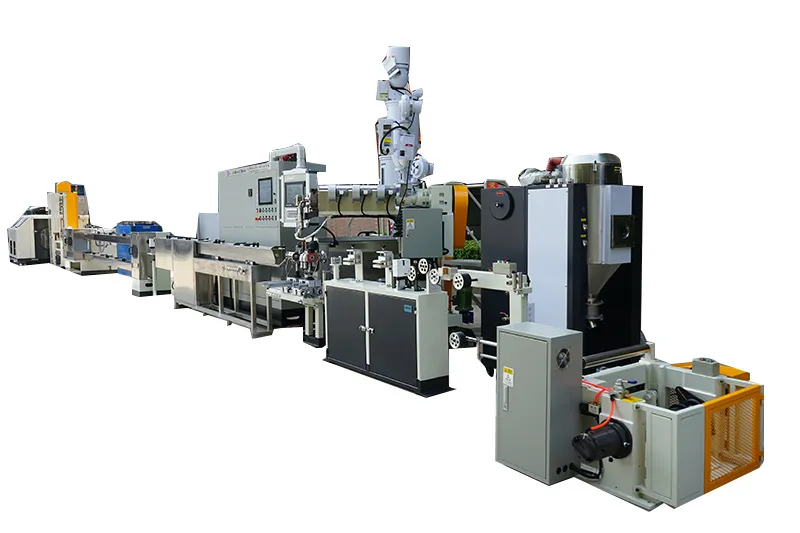
Cable Extrusion Line Price: What Affects the Cost?

Cable extrusion line price is mainly determined by what cable the line must produce—not simply by the screw diameter or extruder motor power. Material type, conductor range, number of extrusion layers, production speed, dimensional accuracy, online inspection and upstream/downstream equipment can all change the final cost. This explains why two cable extrusion line quotations can look similar at first but have very different prices. Both suppliers may write: Yet one line may be designed for ordinary PVC insulation, while another

Read More
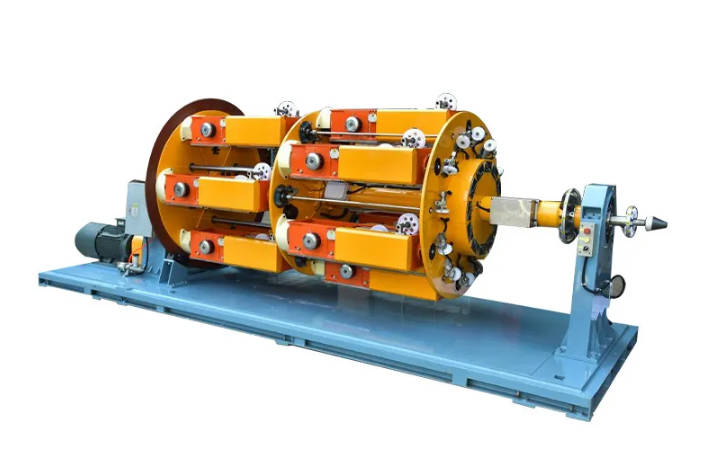
Power Planetary Cage Stranding Machine
Blog

Planetary Cable Machine vs Tubular Stranding Machine: Key Differences

The main difference between a planetary cable machine and a tubular stranding machine is not simply machine shape or rotational speed. The more important question is how each machine controls the orientation, tension and movement of the cable elements while they are stranded. A planetary machine is usually selected when manufacturers need greater control over individual bobbins, cable-core orientation and complex stranding structures. A tubular strander is often considered when the product structure is comparatively regular and production efficiency is

Read More
Taping Machine manufacture
Blog

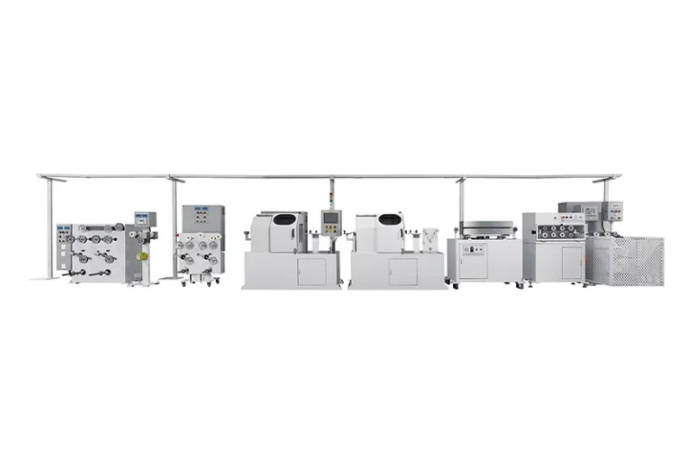
Single-Layer vs Double-Layer Cable Taping Machine: Which One to Choose?

Choose a single-layer taping machine when one tape layer can provide the required insulation, shielding, binding or protection. Choose a double-layer cable taping machine when the cable needs two functional layers, greater coverage redundancy, opposite-direction wrapping or two different tape materials in one production pass. The important point is that two layers are not automatically better. A second taping head increases equipment complexity, setup time, tape consumption and process-control requirements. If the cable specification only requires one stable tape layer,

Read More
Triple Layer Taping Machine
Blog

Common Cable Taping Defects: Wrinkles, Gaps, Breakage and Loose Wrapping

Most cable taping defects can be traced to an unstable relationship between tape tension, tape angle, cable speed, taping-head speed and the geometry of the incoming cable core. Wrinkles usually indicate that the tape is not lying smoothly against the cable. Gaps often point to incorrect pitch or unstable synchronization. Frequent tape breakage is commonly associated with excessive tension, damaged tape edges or abrupt machine movement, while loose wrapping usually means that insufficient force is keeping the tape against the

Read More
Extrusion Line factory
Blog

Insulating Core Wire Extrusion Line: Process and Equipment Guide

An insulating core wire extrusion line applies a controlled polymer insulation layer around a conductor while maintaining conductor tension, insulation thickness, concentricity, surface quality and finished wire diameter throughout continuous production. The extrusion machine is only one station in this process. A stable core wire production line normally depends on the coordination of: A problem at any one of these stages can appear later as uneven wall thickness, unstable diameter, rough surface, conductor eccentricity or excessive scrap. This article therefore

Read More

Looking For Wire and Cable Machine Manufacturer ?

Contact us for design assistance, free quote, and expert advice today. 

Your inquiry will be replied within 24 working hours, and we respect your privacy.

Get a Free Quote