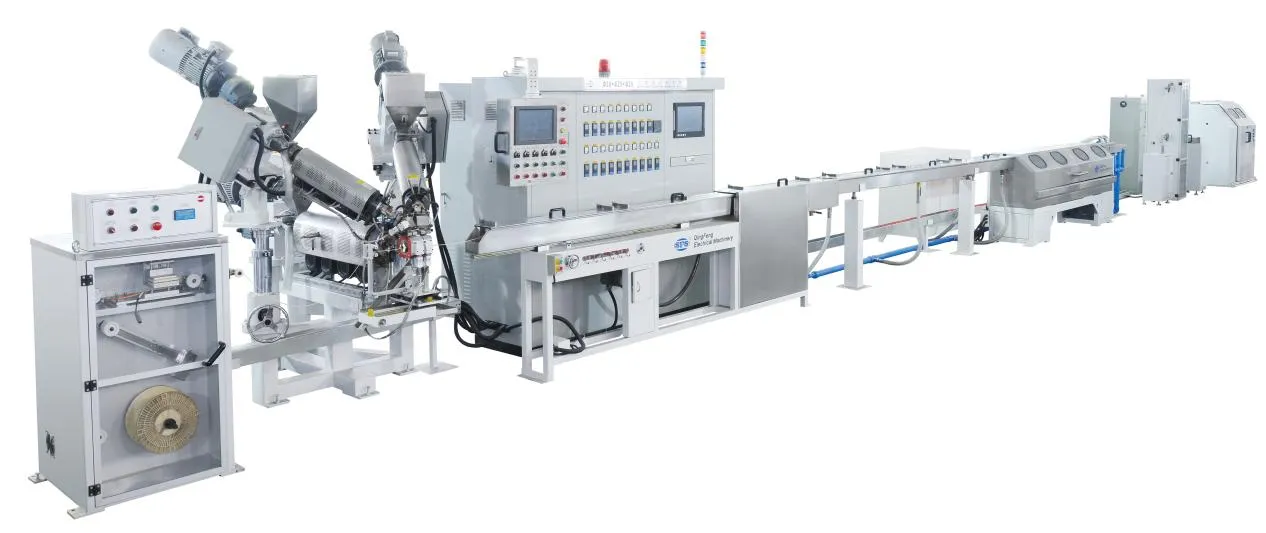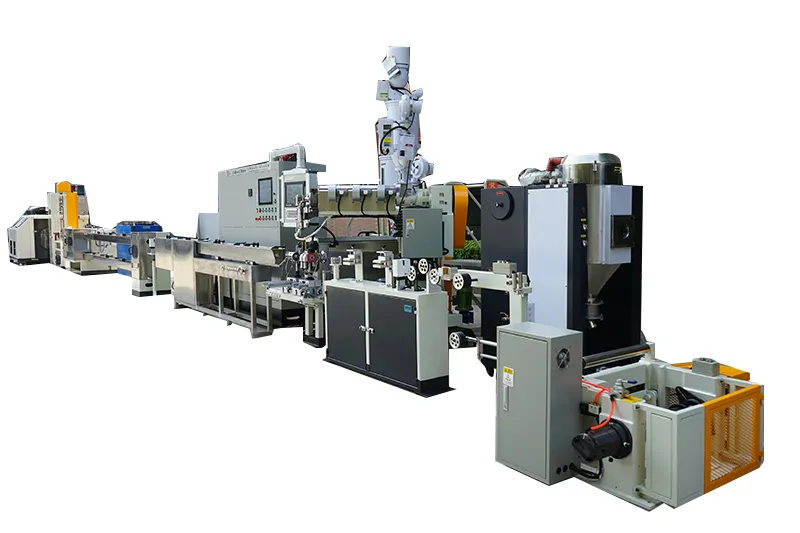
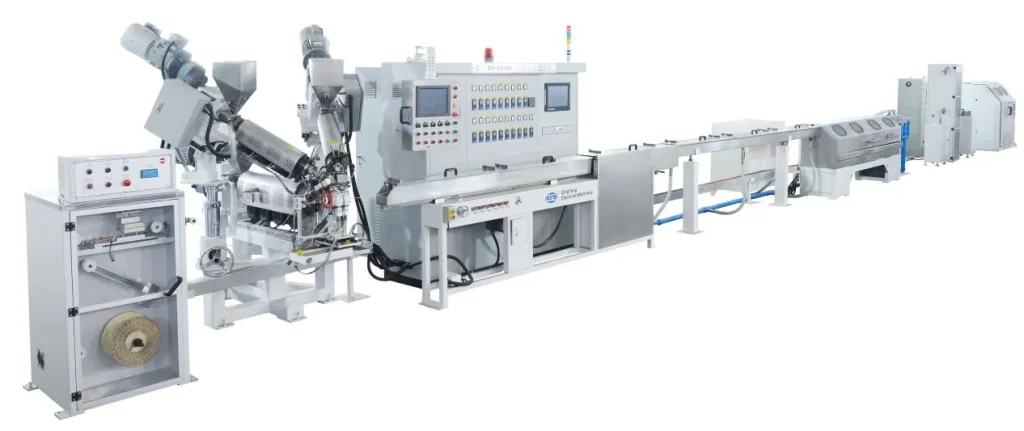
When factory capacity reaches its limit, production managers face a familiar dilemma: should you source a pre-owned machine to conserve initial capital, or invest in a newly manufactured line? While a pre-owned machine can cut initial capital expenditure by roughly 40% to 60%, it frequently introduces unpredictable operational expenses.
A professional extrusion line supplier scope covers far more than delivering machinery to a factory floor. In industrial manufacturing, acquiring an extrusion system involves complex mechanical alignment, precise thermal profiling, automation synchronization, and long-term risk mitigation. A reliable partner manages the full transition from manufacturing to stable commercial output, providing pre-shipment verification, on-site commissioning, structured operator instruction, and guaranteed service response frameworks.
Evaluating an extrusion equipment manufacturer requires examining four operational phases: factory acceptance testing before dispatch, on-site installation boundaries, workforce technical onboarding, and after-sales support mechanisms. This guide outlines the exact deliverables and service parameters industrial buyers should demand before signing an equipment purchase contract.
Beyond the Hardware: Why Service Scope Defines Extrusion Line ROI
Comparing machinery quotes based solely on raw motor kilowatts, screw dimensions, and capital expenditure creates significant operational risk. Unclear service boundaries frequently lead to hidden post-purchase costs that negate initial machine savings — one more reason buyers should first understand what actually drives the price of a cable extrusion line rather than the sticker figure alone.
| Service Deficit | Operational & Financial Consequence |
|---|---|
| Omitted Factory Acceptance Testing | Unidentified alignment errors require costly field rework. |
| Poor Plant Handover Criteria | Multi-week installation standstills awaiting facility power or utilities. |
| Superficial Push-Button Training | High raw material waste, melt instability, and persistent operator error. |
| Vague Wear-Part Support Terms | Weeks of unscheduled downtime waiting for custom screws, dies, or replacement barrels. |
When evaluating proposals for custom extrusion lines, procurement teams must assess total cost of ownership (TCO). A production line that sits idle due to misaligned barrel heaters, incorrect sensor calibration, or untrained line operators quickly consumes any margin gained from a lower purchase price. Specifying the engineering and service scope within the commercial contract protects the timeline and capital investment.
Pre-Installation Scope: What Should Happen Before Equipment Leaves the Factory
System integration begins long before crates arrive at your facility. Professional manufacturers conduct comprehensive factory acceptance testing at their assembly facility to identify and correct mechanical or electrical deviations.
Factory Acceptance Testing (FAT) & Trial Runs with Actual Raw Materials
A standard visual inspection is insufficient for high-precision extrusion systems. A comprehensive factory acceptance test must include dynamic testing:
- Dry Cycle Testing: Running motors, gearboxes, screen changers, and downstream haul-offs continuously to verify drive synchronization, heating zone stability, and safety interlocks.
- Material Trial Runs: Testing the extruder using the buyer’s specified polymer compounds (such as PVC, PE, PP, or engineering resins) along with designated masterbatches.
- Dimensional and Output Verification: Validating that melt pressure, melt temperature, linear line speed, and profile wall tolerances conform to target production standards.
- Punch-List Resolution: Documenting every mechanical adjustment, software bug, or leak on an official FAT protocol sheet, requiring sign-off by both parties prior to container loading.
Plant Preparation Guidelines: Power, Water, Chilling, and Footprint Planning
To prevent costly delays during delivery, the supplier must provide detailed engineering utility drawings at least four to eight weeks prior to shipment. These deliverables must specify:
- Electrical Demands: Total connected load (kVA), full-load amperage, voltage tolerances, and harmonic filter specifications.
- Cooling Water Requirements: Flow rates (m³/h), inlet water temperatures, pressure parameters, and filtration tolerances for calibration vacuum tanks and water baths.
- Pneumatics and Venting: Required CFM, air dryness levels, and exhaust ducting specifications for vacuum degassing units.
- Mechanical Footprint: Detailed foundation anchoring schematics, overhead crane clearances for screw pull-out, and spatial layouts for downstream collection racks.
On-Site Installation and Commissioning: Defining the Boundary of Responsibility
The handoff between buyer site contractors and the supplier’s field service engineers is where production timelines face the highest risk of disruption. A professional contract defines exactly where the customer’s preparatory duties end and the manufacturer’s technical obligations begin.
| Project Milestone | Buyer Responsibility | Supplier Scope |
|---|---|---|
| Rigging & Mechanical Placement | Unload crates, rig into bay, floor anchoring, and core leveling. | Supervise positioning, check level tolerances, align barrel and downstream units. |
| Utility Hookup | Route electrical drops, chilled water, and compressed air to primary cabinets. | Connect internal machine junction boxes, verify heating zone loops, check grounding. |
| Calibration & Dry Run | Supply hydraulic/gearbox oil, clean environment, safety perimeter. | Zero pressure transducers, test motor rotation direction, load and verify PLC code. |
| Site Acceptance Test (SAT) | Supply production resins, profile tooling, downstream handling crew. | Tune line speed, stabilize melt output, achieve final dimension and scrap criteria. |
Investing in a true turnkey extrusion line requires clear completion criteria for the Site Acceptance Test (SAT). A professional commissioning engineer remains on-site until the line runs continuously for an agreed evaluation period—typically 4 to 8 hours—within strict product dimensional tolerances, scrap-rate limits, and output targets.
Operator and Maintenance Training: Ensuring Long-Term Machine Productivity
High-performance machinery cannot compensate for an untrained operating crew. Qualified manufacturers deliver structured operator training programs with role-specific technical transfer sessions rather than informal, on-the-fly demonstrations.
Daily Operation and Parameter Optimization Training
Plant operators must receive hands-on instruction that covers the science of the extrusion process:
- HMI Navigation and Recipe Management: Loading, modifying, and locking production parameter recipes across multi-zone temperature controllers.
- Thermal Profiling & Melt Stabilization: Adjusting barrel heating curves to prevent polymer shear degradation while maintaining homogeneous melt viscosity.
- Start-Up and Purging Protocols: Step-by-step procedures to heat up dies evenly, purge resins cleanly to prevent screw scoring, and bring downstream haul-offs into synchronization without repeated web or strand breakage.
Preventive Maintenance, Die Cleaning, and Wear Part Replacement
Maintenance technicians require deeper mechanical and electrical instruction — the same routines detailed in a cable extrusion line maintenance checklist:
- Screw and Barrel Maintenance: Proper usage of puller tools, barrel inspection protocols, and wear measurement routines using precision internal micrometers.
- Die Head Disassembly and Care: Safe teardown procedures at processing temperatures, correct brass-tool cleaning techniques to prevent channel scratching, and re-torque patterns for die bolts.
- Lubrication and Drive Inspection: Gearbox oil sampling schedules, thrust bearing inspection methods, and drive belt tensioning.
After-Sales Safeguards: Technical Support, Warranty Terms, and Consumables
The equipment handover marks the start of a multi-year manufacturing partnership. Evaluating a reliable extrusion line manufacturer requires reviewing their formal after-sales service architecture and regional support structure.
| Support Element | Baseline Commercial Standard | High-Risk Deficiency Indicator |
|---|---|---|
| Remote Support Access | VPN/IIoT gateway connection for real-time PLC diagnostic sessions. | Phone-only troubleshooting without live system diagnostic visibility. |
| Emergency Response SLA | Defined initial technical response window (e.g., within 4 to 12 hours). | Vague promise of “support as soon as technicians become available.” |
| Wear-and-Tear Clarity | Explicit schedule of excluded consumables vs. covered core structural components. | Ambiguous warranties that deny coverage on early gearbox or drive failures. |
| Critical Spare Parts Pack | Pre-packaged kit delivered with the line (heaters, seals, sensors, rupture disks). | Zero parts inventory on site; all replacement spares sourced to order from overseas. |
Critical Spare Parts Management
Industrial buyers must insist on a structured two-tier spare parts package — a standard component of a full-service support program:
- Commissioning & Year-One Spares: Items that wear naturally or can fail during regular calibration, delivered alongside the main machine crates. This includes thermocouple probes, solid-state relays, band heaters, melt pressure sensors, rupture disks, and specialized seals.
- Capital Spares Strategy: Clear lead times, drawings, and raw material specifications for proprietary downstream tooling, calibration sleeves, and custom screw profiles to avoid extended line shutdowns.
The Due Diligence Checklist: Questions to Ask Before Signing the Contract
Before issuing a deposit for a high-performance plastic extrusion line — ideally after working through a structured cable extrusion line buying guide — require potential suppliers to provide written confirmation for this operational checklist:
- [ ] Pre-Shipment: Is raw material trial testing included in the baseline quote, or does it carry an added charge? Can our engineering team attend the FAT in person or via live multi-angle video streaming?
- [ ] Commissioning Scope: How many field engineers are sent, and for how many business days? What are the overtime rates if facility delays occur?
- [ ] Travel & Living Expenses: Are engineer flights, local transit, lodging, and per diems included in the quotation, or billed separately to the buyer?
- [ ] Utility Interface: Does the supplier provide full electrical schematics with complete wiring labels and terminal numbers in English?
- [ ] Training Documentation: Are step-by-step operating manuals, mechanical drawings, and HMI alarm troubleshooting guides delivered in our plant’s working language?
- [ ] Warranty Framework: Does the equipment warranty cover parts-only replacement, or does it include labor and freight costs for replacement components during the initial operational period?
- [ ] Software Rights: Does the buyer receive unrestricted access to PLC ladder logic programs, or is the control software locked behind proprietary manufacturer passwords?
Partnering for Reliable Long-Term Extrusion Manufacturing
Purchasing an extrusion line is an ongoing investment in operating capacity, scrap minimization, and output consistency. Prioritizing thorough pre-shipment validation, clear installation handovers, practical workforce training, and predictable after-sales agreements protects manufacturing margins from unexpected field modifications and startup delays.
When sourcing machinery, request a detailed written service scope and demand contracts that explicitly outline each support tier. Clear service boundaries provide the foundation for predictable production schedules, protected equipment lifespans, and long-term manufacturing profitability.
Key Takeaways
Service Drives Total ROI: Machinery purchase price accounts for only a portion of real equipment costs; incomplete installation and commissioning scopes lead to high scrap rates and costly production delays.
FAT Prevents Field Delays: Never authorize equipment dispatch without dynamic testing, including heating tests, PLC cycle verification, and trial runs using your specified resins and compounds.
Establish Clear Work Boundaries: Use a formal responsibility matrix to delineate buyer facility prep (power, cooling drops, civil anchoring) from supplier technical calibration and Site Acceptance Testing.
Invest in Practical Training: A thorough training program educates operators on melt temperature control, formula adjustments, and safe die-cleaning protocols, rather than just basic start/stop sequences.
Require Immediate Spare Parts: Ensure a year-one consumables package—including sensors, heater bands, and relays—ships directly inside the machine crates to protect initial production runs.
FAQ
What is the typical duration of on-site commissioning for an extrusion line?
Commissioning schedules vary by system complexity, automated integrations, and facility readiness. For standard single-screw or twin-screw extrusion setups, on-site commissioning generally requires 5 to 10 working days, provided all utility drops, electrical lines, cooling loops, and raw materials are prepared in advance.
What is the difference between a Factory Acceptance Test (FAT) and a Site Acceptance Test (SAT)?
A Factory Acceptance Test (FAT) is conducted at the supplier’s manufacturing plant prior to shipment to verify mechanical functionality, control operations, and dimensional tolerances. A Site Acceptance Test (SAT) is executed on the customer’s factory floor using actual facility utilities and operators to prove the machinery delivers specified commercial production rates under standard manufacturing conditions.
Which utilities must a manufacturing plant prepare before the extrusion line arrives?
The facility must provide adequate main power drops, industrial cooling water with controlled flow rates and temperatures, compressed air lines, overhead crane or forklift rigging capability, floor anchoring points, and raw processing materials for operational testing. Complete interface requirements should be supplied via engineering drawings before machine dispatch.
What spare parts should always be ordered alongside a new extrusion line?
Essential first-year spares include barrel heating bands, thermocouples, pressure transducers, rupture disks, motor drive belts, specialized water-tank seals, cutting blades for downstream cutters, and solid-state relays.
Are software updates and remote diagnostics included with modern extrusion lines?
Most modern extrusion control systems include an industrial router or VPN module allowing technicians to conduct off-site diagnostics, inspect PLC inputs, and apply software updates. Buyers should confirm whether remote diagnostic services remain free of charge during the warranty period or require a recurring service agreement.