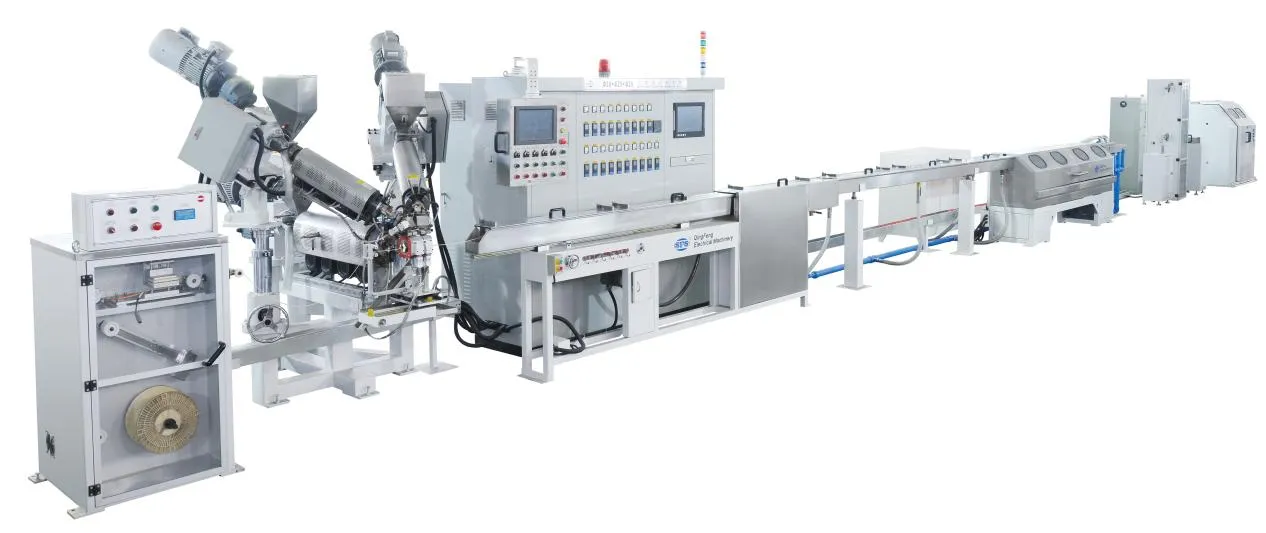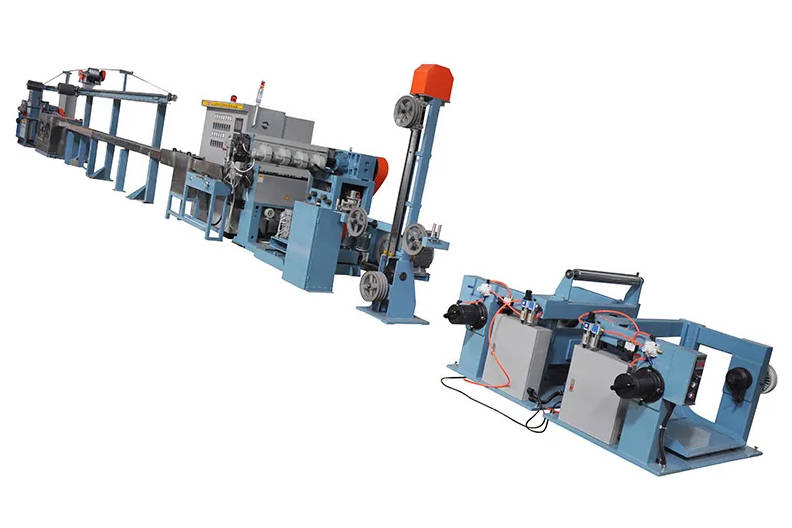
Managing screw and barrel wear comes down to three physical and financial thresholds: recoat when wear is limited to minor surface degradation and dimensions remain within tolerance; rebuild when screw flights show measurable dimensional loss but the base metal, straightness, and drive spline remain sound; and replace when the barrel liner is breached, corrosive pitting reaches the substrate, the screw is bent or cracked, or repair downtime costs more than a new assembly.
Making the wrong call on an extrusion line is expensive in both directions. Replacing a component too early wastes maintenance budget, while running or repeatedly repairing a severely worn assembly drives up scrap rates, energy consumption, and unplanned downtime. This guide explains how to diagnose signs of worn screw and barrel in extrusion line operations, measure wear accurately, compare rebuilding, recoating, and replacement, and evaluate the total cost of ownership for cable manufacturing.
Early Signs of Screw and Barrel Wear on an Extrusion Line
Process instability usually appears long before a screw or barrel fails catastrophically. As the radial clearance between the screw flights and the barrel wall widens, molten polymer leaks backward over the flights—a phenomenon known as leakage flow. This reduces pumping efficiency, increases shear heating, and disrupts melt homogeneity.
Before pulling the screw for inspection, process engineers should distinguish wear-related symptoms from heater, thermocouple, screen pack, or die issues.
| Observable Line Symptom | Underlying Wear Mechanism | Other Factors to Rule Out First |
|---|---|---|
| Gradual drop in output at the same RPM | Increased screw to barrel clearance allows melt to flow backward across the flights, reducing net forwarding efficiency. | Clogged breaker plate or screen pack, feed throat bridging, or resin batch viscosity changes. |
| Rising melt temperature or surging head pressure | Higher screw speeds required to maintain line speed generate excessive shear heat; worn metering flights deliver uneven pressure. | Faulty barrel heaters, drifting thermocouples, or cooling fan/water channel blockages. |
| Cable concentricity drift and wall thickness variation | Unstable melt pressure and inconsistent melt viscosity exiting the metering zone cause erratic flow through the crosshead die. | Worn die tips/dies, misaligned crosshead, or unstable capstan/haul-off speed. |
| Increased main motor amperage | Localized binding, poor melting in the transition zone, or higher RPM compensation increases drive load. | Gearbox lubrication issues, belt slippage, or overly low barrel temperature setpoints. |
| Black specks, gel formation, or degraded resin | Stagnant polymer collects in pitted barrel areas or worn flight roots, overheating and shearing off into the melt stream. | Poor purging procedures, dead spots in the crosshead, or thermal stabilizer issues in the compound. |
Understanding how the wear occurred is equally important. Abrasive wear typically results from hard mineral fillers or glass fibers grinding down flight lands. Corrosive wear is driven by acidic off-gassing from polymers such as PVC or fluoropolymers attacking the metal surface. Adhesive wear occurs when metal-to-metal contact between the screw and barrel causes galling—often due to misalignment or running the extruder empty, an operating habit that structured operator training programs are designed to eliminate.
How to Inspect and Measure Screw and Barrel Wear
Visual inspection alone cannot determine whether a component is salvageable. Deciding when to rebuild or replace extruder screw and barrel assemblies requires systematic dimensional measurement after the screw is pulled and thoroughly cleaned of residual polymer.
Step-by-Step Wear Inspection Process
- Clean both components completely. Remove all carbonized polymer from the screw flights, root, and barrel bore using non-abrasive brass tools or appropriate thermal cleaning methods to avoid creating artificial scratches.
- Measure the screw outer diameter (OD). Use a calibrated micrometer across the flight lands at regular intervals along the feed, compression (transition), and metering zones. Compare readings against the original manufacturer’s drawing.
- Measure the barrel inner diameter (ID). Use an internal bore gauge at corresponding axial positions along the barrel, measuring both vertically and horizontally to detect ovality or localized grooving—especially in the high-pressure transition and metering zones.
- Calculate the radial clearance. Subtract the measured screw OD from the measured barrel ID and divide by two. Compare the resulting clearance against the extruder screw flight wear tolerance specified by the original equipment manufacturer (OEM) for that specific screw diameter and resin type.
- Check structural and surface integrity. Inspect the screw for straightness (runout), spline or keyway wear at the drive end, deep pitting, and stress cracks at the flight roots. Inspect the barrel bore with a borescope for flaking, deep scoring, or breached bimetallic liners.
Inspection Specification Checklist
Before requesting a repair or replacement quote, record the following measurements:
- Screw nominal diameter and length-to-diameter (L/D) ratio
- Measured screw OD at feed, transition, and metering zones
- Measured barrel ID (vertical and horizontal axes) at matching zones
- Calculated radial clearance versus OEM baseline specification
- Straightness/runout check along the screw shaft
- Condition of the drive spline, cooling bore (if applicable), and feed throat
- Visual evidence of pitting, spalling, or exposed base metal
Note: Acceptable clearance thresholds vary significantly depending on the screw diameter, polymer viscosity, and precision requirements of the cable insulation. Always confirm exact wear limits against the OEM drawings. To catch these trends early rather than at failure, the measurement points above should be folded into a recurring extrusion line maintenance checklist instead of performed as one-off inspections.
Rebuild vs. Recoat vs. Replace: Comparing Your Three Options
Once wear measurements are documented, maintenance teams must choose between three restoration paths. Each option addresses a different level of mechanical degradation.
| Evaluation Criteria | Recoat (Surface Treatment) | Rebuild (Weld Overlay & Regrind) | Replace (New Component) |
|---|---|---|---|
| Suitable Wear Level | Very light surface wear, minor corrosion, or preventive hardening | Moderate to heavy flight OD wear with intact base metal | Severe wear, breached barrel liner, bent/cracked screw, or deep pitting |
| Primary Components | Primarily screws (surface plating/coating) | Primarily screws (flight lands and root restoration) | Screws, barrels, or matched screw-and-barrel sets |
| Dimensional Restoration | Does not restore significant lost diameter | Restores flight OD to near-original tolerances | Factory-new geometry, metallurgy, and tolerances |
| Key Technical Risk | Coating will peel if applied over damaged or heavily worn base metal | Welding heat can introduce distortion or metallurgical fatigue over repeated cycles | Requires accurate matching to existing gearbox and heater zones |
| Downtime & Lead Time | Shorter turnaround, subject to coating process and shipping | Moderate turnaround; requires shipping, welding, grinding, and polishing | Varies depending on whether standard spares are stocked or custom-built |
| Cost Structure | Lowest upfront cost | Moderate upfront cost compared to new hardware | Highest upfront purchase price, lowest long-term operational risk |
When Rebuilding (Weld Overlay and Regrinding) Makes Sense
An extruder screw rebuild involves welding a hard-facing alloy onto worn flight lands, followed by precision grinding and polishing to restore the original outer diameter. Rebuilding is a practical choice when:
- Wear is concentrated on the screw flight lands rather than the root or core.
- The screw shaft is straight, free of structural cracks, and has an undamaged drive spline.
- The barrel bore remains within acceptable tolerance, or the barrel is being replaced/relined simultaneously.
- The screw has not already undergone multiple rebuild cycles that could compromise its metallurgical integrity.
When Recoating (Surface Treatments and Hard Facing) Is Viable
Extruder screw recoating—such as industrial hard chrome plating, tungsten carbide thermal spraying, or re-nitriding—applies a thin protective layer to improve wear resistance, corrosion resistance, or polymer release. Recoating is viable only when:
- The existing coating is worn or slightly pitted, but the underlying steel has not suffered significant dimensional loss.
- The goal is to upgrade surface protection for a newly introduced corrosive or sticky compound without changing screw geometry.
- The base metal is clean, uniform, and capable of bonding properly with the new surface treatment.
When Full Replacement Is the Only Reliable Choice
Screw and barrel replacement is the most technically sound option when structural or metallurgical limits have been crossed:
- Bimetallic barrel wear has worn completely through the hard alloy inlay down to the softer backing steel. Once the liner is breached, wear accelerates rapidly and re-honing is not viable.
- The screw shows deep corrosive pitting, root cracking, torsional twist, or worn drive splines.
- Both the screw and barrel are heavily worn, making a matched replacement set necessary to restore proper radial clearance.
- The current screw design is poorly suited to the resins currently being processed, making a new, optimized screw and barrel geometry more valuable than restoring an outdated design.
Decision Framework: Evaluating Technical Risk and Total Cost of Ownership
Comparing extruder screw rebuild vs replace cost solely on the supplier’s invoice often leads to poor financial decisions. For a continuously operating cable extrusion line, the true cost includes unplanned downtime, lost production capacity, high scrap rates during startup, and excess electricity consumption.
| Operational Scenario | Recommended Action | Core Engineering & Financial Rationale |
|---|---|---|
| Minor surface dulling or light corrosion; dimensions within OEM tolerance | Recoat | Extends service life at minimal cost before base metal degradation begins. |
| Flight OD worn beyond tolerance; straight shaft; spare screw available to keep line running | Rebuild | Captures lower repair cost without incurring extended production downtime. |
| Flight OD worn beyond tolerance; no spare screw on site; high daily production value | Replace (and rebuild old screw as spare) | Avoids weeks of lost output while waiting for weld-overlay turnaround. |
| Barrel bimetallic liner breached, deep pitting, or severe ovality | Replace | Restoring a breached barrel is rarely reliable; new hardware prevents rapid secondary screw wear. |
| Frequent wear accompanied by high energy use, unstable temperature control, and slow line speeds | Evaluate Line Upgrade | Repeatedly repairing core wear parts on an obsolete machine yields diminishing returns. |
Evaluating Repair Costs Against Unplanned Downtime and Scrap
If a factory does not keep a backup screw in inventory, sending a worn screw out for rebuilding means shutting down the extruder for the entire shipping and machining cycle. When the revenue lost during that shutdown exceeds the difference between the repair invoice and a new screw and barrel quotation, ordering a replacement—and optionally rebuilding the old screw afterward as an emergency spare—protects overall plant profitability. Spare-parts availability and turnaround commitments should be confirmed with your supplier’s after-sales support terms before the first wear event, not after it.
Similarly, if a marginally rebuilt screw produces even a slight increase in cable wall thickness variation, operators must over-extrude insulation material to stay above minimum wall standards. Over months of continuous running, that extra resin consumption can quietly erase the savings of a cheaper repair.
When Recurring Wear Signals It Is Time to Upgrade the Extrusion Line
Sometimes, premature screw and barrel wear is a symptom of a broader equipment mismatch. Older extruders running modern, high-filled, or high-temperature cable compounds often suffer from inadequate barrel cooling, outdated screw geometries, or under-spec metallurgy.
If a machine requires frequent screw and barrel replacement while also struggling with high power consumption, inconsistent concentricity and wall thickness, or slow output speeds, continuing to invest in legacy spare parts may not be cost-effective. In these situations, evaluating a modern cable extrusion line configured with wear-resistant bimetallic barrels, optimized screw profiles, and precise thermal control can lower per-meter production costs and stabilize long-term cable quality.
How Cable Extrusion Materials Influence Wear and Restoration Choices
In wire and cable manufacturing, the polymer being processed dictates both the dominant wear mechanism and the feasibility of repair. A restoration strategy that works for standard polyethylene jacketing may fail quickly on fluoropolymers or flame-retardant compounds. (For a broader materials comparison, see our guide to PVC, PE, XLPE and TPE cable insulation.)
| Cable Material Category | Dominant Wear Mechanism | Typical Impact on Screw & Barrel | Restoration & Selection Considerations |
|---|---|---|---|
| PVC (Rigid & Flexible) | Corrosive & mild abrasive | Acidic HCl off-gassing attacks unplated steel; dead spots cause burning and pitting. | Smooth surface finishes and corrosion-resistant coatings are essential; pitted screws should be replaced rather than patched. |
| Fluoropolymers (FEP, ETFE, PFA / Teflon) | Severe corrosive wear | High processing temperatures release aggressive corrosive gases that rapidly degrade standard tool steels. | Standard carbon or nitrided steels fail quickly; requires specialized corrosion-resistant nickel-based alloys (confirm exact alloy grade with the equipment supplier). Dedicated Teflon extrusion lines are specified around these metallurgy requirements. |
| XLPE / XLPO | Thermal & mild abrasive | Scorching or premature crosslinking in worn clearances causes gels and localized wear. | Tight radial clearance is critical to prevent stagnant melt; rebuilding must maintain exact flight geometry. |
| Filled / LSZH Compounds | Heavy abrasive wear | High mineral filler content grinds down flight lands and transition-zone barrel walls. | Bimetallic barrels and hard-faced screw flights are recommended; monitor transition-zone clearances closely. |
| Nylon (Polyamide) | Abrasive & adhesive | Sharp melting point and high shear in the transition zone can cause localized flight wear or galling. | Requires accurate alignment and proper temperature profiling; verify barrel straightness before installing a rebuilt or new screw. |
When corrosive wear in fluoropolymer cable extrusion or heavy abrasion from LSZH compounds shortens component life, simply rebuilding to the original specification will repeat the same failure cycle. Upgrading to a custom cable extrusion line or specifying upgraded bimetallic and corrosion-resistant barrel assemblies during replacement addresses the root cause rather than just the symptom.
What to Prepare Before Requesting a Rebuild or Replacement Quote
Clear technical communication speeds up quoting and prevents costly fitment errors. Whether contacting an OEM or a specialized screw-and-barrel manufacturer, maintenance and procurement teams should prepare two checklists.
Pre-Quote Technical Information Checklist
- Original OEM drawings (if available) or complete dimensional measurements of the screw and barrel
- Extruder model, screw diameter, and L/D ratio
- Wear inspection report detailing current OD, ID, clearance, and any structural defects
- Resin types and filler percentages currently processed (and any planned material changes)
- Operating temperature profile and typical screw RPM range
- Target turnaround time and whether a spare assembly is available on site
Incoming Quality Inspection Checklist
Before installing a rebuilt, recoated, or newly manufactured screw and barrel, verify:
- Dimensional inspection report confirming flight OD, barrel ID, and radial clearance match the agreed tolerance
- Material and hardness certificates verifying base steel, bimetallic liner, or surface coating specifications
- Straightness and runout verification to prevent adhesive wear during startup
- Surface finish quality (smooth, pit-free channels to prevent polymer hang-up and scorching)
- Drive spline and feed-zone fitment against the existing gearbox and hopper block
Conclusion
Deciding whether to rebuild, recoat, or replace worn extrusion components requires balancing physical wear measurements against operational downtime and long-term material costs. Recoating protects sound geometry against minor surface degradation, rebuilding extends the life of structurally intact screws when downtime is manageable, and replacement becomes the safest investment once barrel liners are breached, corrosion penetrates the base metal, or production losses outweigh repair savings. By documenting radial clearances systematically and matching component metallurgy to your cable compounds, you can keep output stable and protect insulation quality across every production run.
If your wear inspection report is ready and you need a quotation—or an opinion on whether your screw design still suits the compounds you run—send us your screw diameter, L/D ratio, and resin list and our engineers will recommend the most cost-effective path.
Key Takeaways
- Match the fix to the wear depth: Recoat for minor surface protection, rebuild for measurable flight OD wear with intact base metal, and replace when barrel liners are breached, shafts are bent, or deep corrosive pitting is present.
- Measure before deciding: Never rely on output symptoms alone; pull the screw, measure OD and barrel ID across all zones, and compare radial clearance against OEM tolerances.
- Factor in total cost of ownership (TCO): Unplanned downtime, scrap from wall-thickness variation, and higher energy draw often cost more than the price difference between rebuilding and replacing.
- Material dictates metallurgy: Corrosive compounds (PVC, fluoropolymers) and abrasive fillers (LSZH) require targeted alloy and coating selections rather than generic repairs.
- Know when to upgrade the line: If recurring screw and barrel wear coincides with high energy use and outdated thermal control, upgrading the extrusion line may deliver a better return than repeated component repairs.
FAQ
Can you replace just the extruder screw without replacing the barrel?
Yes, but only if a bore gauge inspection confirms the barrel inner diameter is still within OEM tolerance and the bimetallic liner is intact. Installing a new screw into a heavily worn or ovalized barrel leaves excessive radial clearance, which causes immediate leakage flow, poor output, and accelerated wear on the new screw.
How many times can an extruder screw be rebuilt?
There is no universal fixed number, as it depends on the base steel, weld-overlay process, and operating stress. Each welding cycle introduces heat that can cause distortion or metallurgical fatigue. Most engineers evaluate the screw’s straightness, root integrity, and spline condition after each cycle and replace the screw once structural reliability becomes uncertain.
Does recoating restore lost diameter on a worn screw?
No. Surface treatments such as hard chrome plating or thermal spray coatings add only a thin protective layer designed to resist corrosion, abrasion, or sticking. They cannot fill significant dimensional gaps. If the screw flight outer diameter is worn below tolerance, weld-overlay rebuilding or full replacement is required.
How does screw and barrel wear impact cable insulation quality?
Worn flights and widened radial clearances cause uneven melt pumping and erratic head pressure. On a cable extrusion line, these pressure fluctuations directly disrupt concentricity and cause inconsistent insulation wall thickness. Additionally, stagnant polymer trapped in worn or pitted zones can overheat, creating black specks or gels in the finished cable.