
Cable Extrusion Line Maintenance Checklist Maximizing Equipment Lifetime to 10+ Years

Extending the service life of an industrial cable extrusion line beyond a decade requires shifting from reactive repairs to structured preventative maintenance. Without regular inspection, thermal drift, mechanical misalignment, and mechanical wear degrade process stability, leading to insulation eccentricity, surface flaws, and unscheduled line downtime. Achieving long-term equipment reliability depends on systematic control over mechanical clearances, […]
Double Wire Extrusion Line vs Single Line When Two Lines Pay Off
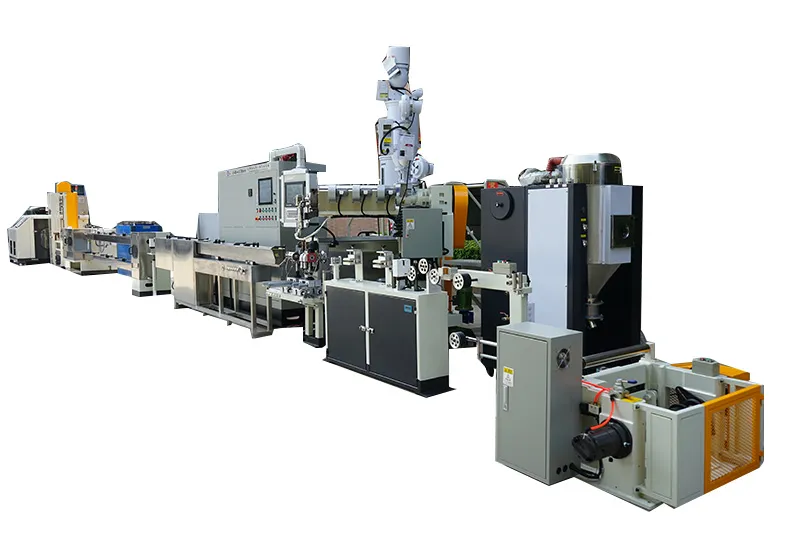
A double wire extrusion line lets a single extruder produce two insulated conductors simultaneously through a specially designed crosshead. The obvious appeal is higher output without doubling floor space or operator count. Yet the decision is not as simple as “two lines are better than one.” The right configuration depends on your cable type, conductor […]
Energy-Saving Extrusion Lines How Advanced Drives and Heating Systems Reduce Cable Production Costs
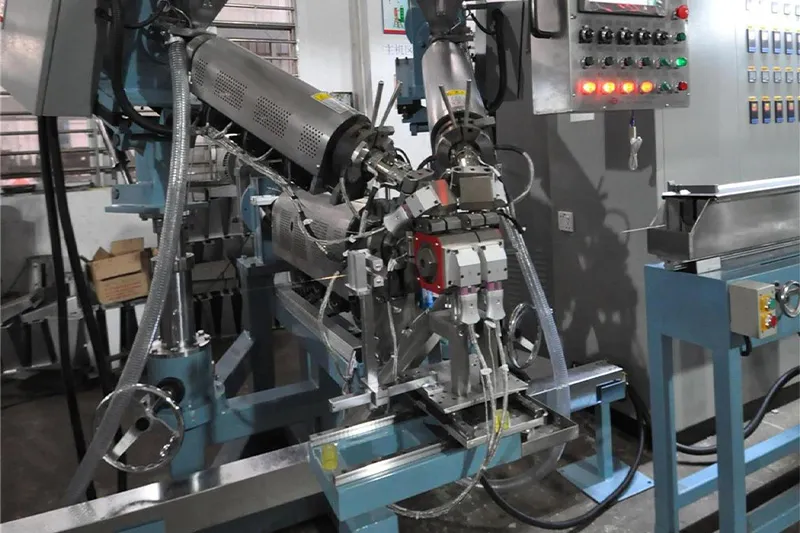
Electric power is one of the highest continuous operating expenses in wire and cable manufacturing. In a typical continuous extrusion plant, utility overhead is dominated by two primary subsystems: the mechanical drive powering screw rotation against melt resistance, and the thermal control units heating the extruder barrel and crosshead. Operating an energy-saving extrusion line requires replacing passive […]
How to Control Concentricity and Wall Thickness in High-Speed Cable Extrusion Lines
Maintaining tight insulation tolerances at line speeds exceeding several hundred meters per minute requires balancing mechanical alignment, polymer thermodynamics, and real-time process monitoring. In continuous wire manufacturing, cable extrusion line concentricity determines whether a finished conductor meets strict electrical insulation standards or fails spark testing due to localized thin spots. Achieving uniform wall distribution is not […]
Energy-Saving Extrusion Lines How Advanced Drives and Heating Systems Reduce Cable Production Costs
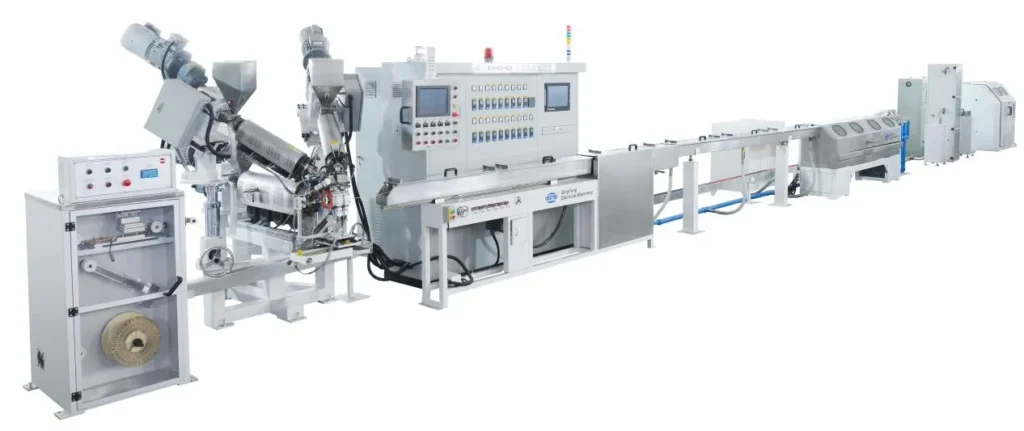
Electric power is one of the highest continuous operating expenses in wire and cable manufacturing. In a typical continuous extrusion plant, utility overhead is dominated by two primary subsystems: the mechanical drive powering screw rotation against melt resistance, and the thermal control units heating the extruder barrel and crosshead. Operating an energy-saving extrusion line requires […]
How to Control Concentricity and Wall Thickness in High-Speed Cable Extrusion Lines
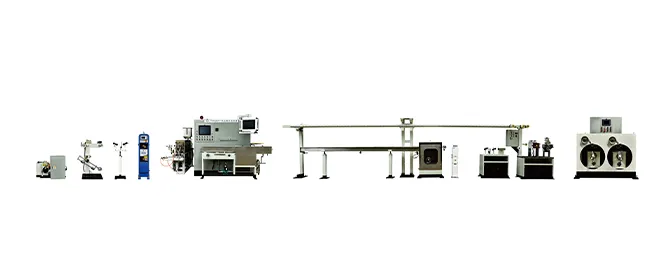
Maintaining tight insulation tolerances at line speeds exceeding several hundred meters per minute requires balancing mechanical alignment, polymer thermodynamics, and real-time process monitoring. In continuous wire manufacturing, cable extrusion line concentricity determines whether a finished conductor meets strict electrical insulation standards or fails spark testing due to localized thin spots. Achieving uniform wall distribution is not […]
Spark Testing in Cable Extrusion Lines: Placement, Sensitivity, and Integration Guide
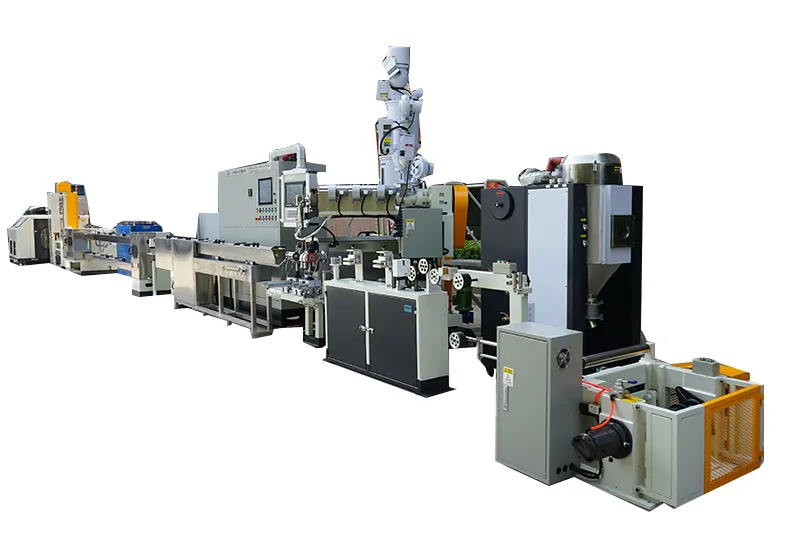
Direct inline testing is the only reliable way to detect insulation pinholes, voids, and thin spots before a cable reaches the take-up reel. Implementing effective spark testing in cable extrusion line operations requires resolving two core engineering questions: exactly where to locate the test electrode along the line, and how to calibrate the test voltage and […]
Drum Twister vs Planetary Cage Twister: Cost, Mechanics, and Application Comparison
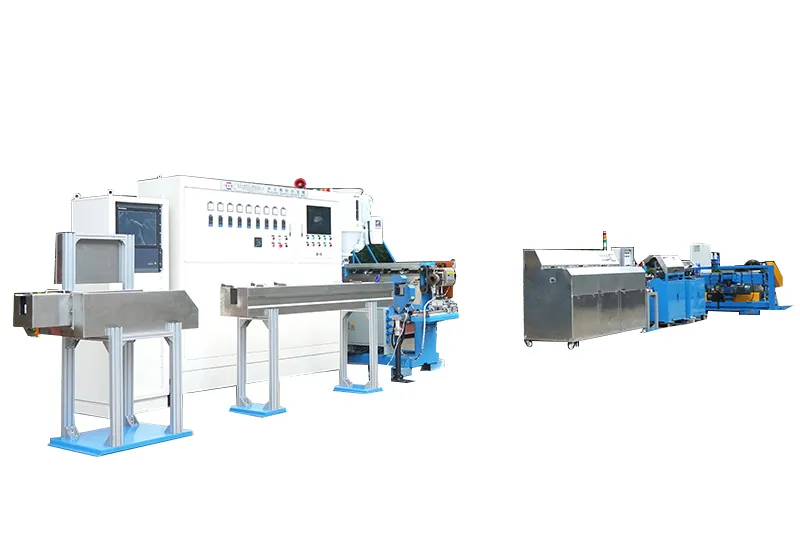
Choosing between a drum twister and a planetary cage twister is one of the most critical capital expenditure decisions for a cable manufacturing plant. The short answer comes down to geometry, core sensitivity, and package size: a planetary cable machine is engineered for 100% mechanical back-twist, handling delicate, shaped, or multi-core constructions without torsional stress, whereas […]
Charging Pile Cable Extrusion: What Equipment Buyers Should Evaluate
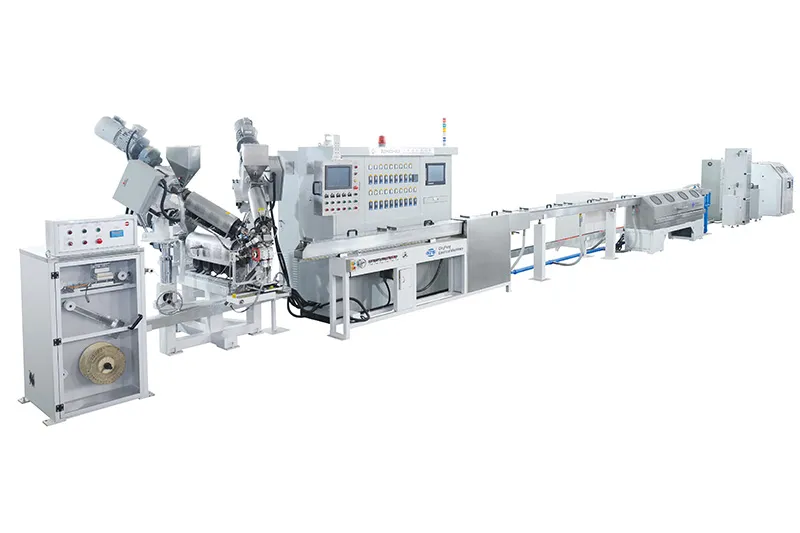
Selecting equipment for charging pile cable manufacturing requires matching machine dynamics directly to polymer shear sensitivity, strict concentricity tolerances, and continuous high-voltage insulation integrity. Because electric vehicle (EV) charging cables combine heavy-gauge power conductors with delicate signal cores under heavy, oil-resistant jackets, standard construction-wire extruders cannot deliver the required dimensional stability. A dedicated extrusion line must […]