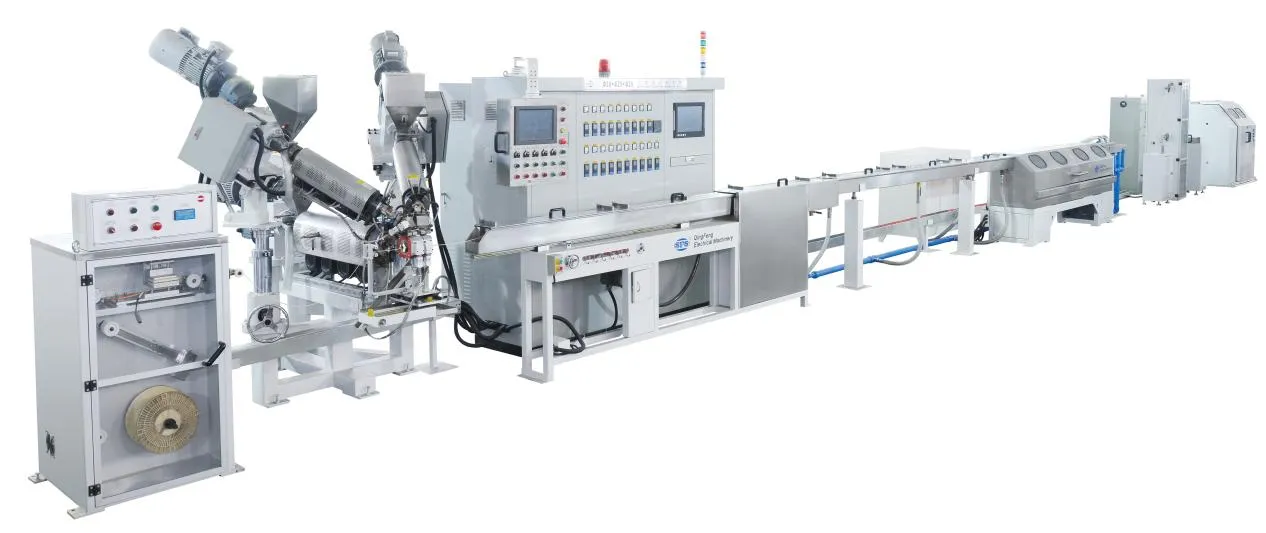
When factory capacity reaches its limit, production managers face a familiar dilemma: should you source a pre-owned machine to conserve initial capital, or invest in a newly manufactured line? While a pre-owned machine can cut initial capital expenditure by roughly 40% to 60%, it frequently introduces unpredictable operational expenses.
In industrial plastics, rubber, and profile extrusion, the true cost of an asset is rarely defined by its invoice price. Evaluating a used vs new extrusion line requires calculating Total Cost of Ownership (TCO)—a framework that accounts for procurement, installation, daily running costs, scrap rates, and lost throughput over three to five years. For expanding manufacturing plants, deciding between used and new machinery comes down to balancing initial budget limits against scrap rate stability, energy usage, spare parts availability, and the risk of unscheduled downtime. Evaluating complete extrusion line options requires calculating what that machine costs per kilogram of saleable output over its entire working lifecycle.
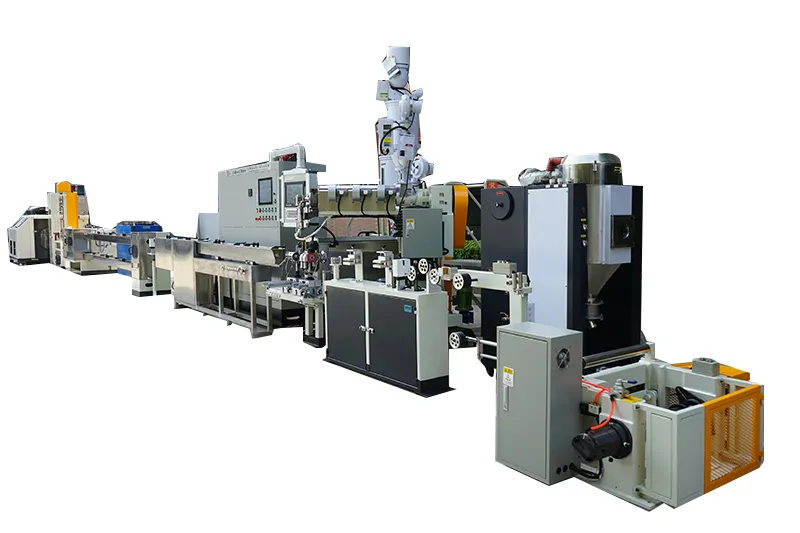
This guide breaks down upfront procurement costs, analyzes the hidden operating variables of second-hand machinery, provides a quantitative TCO framework, and presents a structured decision matrix to guide your equipment purchasing decisions.
The CAPEX Illusion: Why Initial Machine Cost Misleads Growing Extruders
Focusing strictly on Capital Expenditure (CAPEX) creates an operational blind spot. An available used machine at an attractive auction price looks like an immediate win for factory cash flow. However, that purchase order only covers the iron sitting on another plant’s floor.
Total Cost of Ownership represents the complete financial commitment required to procure, integrate, operate, maintain, and decommission an asset:
TCO = Initial Acquisition Cost + Relocation & Commissioning + Operating Costs (Energy + Scrap) + Maintenance & Downtime − Residual Asset Value
For high-output production, operating expenditures (OPEX) quickly overtake initial machine acquisition costs. A machine that runs two shifts a day, five days a week, will consume its purchase value in resin and electricity within its first few years of operation. If an older system runs with worn heating bands, inefficient motors, or fluctuating barrel temperatures, the financial losses from discarded purge, out-of-spec scrap, and unplanned stops will rapidly surpass the initial savings achieved at purchase — a dynamic that echoes what actually drives the price of a cable extrusion line in the first place.
Upfront Investment Breakdown: Where the Money Actually Goes
Comparing the invoice price of new equipment against a used machine does not reflect real-world installation costs. A pre-owned line involves significant logistical and refurbishment hurdles before drawing its first kilogram of raw material.
| Expense Category | Pre-Owned Extrusion Line | New Turnkey Extrusion Line |
|---|---|---|
| Asset Acquisition | 40% to 60% below new equipment list price. | Full capital investment based on specified engineering scope. |
| Decommissioning & Rigging | Buyer typically pays for match-marking, teardown, and rigging out of the seller’s facility. | Handled at the manufacturer’s facility; packaged directly for export/delivery. |
| Freight & Transit Insurance | Often complex due to loose assemblies, fragile components, and non-standard packaging. | Standardized containerization or crating with transit insurance. |
| Mechanical & Electrical Refurbishment | Often requires rewiring, barrel re-honing, screw repairs, and heater band replacement. | Factory-fresh components; no pre-production refurbishing needed. |
| Die & Downstream Tooling Adaptation | Requires machining adapters to mate existing crossheads, dies, calibrators, or haul-offs. | Custom-machined to match target product profiles, tooling, and materials. |
| Commissioning & Calibration | Internal maintenance team or third-party contractors bill hourly without OEM factory support. | On-site or remote OEM commissioning included under contractual terms. |
A used asset frequently demands substantial cash outflows between warehouse pickup and actual production. If a used machine requires major barrel re-sleeving, new drives, or customized transition plates to mate with existing dies, that upfront financial gap narrows before the line produces its first commercial meter.
The Unseen OPEX: Five Hidden Drains on Factory Cash Flow
After commissioning, the ongoing operational costs of a used extrusion line can strain factory budgets in several specific ways.
| Operational Drain | Root Mechanical or Electrical Cause | Direct Operational Consequence | Commercial & Financial Impact |
|---|---|---|---|
| Progressive Screw & Barrel Wear | Widened flight clearances from processing abrasive fillers, Masterbatch, or flame retardants; loss of flight depth uniformity. | Melt backflow slippage, loss of specific throughput (kg/hr per RPM), and uneven shear heating. | Chronic wall thickness variance, out-of-spec dimensions, and elevated resin scrap rates. |
| Outdated PLC & Control Architectures | Unsupported legacy control boards, obsolete analog loop controllers, or locked/undocumented ladder logic. | Inability to maintain precise zone PID loops; lack of historical process parameter tracing. | Frequent process drift, unstable melt temperatures, and high scrap generation during line startup. |
| Motor & Thermal Inefficiencies | Aging standard AC/DC motors, worn gearboxes with friction losses, and uninsulated band heaters. | High electrical transmission losses and continuous radiant heat loss into ambient air. | Significantly higher electrical consumption (kWh per kg) and inflated recurring utility bills. |
| Component Scarcity & Parts Sourcing | Discontinued drives, rare thrust bearings, obsolete melt pump seals, and defunct OEM suppliers. | Weeks spent sourcing replacement parts through international brokers or custom machine shops. | Extended downtime, premium air-freight expenses, and inflated maintenance hours. |
| Cascading Downtime | Unplanned extruder stops halting continuous downstream operations (tanks, haul-offs, cutters). | Unscheduled equipment trips that force downstream operators into idle standing time. | Missed delivery deadlines, batch-level scrap waste, and commercial chargebacks from clients. |
Operating a modern, energy-efficient extrusion line helps eliminate these compounding losses, maintaining predictable output, protecting upstream planning, and ensuring reliable customer fulfillment.
3-Year TCO Comparison: Used Line vs. New Turnkey Extrusion Line
To evaluate the true cost over time, consider a model of a growing facility operating a standard production schedule over three years (approximately 4,000 to 5,000 running hours per year).
Note: The following model uses normalized relative index values where the acquisition cost of a new line equals 100 units. It illustrates structural cost distributions rather than fixed quotes, as actual performance varies with material properties, machine size, and operating conditions.
| Cost Component | Used Line (Auction / As-Is) | Used Line (Fully Refurbished) | New Turnkey Extrusion Line |
|---|---|---|---|
| Initial Purchase Price | 45 | 70 | 100 |
| Freight, Rigging & Foundations | 12 | 10 | 8 |
| Initial Overhaul & Tooling Adapters | 18 | 6 | 0 (Included) |
| Commissioning & Startup Trial Scrap | 8 | 5 | 3 |
| Year 1–3 Power Consumption | 42 | 38 | 32 |
| Year 1–3 Scrap & Material Loss | 22 | 16 | 8 |
| Year 1–3 Maintenance, Spares & Repairs | 18 | 12 | 4 (Under Warranty) |
| Estimated Cost of Unplanned Downtime | 25 | 14 | 3 |
| Gross 3-Year Expenditure | 190 | 171 | 158 |
| (Less Residual Equipment Value at Year 3) | (15) | (25) | (60) |
| Net 3-Year Total Cost of Ownership | 175 | 146 | 98 |
Analyzing the Breakeven Point
Although the unrefurbished used machine enters the plant at less than half the invoice cost of a new system, the combination of adaptation work, elevated scrap rates, higher energy demand, and unplanned downtime steadily erodes that financial buffer. In high-volume operations, the cumulative cost curve of an unrefurbished machine often intersects and exceeds that of a new line within 18 to 24 months. Furthermore, at the end of the three-year cycle, a modern, well-maintained machine retains substantial book and resale value, whereas an aging, heavily modified line approaches scrap value.
Decision Framework: Evaluating What Fits Your Current Production Stage
Pre-owned machinery does have a role in industrial manufacturing. The goal is matching the equipment’s condition and risk profile to your commercial commitments.
| Evaluation Question / Condition | Primary Operational Implication | Recommended Equipment Strategy |
|---|---|---|
| Continuous, high-volume commercial production? | Downtime immediately impacts production volume, operator utilization, and customer delivery timelines. | Invest in a New Turnkey Extrusion Line |
| Strict dimensional tolerances and expensive raw polymers? | Barrel/screw play causes continuous scrap and inconsistent wall concentricity, leading to direct resin loss. | Invest in a New Turnkey Extrusion Line |
| Periodic pilot runs, intermittent prototyping, or R&D? | Equipment runs intermittently; downtime and startup tuning scrap do not disrupt commercial delivery schedules. | Pre-Owned / Used Equipment Viable |
| Low-tolerance goods with low-cost recycled resin? | Minor dimensional shifts and surface finish variances remain within acceptable client quality thresholds. | Refurbished Used Line Viable |
| In-house mechanical and controls engineering staff available? | Plant has the technical skills and time to service obsolete PLCs, source drives, and re-machine components. | Refurbished Used Line Viable |
| Lean maintenance team with tight delivery commitments? | Maintenance must focus on day-to-day operations rather than long-term rebuilds and troubleshooting. | Invest in a New Turnkey Extrusion Line |
Practical Production Scenarios
When Buying a Used Extrusion Line Makes Sense:
- R&D and Laboratory Testing: Sourcing a used extruder for material trials, color formulation tests, or masterbatch evaluation where continuous production is not required.
- Low-Duty Cycle Operations: Production runs limited to a few days per month to fulfill sporadic, non-critical stock orders.
- Low-Tolerance Products: Processing non-critical profiles where wall thickness variations, visual imperfections, or frequent sizing adjustments will not trigger quality rejections.
- In-House Rebuilding Expertise: Plants staffed with experienced mechanical and electrical technicians capable of rebuilding gearboxes, repairing screws, and updating PLC software without outside contractors.
When Investing in a New Extrusion Line is Imperative:
- High-Volume Contract Manufacturing: Securing contracts with Tier-1 automotive, medical, precision packaging, or infrastructure clients where unscheduled downtime breaches delivery SLAs.
- High-Cost Raw Materials: Processing expensive engineering polymers such as fluoropolymers (e.g., PTFE/FEP, PEEK, compounding additives) where high scrap rates cause direct financial losses.
- Tight Dimensional Tolerances: Applications requiring precise outer diameters, consistent wall concentricity, and strict physical profiles that depend on optimized screw geometry and stable barrel heating.
- Capacity Expansion with Lean Headcount: Growing facilities that need to run machinery immediately without diverting their core maintenance team toward long rebuilding projects — the same economics that determine when adding a second extrusion line pays off. Sourcing tailored extrusion line engineering provides immediate operational predictability, backed by direct manufacturer warranty coverage.
Due Diligence Checklist: What to Inspect If You Must Buy Pre-Owned
If cash flow limits dictate purchasing a pre-owned machine, do not finalize a deal based solely on photographs or video clips of dry cycles. Follow this comprehensive engineering inspection framework across every functional subsystem — the same discipline you will later apply through a cable extrusion line maintenance checklist:
| Subsystem Area | Critical Physical Inspection Items | Key Verification & Diagnostics | High-Risk Red Flags |
|---|---|---|---|
| 1. Mechanical Drive & Transmission | Gearbox housing, drive coupling alignment, and main thrust bearing seals. | Pull gearbox oil sample to check for bronze/steel flakes; perform motor insulation resistance (Megger test). | Excessive shaft backlash, noisy thrust bearing, or oil contaminated with metal particles. |
| 2. Plastification Unit (Screw & Barrel) | Feed throat cooling jacket, barrel outer insulation, and head-clamping bolts. | Measure barrel internal bore ovality using internal micrometers; inspect screw flight clearance and depth. | Scratched barrel walls, chipped screw flights, uneven re-welding, or scaled cooling jackets. |
| 3. Thermal & Pressure Management | Heater bands, solid-state relays (SSRs), thermocouple mountings, and melt transducers. | Calibrate melt pressure sensors against master gauge; cycle all heating zones to verify continuous PID response. | Charred wiring harnesses, faulty relays, stuck cooling solenoid valves, or blown rupture disks. |
| 4. Downstream & Sizing Systems | Vacuum calibration tank seals, spray nozzles, water pumps, haul-off caterpillar pads, and cutter blades. | Check vacuum tank rail alignment; test caterpillar puller drive synchronization; cycle cutter clamp mechanisms. | Corroded vacuum chambers, cavitation in water pumps, uneven puller pad wear, or blade play. |
| 5. Controls, PLC & Automation | Electrical cabinet condition, cooling fans, terminal block labelling, and HMI display screen. | Confirm PLC passwords are provided; verify physical wiring matches electrical schematics; confirm source code access. | Locked proprietary PLCs, missing circuit schematics, obsolete drives, or bypassed safety circuits. |
De-risking Capacity Expansion: The Strategic Value of a Modern Extrusion Partner
When small-to-medium factories transition into high-volume production, their machinery needs to be a dependable production asset, not a constant maintenance project. Modern manufacturing requires predictable output, precise material consumption, and consistent product dimensions.
Working with an established equipment partner like Qingfeng helps mitigate expansion risks:
- Application-Specific Screw Design: Instead of adapting generic used screws to your resin, modern production lines feature screw geometries (L/D ratio, compression ratio, mixing pins, barrier flights) engineered specifically for your polymers, melt flow indexes, and output targets.
- Integrated Safety & Quality Verification: New production units are wired to current electrical safety standards, featuring automatic safety shutdowns, pressure-limiting relief protections, and melt-temperature monitoring to eliminate equipment hazards.
- Turnkey Equipment Integration: Extruders, crossheads, sizing tanks, caterpillar haul-offs, and rotary cutters are engineered to operate as a synchronized production line, eliminating mechanical bottlenecks and communication errors between mismatched equipment stages.
- Factory Warranty and Direct Technical Assistance: Operating under warranty protects operating margins against component failures, while factory technicians provide clear guidance on startup tuning, routine maintenance, and operator training.
Selecting appropriate Qingfeng extrusion line solutions allows factory owners to focus capital on securing raw materials, hiring operators, and servicing customer accounts, rather than troubleshooting legacy machinery issues.
Calculate Your Operational Requirements Before Committing Capital
The trade-off between used and new extrusion lines is ultimately a balance of risk against ongoing operating costs. A discounted purchase price can be an effective way to secure spare capacity for periodic, non-critical production runs. However, when factory survival and growth depend on high yield, low scrap, dependable delivery dates, and predictable operating costs, the higher upfront cost of modern machinery consistently yields a lower Total Cost of Ownership.
Before committing capital to pre-owned equipment, quantify your full operating picture: calculate your raw material scrap losses per hour of troubleshooting, evaluate local utility power tariffs against line efficiency, and verify spare part availability. Working through a structured cable extrusion line buying guide and choosing the setup that offers the lowest operational cost per kilogram will protect your factory’s margins over the long term.
Key Takeaways
Initial Price is Not Total Cost: Pre-owned lines typically cost 40% to 60% less on initial purchase, but shipping, installation, tooling adaptation, and barrel/screw overhauls significantly narrow that gap before production starts.
The Five Hidden Cost Drivers: Used machinery often incurs ongoing operational losses through progressive screw/barrel wear, obsolete PLC/electronic systems, higher power usage (kWh/kg), hard-to-source spare parts, and unscheduled downtime that stalls downstream finishing lines.
The 3-Year TCO Inversion: Higher scrap rates, elevated power bills, and unscheduled maintenance usually push the cumulative operating cost of an unrefurbished used machine past that of a new line within 18 to 24 months.
Application Fit Dictates Selection: Used machines work well for intermittent R&D batches, low-tolerance goods, and shops with in-house maintenance skills. New production lines are essential for continuous, high-volume production, tight tolerances, and processing expensive resins.
Operational Value of New Machinery: New extrusion machinery provides application-matched screw designs, synchronized downstream controls, modern safety protections, and warranty coverage that protects growing plants from production interruptions.
FAQ
How much cheaper is a used extrusion line compared to a new one?
On a pure purchase-order basis, used extrusion lines typically sell for 40% to 60% less than newly built systems of comparable size. However, after budgeting for rigging, industrial transport, mechanical rebuilding, electrical updates, and custom die adapters, the true delivered cost usually narrows to within 15% to 30% of a modern turnkey alternative.
What is the single biggest hidden operational risk when buying pre-owned extrusion machinery?
The primary operational risk is progressive, unmeasured wear on the screw and barrel assembly. Even minor flight clearance wear causes material backflow, drops output rates (kg/hr), and produces uneven melt temperatures. This variance leads to continuous profile wall thickness fluctuations and high scrap rates that waste costly resin.
Can an older, used extrusion line be retrofitted with modern controls economically?
Yes, older extruders can be retrofitted with modern PLCs, touchscreen HMIs, and digital drives. However, full control retrofits require hiring specialized automation engineers, building new enclosures, rewiring field devices, and writing custom machine logic. These retrofits often cost tens of thousands of dollars and can take weeks to commission, frequently offsetting the initial savings of a used machine.
What is the typical ROI payback period for a new extrusion line in a growing facility?
For facilities running two or three shifts per day, a new extrusion line typically reaches breakeven within 14 to 26 months. This return is driven by reduced scrap rates, lower electricity use per kilogram processed, higher line speeds, and the elimination of unscheduled downtime.